Professional Garage Door Installation in Chattanooga

Your garage door is the heaviest moving object in your homeโ€”most residential doors weigh between 130 and 400 pounds depending on material, insulation, and size. A proper installation involves far more than bolting a door into an opening. It requires precise spring tensioning to counterbalance every pound of that weight, exact track alignment so the door glides without binding or grinding, correctly positioned safety sensors that reverse the door before it contacts anything in its path, and perimeter weather sealing that holds up through Chattanooga's humid summers and storm-driven downpours. Every installation we perform includes a complete system evaluation: hinges, rollers, cables, mounting brackets, torsion assembly, and opener integration. When installed correctly, a quality garage door operates safely and quietly for 15 to 20 years before needing major attentionโ€”and that's the standard we build to on every job.

  • โœ“ Precision Spring Tensioning & Door Balance
  • โœ“ Track Alignment for Smooth, Quiet Operation
  • โœ“ Weather-Sealed for Tennessee Seasons
  • โœ“ Safety Sensor Calibration & Auto-Reverse Test
  • โœ“ Trusted by Chattanooga Homeowners
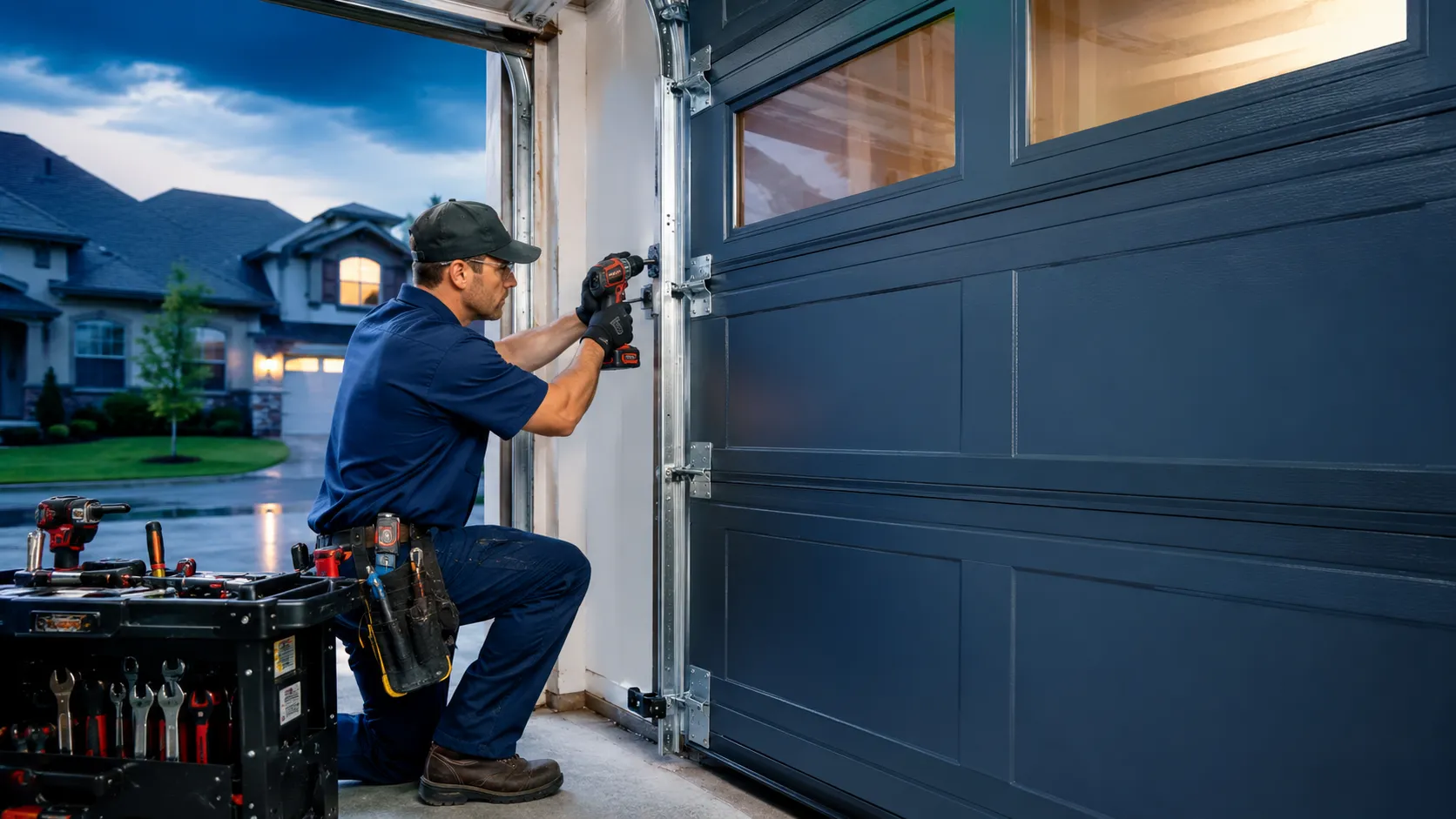
Professional garage door installation technician fitting a new residential garage door in Chattanooga

Why Choose Our Garage Door Installation Service

A garage door is a system of interdependent partsโ€”counterbalance springs, horizontal and vertical tracks, safety sensors, weather barriers, and the opener drive mechanism. When any single component is installed even slightly out of specification, the result isn't just noise or inconvenience: it's accelerated wear, unnecessary strain on the opener motor, and in some cases a door that can derail or crash down under its own weight. The most common failures we see on doors installed by general handymen or underqualified crews are springs wound too loosely or too tightly, tracks set with no regard for side-bearing clearance, safety sensor beams misaligned so the auto-reverse is unreliable, and weatherstripping pinched so tightly that the door binds in humid weather. Every installation we complete in Chattanooga addresses these points at a forensic level. We balance the door so precisely that you can stop it halfway by hand and it stays motionlessโ€”that's the only way to guarantee the opener isn't overworked. We check the photo-eye signal strength with a diagnostic tool, not just by waving a hand. And we never leave a job without verifying that the emergency release functions correctly from inside and outside the garage, because in a power outage or opener failure, that's the only manual escape route. This isn't about doing the bare minimumโ€”it's about making sure the door that protects your cars, tools, and often the interior entrance to your home works safely, quietly, and durably for decades.

  • Installation by Counterbalance Specialists

    Our technicians understand torsion physics intimately: we calculate spring wire size, inside diameter, and length to match your door's exact weight, then wind to the precise number of turnsโ€”not just "tight enough." This prevents the opener from bearing the door's load and eliminates the slow sag that shortens spring lifespan.

  • Security That Actually Works

    A locked garage door can still be breached if the emergency release cord is hooked from outside. We install a proper release shield as standard. We also ensure rolling-code opener technology is correctly synced to block code-grabbing attacks, and we reinforce the jamb with heavy-gauge strike plates so the door resists kick-in attempts.

  • Precision Track Alignment

    A track off by just โ…› inch can cause nylon rollers to grind flat within a year and force the opener to labor against side friction. We use laser levels and digital calipers to set vertical tracks perfectly plumb and horizontal tracks with the exact radius curvature. The result is a door that glides with one-finger effort and doesn't squeal or shudder.

  • Springs Rated for Real-World Cycles

    Not all springs are equal: a builder-grade torsion spring might be rated for only 5,000 cycles, while high-cycle springs can exceed 20,000. We install springs matched to your usage pattern and include safety containment cables on extension springs so a snap won't send a cable whipping across the garageโ€”a common, dangerous failure with unsecured installations.

  • Design Choices That Fit Your Home's Needs

    From steel doors with wood-grain embossing that never need painting, to insulated options that keep an attached garage above freezing in Chattanooga winters, we help you weigh Rโ€‘value, maintenance, and window placement. We'll recommend glass with Lowโ€‘E coating if sun exposure overheats the space, and composite materials where humidity often warps cheaper doors.

  • Built for Decades, Not Just the Warranty

    We use galvanized stamped steel hinges and brackets that resist rust even in the humid microclimate behind an uninsulated door. All moving components are lubricated with white lithium grease after installation, and we show you how to repeat that fiveโ€‘minute maintenance annually. A door installed this way routinely serves 20 years with only minor roller replacement.

Garage Door Installation Solutions Built Around Your Home, Not a Checklist

A garage door is not a one-size-fits-all appliance. The installation requirements change completely depending on whether weโ€™re working with a rough opening in new construction that still needs a steel lintel, a 1970s woodโ€‘framed garage where the header has sagged by half an inch, or a modern highโ€‘lift track setup designed to free up ceiling space for a car lift. We treat every job as a small engineering project: we measure the opening in three places to account for outโ€‘ofโ€‘square framing, select spring wire gauge and length based on actual door weight rather than label assumptions, and verify that the opener arm attachment point can handle the stall force without pulling the top section apart. The six service categories below cover the full range of installation scenarios we handle for Chattanooga homeownersโ€”from straightforward singleโ€‘door replacements to fully integrated smart systems with backup batteries and security camera modules.

  • Residential Garage Door Installation

    For single and double garages where a complete system is neededโ€”new or replacement. We start by anchoring a punched angle or steel strut across the header to distribute load, bolt the vertical tracks to the jambs with lag screws at every preโ€‘punched hole (never skipping the center hole, which is a common shortcut), and wind the torsion springs to the exact quarterโ€‘turn while a second technician monitors the doorโ€™s balance at halfโ€‘open. The goal is a door that stays where you put itโ€”no creeping up or crashing downโ€”before the opener is ever connected.

  • New Garage Door Setup

    When a builder or homeowner has already selected a door and needs it professionally assembled and configured, this service covers everything from unpacking the stacked sections to a fully operating door. We install the bottom bracket and lift cables, build the curtain by joining each section with end stiles and center hinges, insert the roller carriers into the track at the correct orientation (the rollerโ€™s flat face against the track, not the ball bearing), and apply a thin bead of clear silicone along the bottom rubber seal to prevent water wicking under the door during Chattanoogaโ€™s heavy summer rains.

  • Door Replacement Installation

    Replacing a 20โ€‘yearโ€‘old door is more than a swapโ€”itโ€™s an upgrade to modern safety standards. We remove the old door and all hardware, inspect the framing for rot or termite damage around the jambs (a common find in older Chattanooga garages), and install a new galvanized steel bottom bracket with a welded liftโ€‘cable hook that wonโ€™t bend under spring tension. If the original rough opening was never properly sealed, we add a PVC weatherstop with flexible flap fins to close gaps that let in dust, leaves, and drafts. The new door will also receive a highโ€‘cycle torsion spring that outlasts the builderโ€‘grade spring it replaces.

  • Manual & Automatic Door Installation

    Not every garage needs an electric opener. For detached workshops or carports, we install manual doors with a sturdy slideโ€‘bolt lock and a lift handle positioned at the correct height. When an opener is added later, the door must already have a properly reinforced top strutโ€”otherwise the opener arm will flex the top section and eventually tear through the steel. During automatic installations, we integrate the opener with a multiโ€‘function wall console that includes a light control and vacation lock button, and we program the force settings so the opener reverses if it feels resistance equivalent to a 2โ€‘byโ€‘4 on the ground, not an immovable object.

  • Smart Garage Door System Setup

    We configure Wiโ€‘Fi connected openers with encrypted rolling codes to prevent relay attacks, set up battery backups that automatically switch over during power outages, and install a tilt sensor on the top panel that reports true open/closed statusโ€”not just the last command. For homeowners who want a view inside, we can add a lowโ€‘light camera that clips to the opener bracket and streams to your phone. Every smart accessory is tested after pairing: we run the door while monitoring the appโ€™s live activity log to confirm the notification arrives before the door finishes moving, which is the only way to guarantee the system will alert you if the door operates unexpectedly.

  • Heavy-Duty Garage Door Installation

    Oversized doorsโ€”12โ€‘foot wide or more, solid wood carriageโ€‘style doors that weigh over 600 pounds, or windโ€‘load doors designed to meet local code for storm zonesโ€”require hardware that goes well beyond standard residential components. We upgrade to industrialโ€‘grade track brackets with gusseted reinforcements, use a larger shaft diameter for the torsion bar to handle higher spring torque without twisting, and install a continuous angle strut along each section to prevent flexing. The opener for these doors is a trolleyโ€‘type with a solidโ€‘rail track and a heavier gear reduction; we mount it on a punched steel hangar anchored to ceiling joists, not perforated strap, because the startโ€‘up torque on a heavy door can twist a flimsy mount right off the wood over time.

Residential Garage Door Installation That Works with Your Home, Not Against It

A residential garage door does more than open and close. It forms part of your home's thermal boundaryโ€”if the perimeter seal isn't tight, you lose conditioned air equivalent to a small window left open year-round. It's the largest moving part of your security perimeter; a poorly secured door can be lifted off its tracks in under thirty seconds by someone who knows how to exploit a missing slide bolt. And in Chattanooga's humid summers and winter temperature swings, a door that isn't correctly balanced and weather-stripped will rust hardware, warp wood composite sections, and strain the opener motor until the plastic gears inside strip. We install residential doors as complete systems: the opening gets digital level checks in three places, the track shimming compensates for any slab settlement, the torsion spring cycle rating is matched to your daily use so you aren't replacing springs again in four years, and the weatherseal is compression-tested with a sheet of paperโ€”if it slides out easily, we adjust until it doesn't. Every installation finishes with a hands-on demonstration so you know how to test the autoโ€‘reverse, engage the manual release, and perform the fiveโ€‘minute annual lubrication that doubles your roller life.

What Sets a Properly Engineered Residential Installation Apart

  • Opening survey, not just a measurement. We take width at head, middle, and sillโ€”and height left, right, centerโ€”because no framed opening is perfectly square after a few years of settling. If the floor has dropped ยพ inch on one side, we shim the tracks and adjust the bottom seal retainer so the door seals evenly without binding. We also verify the header can carry the torsion spring's upward reaction force and install a steel angle if the framing needs it.
  • Design that suits your home, not a catalog. We help you choose door styles that complement your houseโ€”carriage-house hardware for a Craftsman bungalow, flush panels for a mid-century ranch, or insulated steel with wood-grain embossing that won't require repainting. Window placement is planned to bring in natural light without overheating the space; we use Lowโ€‘E glass where afternoon sun bakes the garage, preserving your car's interior and reducing the temperature swing that stresses the door sections.
  • Insulation that actually delivers its Rโ€‘value. A door with an Rโ€‘9 foam core performs no better than Rโ€‘4 if the weatherstrip at the jambs is pinched or the bottom seal is cracked. We install polyurethane-insulated doors where the foam expands into the frame, eliminating internal voids, and apply a continuous bead of closedโ€‘cell foam tape behind the perimeter stop molding. For attached garages with a bedroom above, we check that the ceiling and wall junction are airโ€‘sealed so the door isn't the only thermal barrier. The result: the garage stays above freezing in winter, protecting plumbing and stored paint from freezeโ€‘thaw damage.
  • Track alignment measured in fractions, not eyeballed. A vertical track off by just 1/16 inch over its 7โ€‘foot length forces the nylon roller to grind sideways, wearing the ball bearing flat in two years. We use a laser level to set both tracks perfectly plumb, then adjust the horizontal radius brackets so the door glides without a hint of drag. After installation, we spray a dry lubricant on the roller stems and hingesโ€”never grease, which attracts gritโ€”and show you where to reapply it annually.
  • Security that stops the common breakโ€‘ins. A locked garage door can still be opened if someone hooks the emergency release cord from outside. We install a release shield as standard, plus a slideโ€‘bolt lock that engages into a heavyโ€‘gauge strike plate on the trackโ€”preventing the door from being lifted off the ground even if the opener is forced. For doors with windows, we discuss laminated glass options that resist shattering, and we reinforce the top strut so no one can push the panel in and crawl through.
  • Tested balance and safety you can see. Before we consider the job finished, we demonstrate that the door stays motionless at halfโ€‘open by handโ€”proof the springs are correctly wound and the door isn't heavy. We test the autoโ€‘reverse by placing a roll of paper towels under the door; if it crushes the roll, we adjust the force sensitivity. Finally, we walk you through the manual release and show you how to inspect the cables every three months. You'll have a printed maintenance card on the opener unit for quick reference.

Ready to Upgrade Your Garage with a System That Lasts?

Tell us about your existing door and what you needโ€”more insulation, a quieter opener, a fresh look, or a complete replacement. We'll provide a detailed proposal covering materials, labor, and a timeline, with no highโ€‘pressure sales. If you're unsure whether to repair or replace, we'll give you an honest assessment based on the door's age, spring condition, and panel integrity.

A Garage Door Installation Process That Anticipates Problems, Not Just Follows Steps

When an installation goes wrong, you don't always see it right away. You hear it months later: a grinding sound as a roller eats through the track because the vertical wasn't plumb. You feel it when the opener strains to lift a door that's never been properly balanced. And you pay for it when the bottom seal gap lets rainwater in or the springs snap at half their expected life. Our process doesn't begin with a wrenchโ€”it begins with a forensic measurement of your opening, a calculation of spring wire diameter and life cycles based on your daily use, and a plan to correct framing imperfections before the first bolt goes in. These five steps are the result of installing doors in homes built in the 1960s with sagging headers, homes on slopes where the floor has settled, and homes where the previous installer used drywall anchors instead of lag bolts. They're designed so that when we leave, your door isn't just workingโ€”it's working in a way that will still be quiet, balanced, and safe ten years from now.

  • 01

    Site Inspection & Measurement

    We don't measure just once. We take the width at the header, at the midโ€‘height, and at the sillโ€”because no framed opening is a perfect rectangle after years of settling. Headroom (the space between the top of the opening and the ceiling), sideroom (the distance to the nearest wall), and backroom (depth of the garage) are measured separately because they determine whether a standard radius track or a highโ€‘lift conversion is needed. The floor gets a digital level check: if one corner has dropped ยพ inch, we note it and plan to shim the vertical track bracket or use an adjustable bottom seal retainer so the rubber contacts evenly across the entire width. We inspect the header for rot, termite damage, or undersized lumberโ€”if the header is a 2x6 laid flat above a 16โ€‘foot opening, it will deflect under the torsion spring's upward force, and we'll recommend a steel angle reinforcement before proceeding. For replacement jobs, we also evaluate the condition of the existing jamb framing, check if the old opener mount points are stripped, and determine if the garage slab has a lip that would trap water; all of this feeds directly into the installation plan and the hardware spec.

  • 02

    Door Selection Guidance

    The right door isn't just about appearanceโ€”it's about weight, insulation type, wind load, and maintenance commitment. We walk you through the real difference between an Rโ€‘6 polystyrene board and an Rโ€‘18 polyurethane foamโ€‘injected door: the latter fills every cavity and adds structural strength, but it's heavier, so the spring pair must be upsized. If your garage has a bedroom above, we discuss continuous thermal breaks and air sealing at the ceiling junction, because the door alone won't stop heat loss. Window placement matters: a westโ€‘facing row of clear glass can turn a garage into an oven in July; we'll suggest Lowโ€‘E glazing or a solid panel layout. For homes in exposed areas where strong gusts are common, we recommend a door with a windโ€‘load rating and reinforced horizontal struts. We show you samples of steel with woodโ€‘grain embossing that never needs painting, explain why composite doors hold up better than wood in Chattanooga's humidity, and calculate the expected spring cycle life (10,000 vs. 25,000 cycles) based on your daily opening frequency so the springs last more than just a few years. This isn't a catalog pickโ€”it's an engineering choice tailored to your home's structure, climate, and how you use the garage.

  • 03

    Old System Removal

    Before we touch the new door, the old one comes out safelyโ€”and that's not a trivial job. The torsion springs are unwound using two winding bars, a quarterโ€‘turn at a time, because the stored energy in a fully wound spring can break an arm. Once the springs are detensioned, we disconnect the lift cables and lower the door into the opening, then unstack the sections one by one, removing the hinges and rollers. We don't just toss everything in a truck: we inspect the exposed framing for rot, powder post beetle damage, or water stains that indicate a flashing leak above the opening. Old wood stop molding that's split or rotten is scrapped off and replaced with PVC stop that won't swell. If the previous opener bracket was mounted with undersized lag screws that have stripped the wood, we plug the holes with hardwood dowels and construction adhesive so the new mount bites solid wood. Metal componentsโ€”steel tracks, old springs, the opener railโ€”are separated for recycling. And if the door we're removing was manufactured before the midโ€‘1980s, we check for asbestosโ€‘containing materials like old cement asbestos board; if found, we stop work and advise on abatement before proceeding.

  • 04

    Professional Installation

    Installation day is when the planning pays off. We start by anchoring a continuous punched steel angle across the header with heavyโ€‘gauge lag screws into every studโ€”not just into the drywall or the trimโ€”to carry the torsion spring's upward reaction. The vertical tracks are bolted to the jambs with lags at every preโ€‘punched hole; a laser level ensures each track is perfectly plumb in two planes, and if the wall isn't straight, we use shims behind the bracket to maintain alignment without distorting the track. The torsion shaft and springs are assembled on a workbench: we measure the wire diameter, inside diameter, and length, then calculate the exact number of quarterโ€‘turns needed to balance the door's weight. Winding is a twoโ€‘person operation: one on the winding bars, one observing the door's reaction. After the bottom brackets and lift cables are secured, we build the curtain by stacking sections, inserting the rollers (longโ€‘stem rollers into the bottom bracket, shortโ€‘stem into hinges), and attaching center hinges and end stiles with the correct bolt torqueโ€”tight enough to eliminate play but not so tight that the nylon bushing compresses. The horizontal tracks are hung with punched steel angle, not perforated strap, and the radius brackets are set to maintain the same clearance from the door edge as the vertical track. The opener is mounted to a solid steel crossโ€‘brace and attached with a punched angle, then the travel limits and force settings are adjusted so the door stops gently without slamming. Weatherโ€‘sealing finishes the job: a doubleโ€‘lip bottom seal on the rubber, PVC stop molding with a flexible flap on the sides and top, and any remaining gaps are filled with foam backer rod. Finally, we lubricate the roller stems and hinges with a dry film lubricantโ€”never greaseโ€”and spray the torsion spring coils to prevent corrosion.

  • 05

    Safety Testing & Final Setup

    We don't consider a job complete until we've proven the door is safeโ€”and shown you how to verify it yourself. First, the balance test: we disconnect the opener and manually move the door to halfway open; if it stays put without drifting up or down, the springs are correctly wound and the door is perfectly balanced. Next, the autoโ€‘reverse test: we place a 2โ€‘inchโ€‘thick block of wood flat on the floor under the closing door; the door must reverse within two seconds of contact. Then the photoโ€‘eye test: we break the beam with a broomstick while the door is closing; it should immediately reverse to fully open. We check the force sensitivity by having the door close against a rolledโ€‘up towel; it must reverse before crushing it. The emergency release is pulled from inside, then from outside (using the keyโ€‘lock release if fitted), to ensure you can operate the door manually during a power outage. We program the opener's travel limits so the door seals without pressing too hard, pair your remotes and wireless keypad, and set up the vacation lock feature if equipped. Every smart connectivity functionโ€”Wiโ€‘Fi, camera, battery backupโ€”is tested live, and we'll show you on your phone that the notification arrives before the door finishes moving. Finally, we hand you a printed maintenance card that lists the three things you should do every season: inspect the cables for fraying, test the autoโ€‘reverse, and apply dry lubricant to the hinges and rollers. The job site is swept, old hardware is hauled away, and you're left with a garage door that's as safe as it is smooth.

Local Garage Door Installation Wherever You Are in the Chattanooga Region

A garage door that's perfectly balanced for a house in Hixson won't necessarily stay that way if the same components are installed without adjustment in Signal Mountainโ€”where temperature swings, wind exposure, and even driveway slope affect how a door cycles. We don't just offer service across the Tennessee Valley; we know the building stock, the typical garage framing quirks, and the weather patterns that influence your door's long-term performance. Whether your home is a 1950s brick ranch in East Ridge, a new construction in Ooltewah, a hillside property on Lookout Mountain, or a farmhouse near Whitwell, our installation process accounts for local conditions. Below are all the communities we regularly serveโ€”if you don't see yours, call us: we cover the entire Greater Chattanooga area and northern Georgia.

Trust Isn't a Marketing Promiseโ€”It's Earned in the Details You Can Verify

When a homeowner asks us, "How do I know you'll install this door correctly?" we don't answer with platitudes. We show them the load calculation for the torsion springs and explain why we use a specific wire diameter instead of whatever was on the truck. We point to the digital level we used to shim the vertical tracks because we knew their concrete floor had settled 5/8 inch on the right side. Trust comes from predictability: you know the price before we unload tools, you know the installer's qualifications because we tell you how many spring winding cycles they've performed, and you know what to watch for in the years ahead because we give you a maintenance checklist specific to your door model and usage patterns. Below are the six commitments that define every installation we performโ€”commitments backed by measurable standards, not vague ideals.

  • Transparent Pricing

    Before we touch your garage, you receive a lineโ€‘item estimate that separates door cost, hardware, spring and track components, opener equipment, and installation labor. We specify the exact spring cycle ratingโ€”not just "heavyโ€‘duty"โ€”so you can compare value instead of vague marketing terms. If we need to add structural reinforcement because your header is undersized, we document it with a photo and a written explanation, and we never add charges without your approval. The price you sign off on is the price you pay; there are no "unexpected frame repair" surprises slipped into the final invoice.

  • Skilled Installation Technicians

    Every lead installer on our team has wound hundreds of torsion springs and can calculate the required quarterโ€‘turn count by weight, not by guesswork. They understand why you never weld a spring to a shaft, why longโ€‘stem rollers go in the bottom brackets and shortโ€‘stem rollers in the hinges, and how to test a photoโ€‘eye with a diagnostic tool that measures signal strength rather than just waving a hand. We don't send a salesperson to sell you a door and then dispatch a subcontractor to install it; the person you speak with is the person who leads the installation, and they have the manufacturer certifications to prove it.

  • Safe & Certified Installation Methods

    Our safety protocol exceeds the minimum requirements of UL 325. We verify the autoโ€‘reverse by placing a 2โ€‘inch block of wood on the floorโ€”not a 2x4 laid flat, because a toddler's fingers are thinner. We test the emergency release from inside and outside the garage to confirm you can manually lift the door during a power outage. The opener's force sensitivity is dialed in so that a closing door reverses before it crushes a roll of paper towels. After installation, we leave a printed safety checklist with your opener, and we'll walk you through the photoโ€‘eye alignment test so you can selfโ€‘check it monthly. No shortcuts: if the sensor brackets aren't rigid and free of vibration, we reinforce them before we leave.

  • High-Quality Materials

    We use components from manufacturers that provide verifiable cycleโ€‘life ratings and corrosionโ€‘resistance specifications. Our torsion springs are oilโ€‘tempered steel with a minimum 10,000โ€‘cycle rating on standard installations; we offer 25,000โ€‘cycle springs as an option because we know a door opened four times a day can burn through a cheap spring in three years. Tracks are 14โ€‘gauge galvanized steel, not 16โ€‘gauge that flexes under weight. Rollers are nylonโ€‘coated with sealed ball bearings, not exposed plastic that grinds flat. Hinges are stamped steel with a zinc finish, not powderโ€‘coated imports that rust after two humid Chattanooga summers. We'll show you the difference before installation because you should know what you're paying for.

  • On-Time Completion

    When we schedule an installation, we block the full day so your project never gets squeezed between two others. You'll receive a twoโ€‘hour arrival window and a call when we're 30 minutes away. A standard singleโ€‘door replacement, from oldโ€‘door removal to final safety test, takes 4โ€“6 hours depending on framing condition. If we discover hidden damageโ€”like a rotten jamb that requires carpentryโ€”we'll give you a realistic time adjustment on the spot and the option to proceed or reschedule. We don't rush, and we don't leave at 3:30 PM with half the weatherstrip still in the box because we're late for another appointment.

  • Customer Satisfaction Focus

    Our install isn't done when the door closesโ€”it's done when you understand it. We spend the last 20 minutes of every job walking you through balance testing, safety reversal, and manual release operation. You'll have a printed card with your door's spring cycle rating, lubrication points, and a QR code linking to a 3โ€‘minute maintenance video. Thirty days after installation, we offer a free balance recheck: because new springs settle slightly, we'll adjust them at no cost if needed. If something isn't right, you call the same phone number you dialed for the estimate, and the same technician who installed your door will return to make it rightโ€”not an outsourced "customer care" line. That's not a guarantee; that's how we've built every relationship we have in Chattanooga.

Real Answers to the Installation Questions Homeowners in Chattanooga Ask Us Daily

We've answered thousands of questions over the yearsโ€”here are six that matter most for your garage door's longโ€‘term performance, safety, and value. No fluff, just the information we'd give you if you called right now.

  • How long does a typical garage door installation take?

    A straightforward singleโ€‘door replacement, including removal of the old door and all hardware, installation of new tracks, springs, weatherseal, and reconnection of an existing opener, typically takes 4 to 6 hours. If we're converting from manual to automatic, adding a highโ€‘lift track to accommodate a car lift, or reinforcing a deteriorated header, plan on 6 to 8 hours. About 45 minutes of every job is dedicated solely to safety testing: balancing the door at halfโ€‘open without the opener, verifying the autoโ€‘reverse with a 2โ€‘inch block on edge, checking photoโ€‘eye alignment with a diagnostic tool, and walking you through the manual release. We never compress that time just to squeeze in another appointment.

  • Do you install residential garage doors?

    Absolutely. Residential installation is our core work, covering singleโ€‘bay, doubleโ€‘bay, and customโ€‘width openings up to 20 feet. We've installed doors on everything from 1920s Craftsman bungalows with outโ€‘ofโ€‘square framing to newly built homes in Ooltewah with highโ€‘lift tracks and wallโ€‘mounted openers. Our team will help you choose a door that complements your home's styleโ€”not just the panel pattern, but the insulation Rโ€‘value appropriate for an attached garage, the window glass tinting to reduce heat gain, and the spring cycle rating that matches your daily use. We'll also evaluate whether a standard radius track will work or if a highโ€‘lift or verticalโ€‘lift conversion is needed based on your ceiling height.

  • Can you replace my old garage door?

    Yes, and a full replacement is often the best investment when a door is more than 15 years old, has rusted panels, broken springs, or an opener that doesn't meet current safety standards. We remove the entire existing systemโ€”door sections, track, springs, and openerโ€”safely unwinding the torsion springs first. The old metal is recycled. Before installing the new door, we inspect the jamb framing for rot, and if needed, we can replace rotted wood or sister new studs. The new installation brings modern safety features like pinchโ€‘resistant section joints, autoโ€‘reverse that responds to 4 ounces of pressure, and rollingโ€‘code opener technology. The visual improvement is dramatic, but the real gain is in daily operationโ€”no more waking up the house when you come home late.

  • Do you set up new garage doors from a store?

    Yes, we frequently install doors that homeowners have purchased from manufacturers or home improvement stores. However, a boxed door from a retailer often includes universal springs not matched to your door's exact weight, or a cheap center bearing that will fail early. We'll verify every component: if the springs are undersized, we'll swap them for a correctly matched pair. We'll assemble the sections, install the track with laser alignment, wind the torsion springs to the calculated number of turns, and integrate your chosen openerโ€”even if it's a different brand. The benefit of professional setup is that the door is balanced at halfโ€‘open without the opener connected, and all safety features are tested before we leave. We often see DIY attempts where the door is heavy and the opener strains, and we correct that in about an hour.

  • Is installation safe for very heavy doors?

    Heavy doorsโ€”such as solid wood carriage doors, insulated steel doors over 18 feet wide, or windโ€‘rated doorsโ€”present unique safety challenges that require more than just a larger spring. We address them by upsizing the torsion shaft to a 1โ€‘inch diameter to resist twisting, using three heavyโ€‘duty hinges per section instead of two, and mounting the horizontal tracks with reinforced steel angle brackets anchored into the ceiling joists with 3โ€‘inch lag screws, not drywall anchors. During spring winding, we use two winding bars and count quarterโ€‘turns aloud, keeping our bodies out of the spring's rotational path. After installation, we verify the autoโ€‘reverse using a 2โ€‘inch block of wood placed on edgeโ€”this simulates a child's fingers, not a 2x4 flat that doesn't reflect real risk. A 600โ€‘pound door must reverse within 2 seconds of contact, and we test it three times before handing over the remote.

  • What kind of warranty comes with the installation?

    The door, springs, and hardware carry the manufacturer's warrantyโ€”typically 10 years on the door section, 1โ€‘5 years on the springs depending on cycle rating, and lifetime on the track and hinges for some brands. Our labor warranty covers the installation workmanship for 1 year: if something we installed fails because of an error in alignment, spring tension, or track mounting, we'll return and fix it at no charge. Additionally, we offer a free 30โ€‘day balance recheck after installation. New torsion springs can settle slightly in the first month, causing the door to become slightly heavy; we'll send a technician to readjust the winding at no cost. We leave a warranty card with all relevant phone numbers and the spring specifications so you have everything you need if an issue ever arises.

Professional Garage Door Installation That Accounts for the Realities of Your Home

A garage door installation isn't a cosmetic upgradeโ€”it's a mechanical system integration that must compensate for the unique geometry, weight, and daily usage of your specific home. When we arrive at a property, we don't just measure the opening width and order a door. We check the header for deflection, level the floor to see if one corner has settled, verify the sideroom and backroom for proper track radius, and calculate the torsion spring's wire diameter and length based on the door's actual weightโ€”not a catalog spec. Because a door that's 10 pounds heavier on the left side than the right will never balance correctly, and that imbalance will burn out an opener's plastic drive gear within two years. These pages explain the standards we apply to every residential installation in Chattanooga, and why those standards matter long after the installation crew has packed up.

Residential Garage Door Installation

A properly installed residential door begins with the rough opening assessment. We laser-measure the width at three heights because out-of-square framing is the norm, not the exception, in homes built before modern building codes. If the floor has dropped 5/8 inch on one side, we don't just bolt the track to the jamb and hope the bottom seal flexes enoughโ€”we shim the vertical bracket behind the track so the rollers travel in a straight line, and we adjust the bottom retainer to maintain even contact across the full width. This eliminates the air gap that would otherwise let in leaves, humidity, and drafts.

Next, the counterbalance system is engineered to the door's exact weight. We use a digital scale to confirm the door's actual mass after assembly, then select torsion springs with the correct wire gauge, inside diameter, and length to balance that weight. The springs are wound to a calculated number of quarter-turnsโ€”not "until it feels tight." We verify balance by disconnecting the opener and manually positioning the door at half-open; if it moves, we adjust until it stays put. This single step is what prevents your opener from labouring against an unbalanced load and failing prematurely.

Explore our Service Areas โ†’

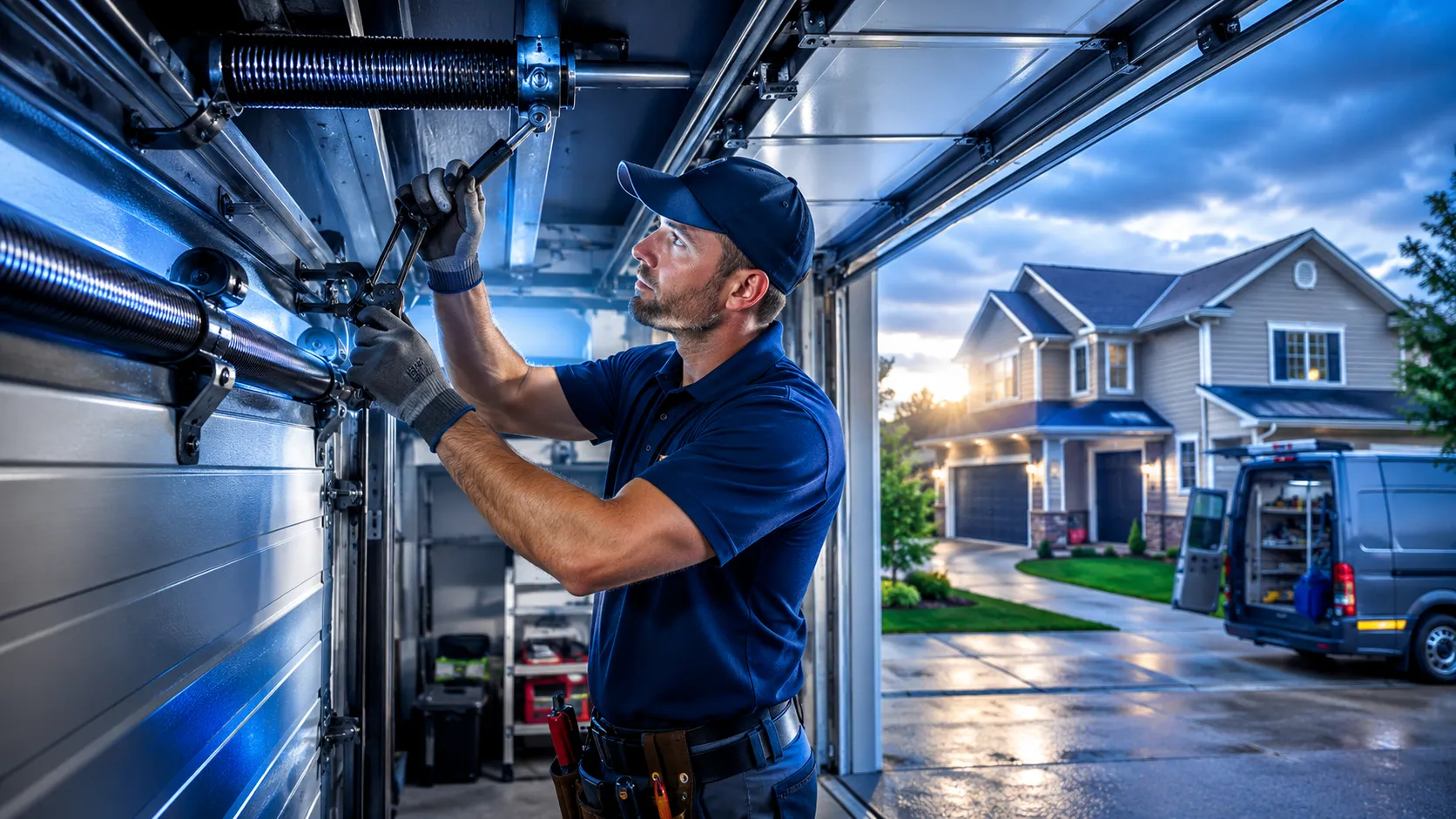
Professional garage door installation technician fitting a new residential garage door

New Garage Door Installation

Whether we're installing a door in brand-new construction or replacing a 30-year-old system, the first concern is the structural readiness of the opening. In new builds, we often find that the rough opening is missing a steel lintel above a wide span, or that the back framing doesn't provide enough depth for the torsion shaft and horizontal tracks. We'll coordinate with your builder to add the necessary reinforcement before any door components are mounted. For replacement projects, we frequently encounter rotted jambs, undersized headers that have sagged, or old opener mounting points where the lag screws have stripped the wood. These are not surprises we work aroundโ€”they are conditions we correct.

The installation itself includes assembling the sections with the correct hinge spacing, installing long-stem rollers in the bottom brackets and short-stem rollers in the center hinges, and aligning the tracks with a laser so that the gap between the door edge and the track is consistent from top to bottom. We lubricate the roller stems and torsion spring coils with a dry-film lubricant that doesn't attract grit. The opener's travel limits are set so the door seals without forcing the panel, and the force sensitivity is calibrated to reverse before it can crush a roll of paper towels. Every smart-home featureโ€”Wi-Fi, camera, battery backupโ€”is tested live before we leave.

Learn about our Repair Services โ†’

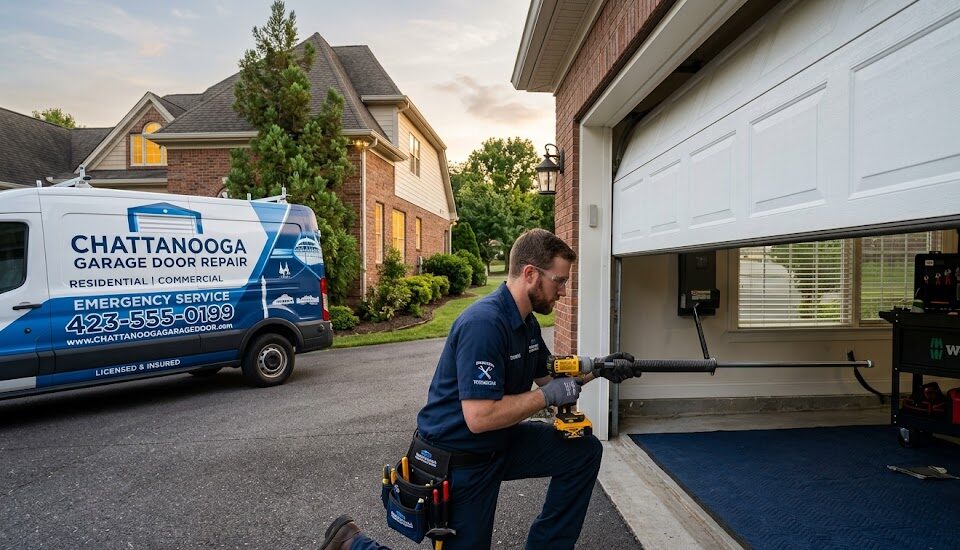
Garage door repair technician working on a residential garage door in Chattanooga

Why Installation Quality Matters

The difference between a door that lasts 20 years and one that fails in five is almost never the door itselfโ€”it's the installation. We've been called to inspect doors where the vertical track was installed 1/8 inch out of plumb, a deviation invisible to the eye. Within two years, the nylon rollers had ground flat on one side, the ball bearings had seized, and the opener's plastic drive gear had stripped from the constant lateral resistance. The repair required replacing the tracks, rollers, and openerโ€”a $1,200 expense that could have been avoided with a laser level and 15 extra minutes of adjustment during the original install.

Safety is equally dependent on quality. An improperly installed photo-eye system may appear to work when you wave your hand in front of the beam, but if the brackets flex when the door vibrates, the signal can momentarily drop and the door won't reverse. We use a diagnostic tool to measure the sensor's signal strength during movement, and we reinforce the brackets with additional screws if they flex. The auto-reverse force is tested with a 2-inch block of wood placed on edgeโ€”because a toddler's fingers are much more vulnerable than a flat 2x4. These aren't optional checks; they're mandatory parts of every installation.
View our Service Guarantee โ†’

Chattanooga skyline and surrounding service areas

Local Installation Expertise

We've installed doors on Signal Mountain where the driveway incline forces rainwater to pool right at the garage threshold, requiring an extra-tall bottom seal and a drip edge to keep the interior dry. In Hixson, we regularly encounter homes built in the 1970s with non-standard rough openings that were framed with rough-cut lumber, not dimensional, and we adjust our track shimming accordingly. On Lookout Mountain, the temperature swings and high winds demand a door with a wind-load rating and reinforced horizontal struts, plus an opener with a battery backup so the door isn't immobilized during a storm outage.

Our familiarity with Chattanooga's neighborhoodsโ€”from the historic homes of St. Elmo with their narrow single-car garages to the modern developments in Ooltewah with three-car baysโ€”means we know the typical framing practices and building code requirements before we even arrive. This local knowledge reduces surprises during installation and allows us to give you a realistic timeline and price from the first conversation.

Learn more About Us โ†’

Expert garage door installation team serving Chattanooga residents