
Garage Door Replacement

Make An Informed Decision About Your Home's Largest Moving Wall

A garage door that struggles to open smoothly, sags visibly in the center, or has sustained panel damage from a vehicle impact isn't just an inconvenienceโ€”it's a safety liability and a growing energy drain. While many individual components can be repaired, there comes a point where cumulative wear on the door assembly makes replacement the smarter long-term investment. Bent tracks, rust-compromised structural integrity, outdated spring systems that lack containment cables, and doors manufactured before federal auto-reverse safety mandates (pre-1993) are all strong indicators that a full replacement should be evaluated. We help Chattanooga homeowners assess these factors honestly, explaining when a targeted repair will restore reliable operation and when the door itself has reached the end of its functional service life.

A complete replacement involves far more than swapping panels. The process begins with removing the existing door and inspecting the framing, jambs, and mounting surfaces for rot, shifting, or deterioration that would compromise the new installation. The old tracks are taken downโ€”reusing worn tracks on a new door creates alignment problems from day oneโ€”and fresh vertical and horizontal track sections are mounted and precisely leveled. The torsion spring assembly is custom-wound to match the exact weight of your new door, a calibration step that directly determines how quietly the door operates and how long the opener motor lasts. Every hinge, roller, cable, and bottom seal is installed new rather than carried over, eliminating the weak-link problem that undermines partial upgrades. This comprehensive approach is the difference between a door that performs reliably for 15โ€“20 years and one that develops problems within the first two. Every installation we complete is protected by our Service Guarantee.

If you're still determining whether replacement is your best path, our Garage Door Repair Services include a thorough condition assessment with no obligation to proceed beyond what's needed. For new construction, detached workshop builds, or situations where the existing opening has no door at all, see our dedicated Garage Door Installation Services. Curious about who will be working on your home? Visit our About Us page to meet the team behind every door we hang.

  • Licensed, Insured & Safety-Trained Crews
  • Residential Door Selection & Sizing Guidance
  • Complete Hardware Replacement โ€” No Reused Parts
  • Precision Spring Calibration for Smooth Operation
  • Old Door Removal & Jobsit Cleanup Included
  • Installation Covered by Service Guarantee
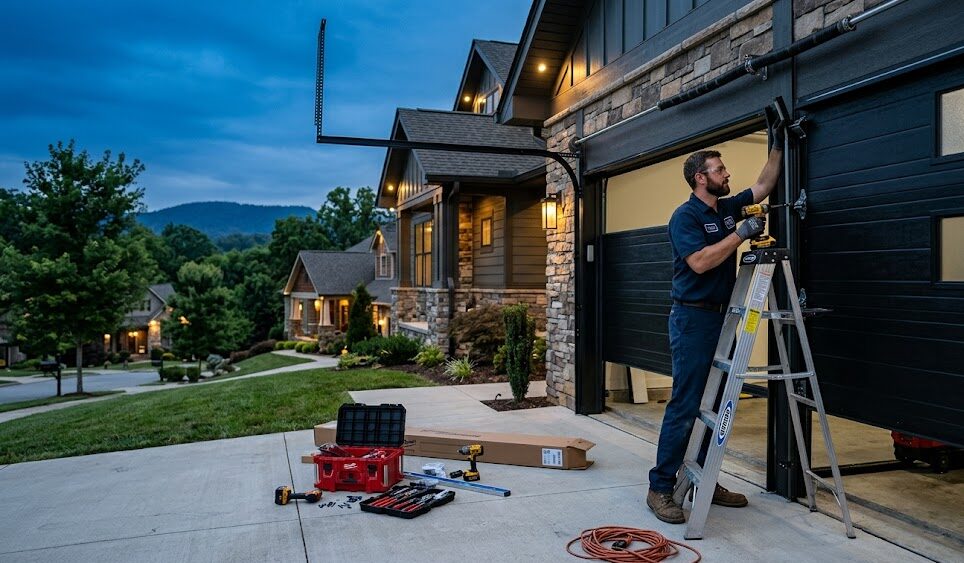
Professional garage door replacement technician installing a new residential garage door in Chattanooga TN

Why Homeowners Replace an Entire Garage Door โ€” Beyond the Obvious

The decision to replace a garage door is rarely driven by a single snapped cable or a rusted bottom bracket. By the time weโ€™re called out to look at a 15โ€‘ or 20โ€‘yearโ€‘old door, the list of issues has usually stacked up: worn rollers that have gouged the horizontal tracks, a torsion spring thatโ€™s lost its cycleโ€‘life rating, panels that have started to delaminate or rust through, and an opener thatโ€™s working twice as hard just to lift an unbalanced door. Add up the cost of correcting those items individually, and you often land within striking distance of a full replacement that resets the clock on reliability and safety.

Beyond pure economics, older doors lack protection that todayโ€™s building codes and manufacturing standards take for granted โ€” contained springs, pinchโ€‘resistant section joints, and automatic reversal systems that react in milliseconds. For many Chattanooga homes, the attached garage also acts as a giant uninsulated radiator that drives up heating and cooling bills. We walk homeowners through these factors honestly, and below are the six evidenceโ€‘backed reasons they choose replacement โ€” reasons that hold up whether you plan to stay in your home another five years or sell it next month.

  • A Measurable Return on Resale

    Remodeling industry data consistently places garage door replacement among the top three projects for cost recouped at resale โ€” often over 90%. Even if youโ€™re not selling soon, a new door immediately updates the dominant streetโ€‘facing feature of most homes. Appraisers notice; buyers notice; your neighbors will, too.

  • Security That Slows Intruders

    Older singleโ€‘skin steel doors can be bowed outward by hand, and exposed lock bars are trivial to bypass. Modern designs use interior reinforcement struts, tamperโ€‘resistant bottom brackets, and multiโ€‘point locking. Paired with a rollingโ€‘code opener, a new door removes the weak point that most garage breakโ€‘ins exploit: the door itself.

  • Energy Bills You Can Feel

    An uninsulated garage attached to your home acts like an open window in summer and a cold sink in winter. Switching to a polyurethaneโ€‘injected door (Rโ€‘value 12โ€‘18) instead of a thin polystyrene insert creates a true thermal break. Homeowners with rooms above the garage are often the first to report the difference โ€” finally, a space that doesnโ€™t roast or freeze.

  • A Noise Level That Respects Sleep

    The grinding, popping, and metallic chatter of an old door is almost always traceable to steel rollers on metal tracks and a spring thatโ€™s lost its tension. New installations use nylonโ€‘caged rollers, vibrationโ€‘isolating hinge designs, and beltโ€‘drive openers that operate at conversation level. If your garage sits under a nursery or home office, this alone justifies the upgrade.

  • An Exterior That Matches Your Taste

    Carriageโ€‘house styling, real woodโ€‘grain embossing, window inserts with privacy glass, custom color matching to your front door โ€” these arenโ€™t superficial details. They transform the largest moving surface on your homeโ€™s faรงade. Weโ€™ve helped homeowners replicate the look of $10,000 custom doors with smart material and panel choices.

  • Decadesโ€‘Long Low Maintenance

    Factoryโ€‘applied finishes on modern steel and aluminum doors are UVโ€‘cured and carry 15โ€‘ to 20โ€‘year fade warranties. Contrast that with a wooden door that demands repainting every few years and swells seasonally. For homeowners who want to stop scheduling ladder time, a replacement door is a permanent vacation from sanding and staining.

Residential Garage Door Styles That Match How You Actually Use Your Garage

A garage door takes up nearly a third of your homeโ€™s front-facing visual real estate โ€” but looks alone wonโ€™t tell you whether itโ€™ll stay quiet, resist dents from a stray basketball, or keep the room above it habitable in August. The right door balances material gauge, insulation construction, weight, and maintenance tolerance against the way your family uses the garage every day. Below we break down the six most common categories we install, not by marketing labels, but by what youโ€™ll actually live with over the next 15 to 20 years.

  • Traditional Steel (Singleโ€‘Skin)

    Most budgetโ€‘friendly doors use 25โ€‘ to 28โ€‘gauge steel without a foam core. Theyโ€™re lighter โ€” which can extend opener life โ€” but they dent more easily and transmit outside heat directly into the garage. Best for detached structures or homeowners who prioritize upfront cost over insulation. Retrofit insulation kits can be added later if needs change, though they donโ€™t match the tight fit of factoryโ€‘injected foam.

  • Insulated Steel (Layered Construction)

    Two steel skins sandwiching either polystyrene (Rโ€‘6 to Rโ€‘9) or polyurethane (Rโ€‘12 to Rโ€‘18). Polyurethane is injected as a liquid that bonds to both skins, adding structural rigidity and deadening road noise. If your garage is attached, has living space above, or doubles as a workshop, the extra weight requires heavierโ€‘cycle torsion springs, but the energy savings and quiet operation pay it back every season.

  • Carriage House (Swingโ€‘Look Sectional)

    These are standard sectional doors stamped or overlaid to mimic oldโ€‘fashioned swingโ€‘out doors, complete with decorative strap hinges and handles. Real wood versions deliver unmatched authenticity but demand annual refinishing; steel or composite versions capture the look with a factory finish that wonโ€™t rot or swell. If you want that timeless curb appeal without spending weekends on a ladder, a composite carriage door is the pragmatic choice.

  • Contemporary (Fullโ€‘View Aluminum & Glass)

    Aluminum frames holding large panels of glass โ€” tinted, frosted, insulated, or clear โ€” that flood the garage with daylight. Ideal for modern architecture, show garages, or converting a bay into a gym or studio. These doors are heavier than they look, so proper track reinforcement and a midโ€‘shaft opener are often necessary. Choose insulated glass if the space is climateโ€‘controlled; otherwise expect heat gain in summer.

  • Custom (Nonโ€‘Standard Sizes & Materials)

    When the rough opening doesnโ€™t match any offโ€‘theโ€‘shelf door, or you need a specific wood species, windโ€‘load certification, or an unusual window arrangement, a custom door is the answer. Lead times run longer and the engineering involves more steps, but you get a door that fits the structure โ€” not the other way around. Weโ€™ve sourced custom doors for historic homes, detached workshops, and converted barns where standard framing didnโ€™t exist.

  • Doubleโ€‘Wide (Single Opening)

    One large door across a twoโ€‘ or threeโ€‘car opening creates a cleaner exterior than twin singles and eliminates the center post that can block wide vehicles. However, the total weight โ€” often 400โ€‘plus pounds โ€” demands a robust torsion spring system and a structural header sized for the span. We also consider headroom and sideโ€‘room constraints: double doors need more ceiling space for the horizontal tracks and a powerful opener to handle the mass without premature wear.

What Actually Happens During a Garage Door Replacement

A replacement done right isnโ€™t a oneโ€‘trade job โ€” itโ€™s a sequence where each step dictates how quietly, safely, and reliably your door will run a decade from now. Weโ€™ll walk you through the full process, including the checks and decisions most homeowners never see, so you can spot the difference between a rushed job and one built to last.

  • 01

    Onโ€‘Site Structural & Safety Evaluation

    Before we talk about new doors, we examine the existing framing, jambs, and mounting points for hidden rot, termite damage, or shifting โ€” issues that will undermine any new installation. We also test the balance and listen for worn bearings in the current system so you know exactly what needs to be addressed and what can stay.

  • 02

    Material & Construction Guidance

    We translate style preferences into practical specs: steel gauge vs. dent resistance, polystyrene vs. polyurethane insulation for that room above the garage, and how weight affects the necessary spring cycle life. Youโ€™ll understand why a beltโ€‘drive opener pairs better with an insulated door and what maintenance each finish will actually require over the years.

  • 03

    Critical Clearance & Weight Measurements

    Using the finished opening, we capture sideโ€‘room, headroom, and backroom dimensions down to the halfโ€‘inch โ€” because a torsion system needs specific clearances to fit, and a doubleโ€‘wide door needs a header sized for its mass. We also factor in any irregular floor slope that would require a custom bottom seal to keep rainwater out.

  • 04

    Full System Installation

    We strip out every piece of the old assembly โ€” tracks, springs, cables, hinges, and rollers โ€” so nothing worn gets reused. New vertical and horizontal tracks are leveled and lagged into solid framing, the torsion spring is customโ€‘wound to the exact door weight, and each panel is set with nylon rollers that wonโ€™t chew up the track. The opener is mounted last, with safety sensors aligned before the first cycle.

  • 05

    Liveโ€‘Load Safety & Operation Test

    We run the door through a full obstruction reversal test (the 2x4 rule), verify photoโ€‘eye cutoff at multiple heights, and check that a manually released door stays balanced at the halfway point โ€” a sign that the spring tension is correct. Finally, we lubricate pivot points and walk you through the fourโ€‘season maintenance routine that keeps everything gliding smoothly.

When Is It Time to Replace Your Garage Door? 8 Signs That Point to a Full Upgrade

A door thatโ€™s been opening and closing for 15 or 20 years isnโ€™t just old โ€” itโ€™s likely missing modern safety systems, bleeding conditioned air, and relying on components that have exceeded their design cycle life. The decision to replace shouldnโ€™t hang on a single broken spring or a dented panel. Itโ€™s the cluster of symptoms below that tells you the door has become a liability rather than an asset. We see these patterns every week, and weโ€™ll walk you through what each one means for your homeโ€™s security, energy bills, and longโ€‘term budget.

  • Frequent Breakdowns (Cascading Failures)

    One or two repairs every few years is normal maintenance. When youโ€™re replacing torsion springs, cables, and rollers in rapid succession within 12 months, the door is in cascading failure. Springs are rated for a finite number of cycles, and once the original set breaks, the opener motor has likely been working harder for months, accelerating wear on the drive gear and circuit board. At that point, patching individual parts often costs more than a new system with a full warranty.

  • Structural Dents & Damage

    A dented bottom panel often breaks the weather seal, letting rainwater, leaves, and rodents into the garage. Deeper dents in the vertical stiles can cause the door to rack when moving, placing uneven strain on tracks and hinges. Surface rust that goes untreated eventually eats through the steel skin, creating holes that weaken the door and give intruders a leverage point. When damage compromises the doorโ€™s ability to close flush, replacement becomes a security and insulation issue.

  • Excessive Noise That Signals Wear

    A screech usually means metal rollers are grinding against dry bearings or worn track radii. A sharp pop during travel often points to a frozen panel hinge or a cable slipping on a drum. While swapping rollers for nylon can quiet things temporarily, if the tracks are grooved or the door is out of balance, the noise returns within months. Persistent grinding and banging is the audible evidence of deeper alignment problems that a new door corrects from the start.

  • Poor Insulation Driving Up Bills

    If your attached garage feels like a sauna in summer or a freezer in winter, the door is likely the largest uninsulated wall of your home. Older doors often have no insulation or rely on thin polystyrene sheets that compress and lose effectiveness. Modern polyurethaneโ€‘injected doors create a continuous thermal barrier, with Rโ€‘values up to 18. Beyond comfort, energy loss directly raises heating and cooling costs โ€” especially if you have living space above the garage.

  • Sagging Sections (Structural Failure)

    When you see a visible bow or sag across the middle of the door while itโ€™s halfway up, the internal steel struts or panel reinforcement have failed. This isnโ€™t cosmetic โ€” the loss of rigidity forces the springs and opener to handle an unbalanced, shifting load. A door that sags even an inch can bind in the tracks and suddenly disengage from the opener carriage, dropping under its own weight. That scenario is a serious safety risk, especially for children and pets.

  • Faded, Peeling Finish (More Than Looks)

    A chalky, peeling door signals years of UV exposure that have broken down the factory finish and possibly the protective coating on the steel. That degradation invites surface rust and makes the door look neglected. If youโ€™re planning to sell within a few years, a wornโ€‘out garage door can knock down perceived value โ€” itโ€™s one of the first things buyers see. Replacing it with a fresh design dramatically improves your homeโ€™s street presence.

  • Missing Modern Safety Features

    Doors built before the 1993 federal safety mandate often lack the autoโ€‘reverse mechanism that detects an obstruction and reverses direction. Worn or misaligned photo sensors can fail to detect a child or pet in the path. Nonโ€‘pinchโ€‘resistant panels can trap fingers. Even a door that seems fine may have a broken torsion spring containment cable โ€” a failure that can send the spring whipping across the garage. If your door lacks these safeguards, itโ€™s a safety liability.

  • Cumulative Repair Costs Outweigh Replacement

    Donโ€™t compare one repair to a new door โ€” look at the total spend over the last two years. If youโ€™ve already replaced two springs, a set of cables, and several rollers, and now the opener circuit board is failing, youโ€™ve likely spent half or more of what a full replacement would cost. And youโ€™re still left with an old door with unknown fatigue. A new installation resets the clock with a full warranty and eliminates the uncertainty of what will break next.

๐Ÿ’ก A door approaching 20 years old and showing even a few of these signs is already costing you more in energy and unpredictable repairs than a new installation would. We help you run the numbers honestly โ€” no pressure, just a clear assessment of your door's remaining service life.

Serving Homeowners From Downtown Chattanooga to the State Line

A garage door that performs perfectly in the Tennessee Valley has to handle humidity that swells wood, afternoon sun that bakes metal tracks, and the occasional icy morning. Weโ€™ve installed and replaced doors in neighborhoods across the region โ€” from the historic homes of North Chattanooga to the new builds in Ooltewah and the mountain drives of Lookout and Signal. Our local inventory, quick response times, and familiarity with each communityโ€™s building setbacks mean you arenโ€™t just getting a door; youโ€™re getting a system built for where you live. Below are the towns, cities, and communities we serve most often. If yours isnโ€™t listed, reach out โ€” we likely cover it.

The Difference Between a Replacement That Lasts and One That Doesn't

A garage door replacement is a system replacement, not a panel swap. The hardware, spring calibration, track alignment, and opener compatibility all determine whether your new door runs silently for two decades or starts grinding within two years. Below are the six practices we insist on that most quotes leave out โ€” and that homeowners only learn about after a problem surfaces.

  • Springs Customโ€‘Wound to Your Door's Actual Weight

    Offโ€‘theโ€‘shelf springs that are too strong or too weak wear out openers and make the door dangerous to operate manually. We measure the assembled weight of every door we install and wind the torsion springs to the exact cycleโ€‘life rating you need โ€” not just a generic estimate. This single step prevents the unbalanced, slamโ€‘shut failures we're called out to replace after other installs.

  • Every Nut, Bolt, and Roller Is Replaced โ€” Nothing Reused

    We strip the entire opening to bare framing. Old tracks, rusty hinges, and stretched cables that look โ€œokayโ€ are the weak links that fail first under the load of a heavier, tighterโ€‘sealing new door. By installing fresh hardware from the flag bracket to the bottom seal, we eliminate the guesswork of mixing worn parts with new panels.

  • Insulation Advice Based on How You Use the Garage

    A detached workshop, an attached garage with a bedroom above, and a carโ€‘only bay all need different Rโ€‘values. We don't upsell you to the thickest foam; we recommend polyurethane vs. polystyrene based on your actual heat loss, noise transfer, and door weight. The result is a door that pays you back in energy savings without overloading your opener.

  • Track Alignment That Adds Years to Roller Life

    Rushed installs leave tracks slightly out of parallel, causing nylon rollers to scrub against the metal and wear flat. We take the extra time to shim vertical tracks so they're plumb, set the radius curve for smooth transitions, and ensure the horizontal tracks have a slight fall toward the back โ€” a drainage detail that keeps bearings dry and quiet through our wet winters.

  • Local Knowledge of Codes, Wind, and Humidity

    Chattanoogaโ€™s seasonal humidity, occasional high winds, and hillside lot grades affect the hardware and weatherproofing your door needs. We install bottom seals that compensate for sloped floors, use corrosionโ€‘resistant fasteners, and, where required, ensure windโ€‘load reinforcement meets county building code โ€” details that keep your door secure and your permit signed off.

  • A Walkthrough That Leaves You Selfโ€‘Sufficient

    After we test the autoโ€‘reverse, balance, and photoโ€‘eye cutoff, we show you what to listen for, where to apply silicone spray (and where not to), and how to manually disengage the opener in a power outage. You'll know the fourโ€‘season rhythm that prevents rust and noise โ€” no followโ€‘up appointments needed unless you choose them.

Garage Door Replacement FAQs

Straight answers to the questions we answer every week โ€” from cost and timing to the technical details that determine whether a door lasts 5 years or 20. If you don't see your concern here, ask us directly during a noโ€‘obligation phone call or onโ€‘site visit.

  • What does a garage door replacement actually cost, and what influences the final number?

    Most complete replacements for a standard singleโ€‘car door in our area fall between $1,200 and $3,800, while larger double doors or premium custom designs can reach $6,000 or more. The price is driven by four things: the door material and insulation level (polyurethaneโ€‘injected steel costs more than nonโ€‘insulated), the size and weight dictating spring and track requirements, whether your existing opener needs to be upgraded to handle the new door's mass, and any structural repairs to the framing that surface after we remove the old assembly. Every estimate we write separates these items so you see exactly where your money goes.

  • How long will the installation take from start to finish?

    A straightforward replacement of a single door with no hidden rot or framing work typically wraps up in 4 to 5 hours. Doubleโ€‘wide doors, custom windows, or highโ€‘lift track conversions may extend to a full day. We arrive with the new door, hardware, and all the tools needed, remove the old system, inspect the jambs, and install everything in one trip. You'll have a fully operational door by the time we leave, and we handle all debris removal โ€” you won't find old springs or metal scraps in your driveway.

  • Can I replace just one damaged panel instead of the whole door?

    Technically possible if the door model is still in production and the damage is isolated, but we rarely recommend it. Even matching color and texture from the same manufacturer, a new panel will stand out against sunโ€‘faded sections. More importantly, if one panel was hit hard enough to deform, the stiles and hinges on adjacent sections often sustained stress you can't see. A full replacement eliminates that risk and gives you uniform insulation, fresh weather seals, and a door that balances correctly on all new springs. We'll give you an honest assessment โ€” and if a panel swap actually makes sense, we'll do it.

  • What door material should I choose? Steel, wood, aluminum, or something else?

    The right choice hinges on your daily use, not just looks. Steel doors (particularly 24โ€‘gauge with polyurethane insulation) are the workhorses โ€” dentโ€‘resistant, quiet, and nearly maintenanceโ€‘free. Wood doors offer unmatched character, but they need annual refinishing and can swell in our humidity. Aluminum and glass are spectacular for contemporary homes, though they require more careful track alignment and a midโ€‘shaft opener. We'll walk you through the tradeโ€‘offs based on whether your garage is attached, unheated, or used as a shop, so you don't pay for insulation you'll never feel or skip features you'll regret.

  • Will a new insulated door really lower my energy bills?

    Yes, if the garage shares a wall or ceiling with your living space. An insulated door with a polyurethane core (Rโ€‘value 12โ€“18) breaks the thermal bridge that turns your garage into a hot box in summer and a refrigerator in winter. That directly reduces the load on your HVAC system. Even a detached garage used as a workshop becomes comfortable yearโ€‘round without a space heater running constantly. The energy savings alone can offset a meaningful portion of the door cost over its life.

  • Do I need a new opener with the replacement door?

    Not always, but there's a good chance you'll want one. Old chainโ€‘drive openers with plastic internal gears often fail within a year of lifting a heavier insulated door. We test your opener's draw and listen for worn bearings during the inspection. If the opener is more than 10 years old, lacks a battery backup, or lacks updated safety sensors, we'll recommend a beltโ€‘drive upgrade that operates nearly silently and pairs seamlessly with the new door's balance. It's a decision we make together with a costโ€‘benefit breakdown.

  • What kind of warranty comes with the work?

    Every manufacturer we use provides a panel warranty (typically 10 years to lifetime depending on the line), a spring warranty covering a specific cycle count, and a hardware warranty against rustโ€‘through and mechanical failure. On top of that, we stand behind our labor and installation quality โ€” if something shifts, squeaks, or goes out of adjustment because of how it was installed, we return and make it right without charging you a second visit fee. We document every warranty detail in writing before the first panel goes up.

  • What happens during the free estimate?

    We come to your home, inspect the current door and framing, take precise measurements, and discuss how you use the garage โ€” not just what color you like. We'll explain the insulation, weight, and opener considerations that matter for your specific situation, show you sample materials, and then email a detailed, lineโ€‘byโ€‘line estimate that's good for 30 days. There's no pressure, no sameโ€‘day discount tactic, and you'll have all the information you need to make an informed decision, even if you choose to wait.

What Every Homeowner Should Know Before Replacing a Garage Door in Chattanooga

A garage door that won't open smoothly, lets drafts through, or wakes the whole house every morning is telling you something. In Chattanooga, our hot, humid summers and sudden temperature swings punish old doorsโ€”warping panels, rusting hardware, and straining underโ€‘sized springs. A replacement isn't just a cosmetic refresh; it's a chance to reset your home's largest moving wall with materials and engineering that handle our climate. This guide walks you through what matters most, from insulation choices to safety standards, so you can judge quotes on real value, not just a bottomโ€‘line number.

Most homeowners don't think about their garage door until it breaks. But by then, years of overlooked maintenanceโ€”worn rollers that have grooved the horizontal tracks, a torsion spring that's lost its cycle life, and weather stripping that's let humidity corrode the bottom panelโ€”have already stacked up. A replacement that only addresses the visible damage leaves those hidden failures in place. That's why we strip the opening to bare framing, assess for rot or shifting, and install a complete system engineered to work as a unit. The result is a door that balances perfectly, seals out Chattanooga's humidity, and won't wake you up at 5 a.m.

Beyond what you see, modern doors bring safety protections that many older models lack. Photoelectric sensors that reverse the door if a child or pet crosses the path, pinchโ€‘resistant section joints, and spring containment cables that prevent a broken spring from becoming a projectileโ€”these aren't upgrades; they're the floor for any door we install. We won't reuse worn tracks, cables, or hinges because mixing old and new forces the new parts to compensate, burning out openers and creating pinch points. A proper replacement resets the entire system's service clock, and we stand behind it with a service guarantee that covers both labor and hardware.

The Residential Replacement That Matches Your Home's Real Needs

A singleโ€‘car door on a detached garage needs a different approach than an insulated doubleโ€‘wide attached to a living space. We start every consultation by understanding how you use the garageโ€”is it a workshop, a gym, extra storage, or just parking? That tells us what Rโ€‘value you actually need (not the highest number, just the one that pays back), whether a beltโ€‘drive opener will make a difference in your daily life, and how to size the torsion springs so they don't shortโ€‘cycle and fail early.

For homes with bedrooms above the garage, polyurethaneโ€‘injected doors (Rโ€‘12 to Rโ€‘18) act as a true thermal break, keeping the floor above from turning into a hot plate in summer. If noise is your biggest complaint, we pair nylonโ€‘caged rollers with a balanced door and a quiet openerโ€”the combination drops operation noise to conversation level. And when we encounter uneven floors or outโ€‘ofโ€‘plumb jambs, we shim tracks and use adjustable bottom seals so the door closes flush every time, keeping pests and rainwater out.
See if we cover your neighborhood โ†’

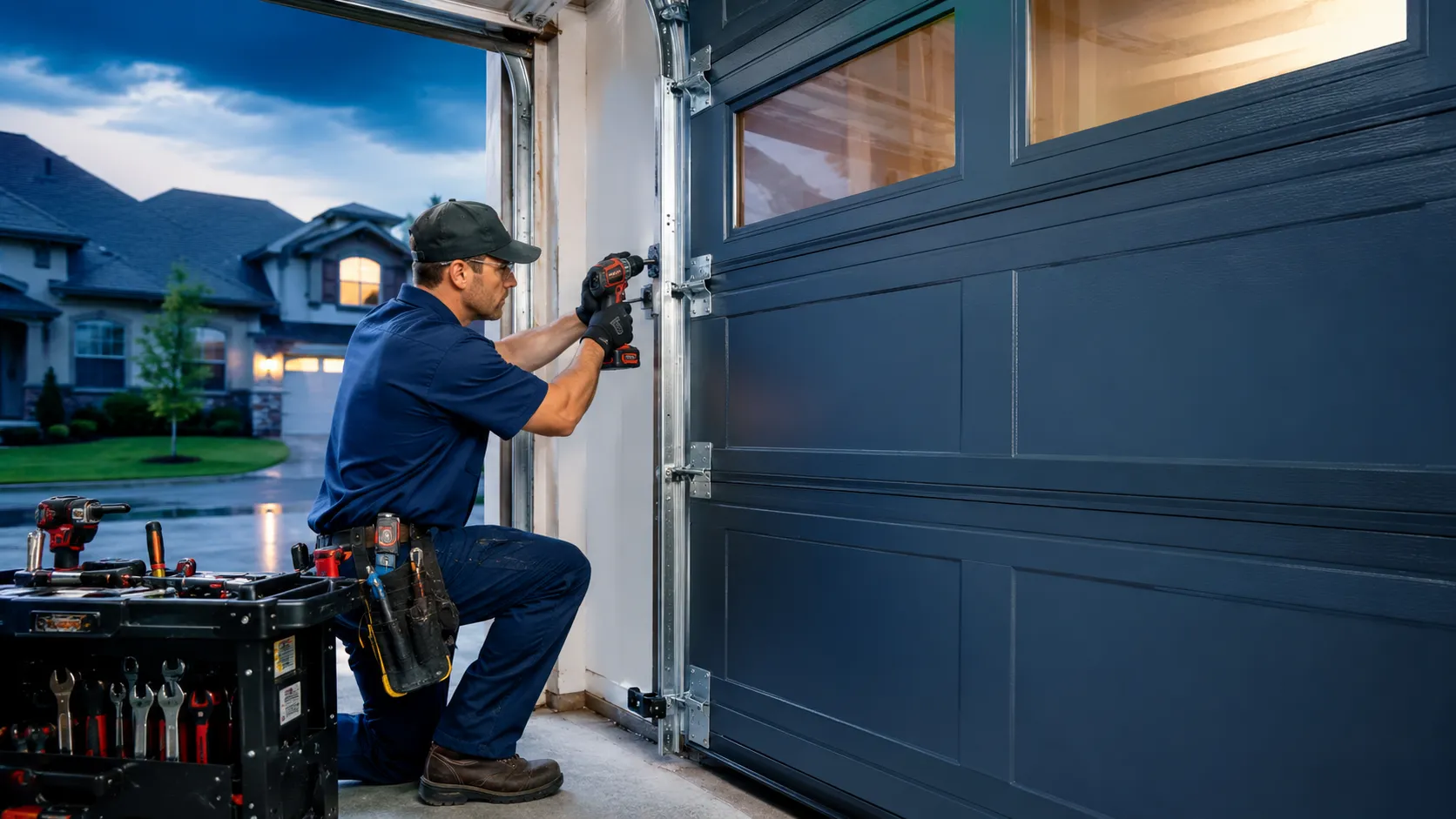
Residential garage door replacement installation with customโ€‘wound torsion springs and nylon rollers

Benefits That Go Beyond the Front of Your House

Yes, a new door boosts curb appealโ€”it's often the first thing buyers notice. But the daily benefits are what you'll appreciate most. Quiet operation means no more grinding or popping that echoes through the house. Energy savings become tangible when you notice the garage stays comfortable without a space heater, and the room above stops swinging 15 degrees between seasons. Modern doors also reduce outside noiseโ€”if you live on a busy street, the difference is immediate.

Then there's security. Old singleโ€‘skin steel doors can be bowed by hand; reinforced models with interior struts and multiโ€‘point locking eliminate that weak point. And because we replace every componentโ€”from the spring shaft to the weather sealโ€”you won't face a surprise repair for a rusty hinge or a frayed cable two years from now. Our customers tell us the single biggest upgrade they feel is the peace of mind of a door that closes solidly, every time, without coaxing.
Still have questions? Read our FAQs โ†’

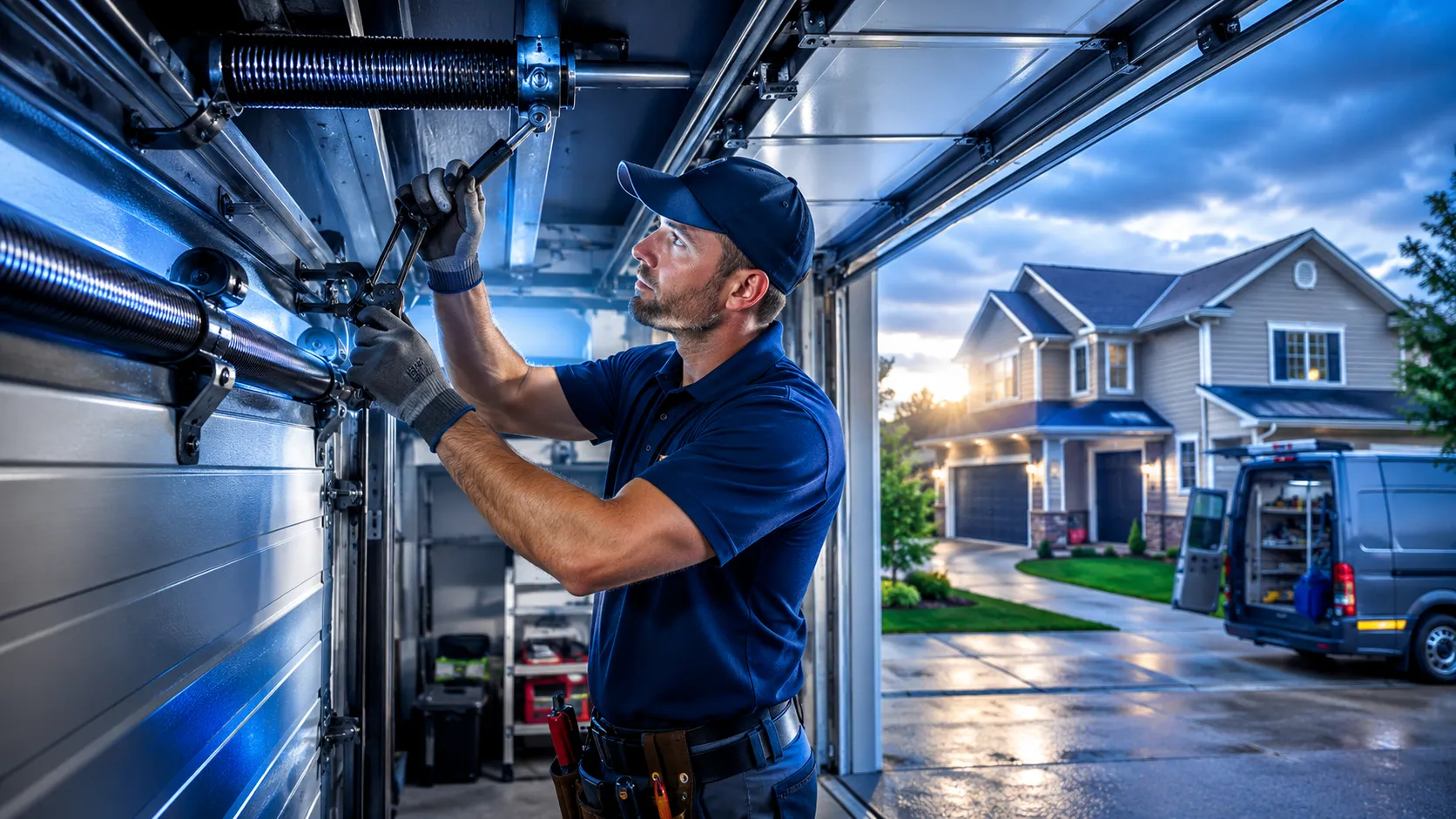
New garage door improving home insulation and noise reduction

Styles That Work With Our Weather, Not Against It

The style you choose has to survive Chattanooga's humidity and sudden storms. Steel doors with a factoryโ€‘applied, UVโ€‘cured finish resist rust and fading better than wood, which swells and needs repainting every few years. Carriageโ€‘house designs in composite or steel capture that timeless look without the maintenance of genuine swingโ€‘out doorsโ€”and they operate as standard sectionals, so you keep the convenience of an opener.

For contemporary homes, aluminum and glass doors flood the garage with daylight, but they require precise track alignment and a midโ€‘shaft opener to handle the weight. We'll help you pick a style that fits your home's architecture and your tolerance for upkeep. And if you're torn between two looks, we can show you actual door samples in person, not just brochure photos.

Meet the team behind the install โ†’

Steel carriage house garage door with durable weatherโ€‘resistant finish

Insulation That Actually Makes a Difference in Your Utility Bill

Not all insulation is equal. Polystyrene panels (like coffee cup foam) slide between steel skins but leave air gaps; they offer modest Rโ€‘6 to Rโ€‘9 and can sag over time. Polyurethane injection bonds to both skins, creating a solid core with Rโ€‘12 to Rโ€‘18 that also stiffens the door. For attached garages, that thermal barrier prevents your HVAC from fighting a giant uninsulated radiator.

The weight difference matters, too. Polyurethane doors are heavier, so they demand higherโ€‘cycle torsion springs and a capable opener. We calculate the door's exact weight and wind the springs accordinglyโ€”skipping this step leads to broken springs within a couple of years. A properly spec'd insulated door will pay for itself in energy savings over its lifetime, and it makes the garage usable as a workshop yearโ€‘round without a space heater.

How we back our work โ†’

Safety Features That Protect Your Family Every Day

A door that doesn't reverse when it hits an obstacle isn't just inconvenientโ€”it's a danger. All doors we install have infrared safety sensors mounted 4โ€“6 inches above the floor that trigger an immediate reversal if the beam is broken. We test this with a 2x4 laid flat, as the UL standard requires. Torsion springs are always fitted with containment cables that run through the core, so if a spring snaps, it stays on the shaft instead of becoming a shrapnel risk.

For older openers that lack autoโ€‘reverse or have a failing logic board, we'll recommend an upgrade with rollingโ€‘code technology that prevents code grabbing. We also verify that manual disconnects work properly so you can open the door in a power outage. After installation, we walk you through a monthly safety test routine that takes two minutesโ€”it's the easiest way to catch a sensor alignment issue before it becomes a problem.

Check if a repair can address your safety concern โ†’

Garage door safety sensor and containment cable test during installation

Energy Efficiency That Goes Beyond the Rโ€‘Value Number

A high Rโ€‘value is only part of the equation. Thermal breaksโ€”a nonโ€‘conductive barrier between the inner and outer steel skinsโ€”stop heat from traveling through the metal itself. Weather seals along the bottom, sides, and top create an airtight envelope. Together, they keep conditioned air in and Chattanooga's pollen and humidity out.

If your garage has living space above or shares a wall with the kitchen, an energyโ€‘efficient garage door can reduce HVAC load by 10โ€“15% according to Department of Energy estimates. We'll calculate the payback period based on your exact door size and exposure, so you aren't guessing. Often, the upgrade from a nonโ€‘insulated to a polyurethaneโ€‘injected door pays for itself in under seven years through lower utility bills alone.

Get a free, noโ€‘pressure energy savings estimate โ†’

When Repairing Your Door Costs More Than Replacing It

The threshold we use with homeowners is simple: if the cumulative repair costs over the last two years exceed half the price of a comparable new door, replacement is usually the smarter financial move. A new door resets the warranty clock and eliminates the next surpriseโ€”like a spring that snaps six months after you replaced the rollers.

There's also a safety cutoff. Doors manufactured before 1993 often lack autoโ€‘reverse mechanisms and pinchโ€‘resistant joints. Even if they still open and close, they're a liability. We'll inspect your door honestly and tell you when a targeted repair will keep it going safely for another few years, and when it's time to stop patching and start fresh. No sales pitchโ€”just the facts.

Explore repair options first โ†’

Technician evaluating a garage door to determine if repair or replacement is more costโ€‘effective

Upgrades Local Homeowners Ask For Most Often

We've installed doors on Signal Mountain slopes, in the heart of North Chattanooga's historic districts, and in the new subdivisions of Ooltewah. The common threads? Quiet beltโ€‘drive openers for attached garages so the nursery doesn't wake up, insulated doors that make a workshop or home gym usable yearโ€‘round, and smart control that lets you check if the door is closed from your phone.

Many homeowners are also taking advantage of doors with highโ€‘lift track conversions to free up ceiling space for storage racks or a car lift. We'll spec the right radius and spring tension for the extra vertical travel so the door doesn't bind. Local knowledge mattersโ€”our team understands how hillside lot drainage affects bottom seals and how Chattanooga's strong afternoon sun accelerates finish fade on certain colors. We'll steer you toward materials that look great and stay that way.

Start with a home evaluation โ†’

We Know the Metro Area โ€” From Cleveland to Lookout Mountain

Garage door replacement throughout Chattanooga metro means we're familiar with Hamilton County codes, Bradley County's wind requirements, and the narrow driveway challenges in older neighborhoods like St. Elmo. We stock common sizes locally, so most replacements don't face weeksโ€‘long lead times, and our crews know which roads to avoid during rush hour so we arrive on time.

Whether you're in East Brainerd, Soddyโ€‘Daisy, Ringgold, or Fort Oglethorpe, the same certified technicians handle your installationโ€”not subcontractors. We bring the door, hardware, and cleanup equipment in one trip. If your project uncovers rotten framing or an undersized header, we have the carpentry experience to fix it before the new door goes up, so you don't have to schedule a second contractor.

Browse all 55+ service areas โ†’

Garage door replacement service truck in a Chattanooga neighborhood

Ready for a Garage Door That Works Like New?

A replacement done right means your new door will balance perfectly, run quietly, and seal out Chattanoogaโ€™s humidity for 15โ€“20 years. Weโ€™ll remove your old system, inspect the framing for hidden rot, and install every componentโ€”tracks, springs, cables, rollers, and sealsโ€”brand new. Youโ€™ll get a detailed, noโ€‘pressure estimate upfront, with a clear breakdown of material and labor, so you can make the best decision for your home. No tactics, just honest expertise from a local team that stands behind every installation.

Licensed & Insured Installers Sameโ€‘Day Consultations Installation Guarantee