
Garage Door Track Repair, Alignment & Off-Track Solutions — Chattanooga, TN
Expert diagnosis and repair for bent, misaligned, or damaged garage door tracks; serving homeowners in Chattanooga, Tennessee and surrounding areas.
Expert Garage Door Track Repair & Alignment — Chattanooga, TN
Fast, Safe Fixes for Bent, Misaligned, or Off-Track Garage Doors
The metal tracks on either side of your garage door are the roadbed for the rollers, guiding the door’s path from closed to open. Even a small bend, twist, or shift in the track can bind the rollers, overload the opener, and cause the door to jam partway — or derail entirely. In Chattanooga, common causes include accidental vehicle bumps, loose mounting brackets from years of vibration, rust-weakened steel, or a sudden spring failure that slams the door off its guides. Chattanooga Garage Doors Pro provides expert garage door track repair that resolves these problems at the source, not just forcing the door back into place. We examine the vertical tracks, horizontal tracks, curved transitions, and flag brackets to restore safe, balanced, and quiet operation for your home.
Our technicians measure track gap, check plumb and level, assess roller play, and verify that the door balances correctly — ensuring the repair holds up long-term. Because track damage often stresses rollers, cables, and hinges, we inspect those as well to prevent future breakdowns. If your door needs more extensive work, we also offer: Garage Door Repair, Garage Door Installation, Garage Door Replacement, Garage Door Roller Repair, Garage Door Cable Repair, Garage Door Opener Repair, and Garage Door Opener Installation.
- Precision Track Straightening
- Laser Alignment & Gap Check
- Off-Track Door Rescue
- Bracket & Support Reinforcement
- Licensed & Insured Team
- Free Safety Inspection & Quote
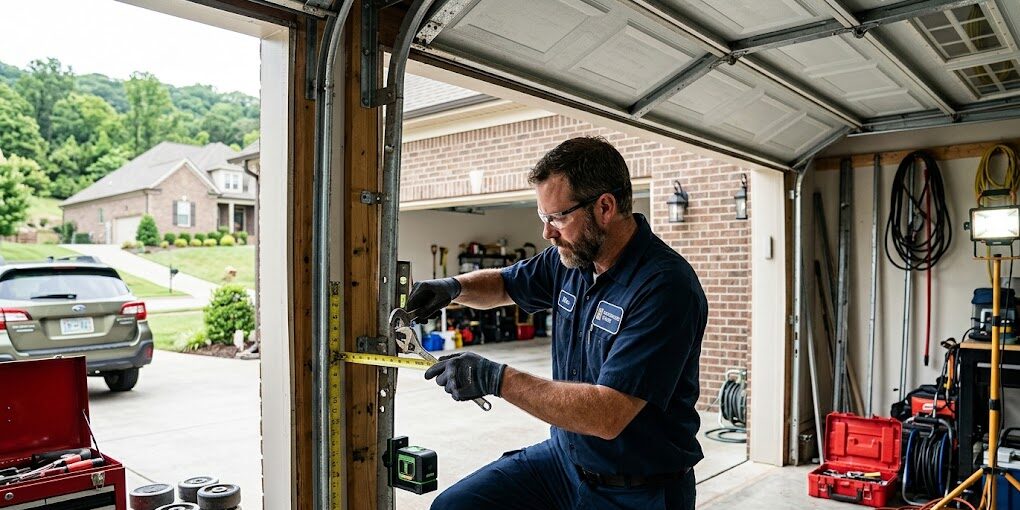
Garage Door Track Diagnosis, Repair & Alignment Solutions
Bent tracks, off-track doors, misaligned vertical tracks, loose hardware, noisy operation, uneven travel — real causes and professional fixes explained.
Garage Door Track Problems: What They Mean & How We Correct Them
The two steel tracks running up the sides and back into your garage do much more than just hold the door in place. They set the exact path every panel follows, keeping a 150‑to‑400‑pound door balanced and moving with fingertip ease. Because the rollers must stay within 1/8 inch of the track web without binding or wobbling, even a seemingly minor bend, bracket shift, or loose bolt can transform a smooth‑cycling door into a noisy, jerky hazard — overworking the opener, chewing through rollers, and risking a full derailment. We don’t just straighten metal; we find the root cause that led to the damage so the repair lasts.
If any of the symptoms below sound familiar, it’s wise to have the entire door system assessed. Track problems rarely happen in isolation — they accelerate wear on rollers, cables, hinges, and even the spring assembly. Our comprehensive garage door repair approach inspects every component from floor seal to operator. Request a free inspection at your home — we serve the entire Chattanooga, TN region.
-
Bent or Damaged Tracks
Vehicle bumps, fallen ladders, or years of vibration can kink the track. You’ll see scrape marks, a visible gap between roller and rail, or the door slowing at one spot. We straighten mild bends with precision tools while preserving the critical curve radius; severely deformed sections get replaced with OEM‑grade steel that matches your door weight.
-
Garage Door Off Track
A roller slipping out of the track — often triggered by a broken spring or impact — leaves the door hanging dangerously. Cables can go slack, and one side may crash down. Never force the door. We safely release spring tension, reset the rollers, realign any bent guides, and verify balance before testing the full cycle, so you don’t face a repeat failure.
-
Misaligned Vertical Tracks
Vertical legs that lean in or out by more than 1/8 inch force the rollers to bind, making the door jerk and overload the opener. In our area, expansive clay soil can shift foundations just enough to pull brackets out of plumb. We re‑square the track with a laser level, shim brackets on solid framing, and tighten every lag — restoring factory alignment.
-
Loose Track Hardware
A rattle you hear every cycle often comes from bracket bolts or track splices working loose. Over time, elongation of the holes lets the track migrate sideways. We retorque all fasteners, replace stripped lags with thicker gauge screws or anchors, and add reinforcement angle where the jamb has softened — locking the track in place for the long haul.
-
Noisy Door Movement
Different sounds tell different stories: dry metal‑on‑metal squealing means tracks or rollers need silicone‑based lubrication (never grease, which attracts grit). A rhythmic thump suggests a roller has a flat spot. Grinding usually indicates the roller is rubbing the track web because the gap is off. We isolate the noise source and fix it, not just mask it.
-
Uneven Door Travel
If the bottom seal drags heavier on one side or you see a twist in the panels as the door moves, the tracks are no longer parallel or the rollers are worn asymmetrically. We measure the gap at multiple points, straighten any bowed sections, check spring balance, and replace roller stems that have developed play — giving you a level, quiet close every time.
Track problems only get worse — and more expensive — the longer they’re ignored. Every repair starts with a no‑cost, no‑obligation inspection that covers the complete door system. We’ll explain exactly what’s happening and give you a fair, upfront estimate.
Schedule Your Free Track Inspection →Expert Bent Garage Door Track Repair & Alignment
Comprehensive bent track repair: precision straightening, section replacement, hardware tightening, and structural reinforcement. Learn how our technicians restore safe, smooth door operation with lasting results.
Bent Garage Door Track Repair
When your garage door hesitates, scrapes, or shakes during operation, a bent track is often the silent culprit. The vertical and horizontal tracks that guide your door rely on perfect alignment to distribute its weight evenly. Even a small deflection—whether from an accidental vehicle bump, a heavy wind gust, a failed roller, or simply years of thermal expansion and contraction—can force the rollers to bind. Left uncorrected, that extra friction accelerates roller and hinge wear, strains the opener, and in severe cases pulls the cables off the drums, creating a genuine safety hazard. We correct this at the source, not by forcing the door to run on a damaged track, but by restoring the track’s original geometry or replacing what can’t be safely saved.
Our approach starts with a full inspection: we measure the gap between track and door, check for loose mounting hardware, evaluate the condition of the rollers and bearings, and assess the entire load path from the flag bracket to the ceiling hangers. This tells us whether a bent section can be cold‑straightened without compromising the metal’s structural integrity—something that depends on the severity of the crease and the gauge of the steel. When the damage is too deep or rust has taken hold, a precise section replacement is the only safe, long‑term answer. Throughout the process, we tighten and reinforce every bracket and bolt so the repair lasts. Because bent tracks rarely happen in isolation, understanding your full system is essential.
Track problems often go hand‑in‑hand with roller damage; see our dedicated Garage Door Roller Repair for a complete solution. For a full system evaluation beyond just the tracks, explore our Garage Door Repair services, and learn how every job is backed by our Service Guarantee.
-
Track Straightening
Using precision straightening tools and a calibrated straightedge, we cold‑work the metal back to its factory profile—only when the steel retains full strength and no cracks are visible. The track is then checked for parallel alignment so rollers glide without binding, eliminating drag and protecting the opener from overload.
-
Section Replacement
When a track is kinked, deeply creased, or has metal fatigue from repeated stress, straightening isn’t safe. We replace only the affected segment—vertical, horizontal, or the curved transition—matching the exact gauge and profile of your system. All joints are dressed smooth so rollers never bump or catch between old and new.
-
Hardware Tightening
Loose lag screws, bracket bolts, and track splices allow the track to shift under the door’s weight—a common source of intermittent scraping and jerky movement. We torque every fastener to manufacturer specs, replace stripped hardware, and add lock washers or thread locker where needed so the track stays solidly anchored to the wall and ceiling.
-
Structural Reinforcement
For tracks that flex under heavy doors or in high‑cycle environments, we add supplementary angle brackets, backing plates, or kickers that distribute the load over a wider area. This reinforcement resists the constant vibration of daily use and prevents the gradual bending that often returns after a simple straightening job.
A bent track is more than a noise—it’s a safety and reliability concern. Our certified technicians diagnose the root cause and provide a permanent fix that restores smooth, balanced movement. Contact us today for a free inspection and estimate.
Schedule Track Repair →Precision Garage Door Track Alignment Repair & Calibration
Expert track alignment repair: vertical plumb adjustment, horizontal slope correction, roller path restoration, and full-system balance tuning. Restore smooth, silent operation with lasting precision.
Garage Door Track Alignment Repair
Track alignment is the foundation of every smooth‑operating garage door. When vertical tracks are not exactly plumb, horizontal tracks lose their gentle downward pitch, or the curved transition radius tightens from impact, the entire weight of the door begins to fight against the rollers and the opener. You might hear grinding, see the door hesitate halfway, or notice one side riding noticeably higher than the other. In many homes, gradual foundation settlement, constant temperature swings, or a single accidental bump from a vehicle can push tracks just enough to begin a cascade of problems—accelerated roller wear, cable slack on one side, and eventually, a dangerous imbalance that puts unnecessary strain on the springs. We treat alignment as a precision discipline, not a quick eyeball adjustment, because fractions of an inch matter when steel rollers travel the same path thousands of times a year.
Our process starts by mapping the complete track geometry: we measure plumb with a calibrated laser, check horizontal track pitch with a digital inclinometer, and verify that the gap between the track and door edge stays within manufacturer tolerances at every point. These measurements tell us whether we’re dealing with a single loosened bracket, a section that’s shifted after a cable snap, or a wider structural issue. We then bring the entire system back into spec—repositioning brackets, cold‑straightening minor bends when safe, and fine‑tuning the back‑hang so the horizontal tracks support the door without flexing. Because alignment directly influences spring tension and cable length, we always re‑verify balance and adjust tension as the final step. Whether you’re starting fresh with a new Garage Door Installation, considering a full Garage Door Replacement, or simply curious about our standards, you can learn more About Us and see why we refuse to cut corners on alignment.
-
Vertical Track Alignment
We set each vertical track absolutely plumb using a self‑leveling laser, then tighten the jamb brackets in sequence from bottom to top. This eliminates the side‑to‑side drag that wears rollers and forces the opener to work harder. If the wall itself has shifted, we shim behind the brackets to achieve perfect alignment without stressing the track metal.
-
Horizontal Track Adjustment
The horizontal tracks must maintain a very slight pitch toward the back of the garage so the door can rest in the open position without drifting. Using a digital angle gauge, we adjust the back‑hang and punch‑angle brackets to set the correct slope. We also check the curved transition for flat spots that can cause rollers to jump—this is especially critical on high‑lift and commercial track systems.
-
Roller Path Correction
A perfectly aligned track means nothing if the roller path itself is obstructed. We clear packed debris from the track grooves, file down minor burrs, and verify that track joints are dressed smooth so rollers don’t catch. We also measure the track opening width at multiple points to ensure it hasn’t spread or pinched—common on older doors where original brackets have loosened over time.
-
Balance Optimization
After realignment, we perform a manual balance test: the door should stay put when lifted halfway and not creep when released. If it moves, the spring torque no longer matches the new geometry. We adjust the torsion springs accordingly—this is the final step that ensures your opener isn’t compensating for an imbalanced door, extending its motor life and reducing cable wear.
Misaligned tracks compromise safety and shorten the life of every moving part. Let our certified technicians restore factory‑spec alignment with tools and methods that produce a smooth, quiet, and lasting result. Call for a free alignment inspection and estimate.
Schedule Alignment Repair →Precision Garage Door Track Repair Process: Inspection to Safety Check
Step-by-step garage door track repair process: thorough inspection, alignment measurement with laser, damage assessment, cold straightening or section replacement, roller testing, and final safety verification. Learn how we restore smooth, balanced door operation.
Our Garage Door Track Repair Process
When a garage door scrapes, hesitates, or shakes, a bent or misaligned track is rarely the only thing that’s wrong—it’s the first domino. We approach track repair as a diagnostic discipline, not a guess. Instead of simply tightening a bracket or forcing a roller back into place, we map the entire track geometry, identify hidden damage, and correct the root cause. This means checking not just the visible bend but also the floor level, the mounting hardware, and the transition curve where stress concentrates. By the time we’re finished, your door should move so quietly and evenly that you’ll forget there was ever a problem. Whether it’s a residential door that’s seen years of weather or a commercial door that takes a daily pounding, this process keeps it running safely for the long term.
Every step is backed by the same care we put into our full garage door services—from new installations to spring replacements—and it’s all covered by our service guarantee. If you’re seeing early warning signs like a grinding noise or a door that’s harder to open manually, contact us for a free inspection and we’ll explain exactly what’s happening.
-
01
Full Track Inspection
We begin by running the door manually, feeling for resistance and listening for changes in sound. Then we examine every inch of both tracks, focusing on the transition curve where damage is most common. We check for vertical scratches inside the track groove—a telltale sign of roller misalignment—and look for cracks radiating from mounting holes that indicate metal fatigue. Floor level matters too: if the concrete has settled, the track brackets may be compensating. All lag bolts and track bolts are torqued to spec because loose hardware can mimic a bent track under load.
-
02
Alignment Measurement
We measure plumb on both vertical tracks with a self-leveling laser, targeting within 1/16 inch over the full height. Any deviation forces the door to crab sideways and wears rollers unevenly. A digital inclinometer checks that horizontal tracks pitch slightly toward the back of the garage so the door stays stable when open. Using a calibrated gauge, we verify the track-to-door gap at multiple points to ensure rollers aren’t pinched or floating. These numbers give us a precise adjustment blueprint.
-
03
Damage Assessment
Not every bend can be safely straightened. We evaluate severity based on metal thickness, the presence of sharp creases, and any sign of cracking. A shallow, gradual bend can often be cold-worked back, but a sharp kink on the back of the track has already compromised the steel’s structural memory. We also assess whether the mounting points are still solid—stripped lag screws in a drywall anchor may need a backing plate before the track can be reattached. This honest evaluation prevents future failures.
-
04
Straightening or Replacement
For salvageable sections, we use track anvils and leverage bars to cold-straighten the steel without heat—heat would destroy the galvanized finish and weaken the metal. The repair area is then dressed smooth so the roller passes without a bump. When replacement is necessary, we splice in a new track segment that matches the original gauge, radius, and slot profile. All joints are aligned with splice plates and secured, ensuring the roller never catches an edge. If the entire track is outdated or repeatedly bent, we discuss upgrading to a heavier gauge for lasting durability.
-
05
Roller Testing
We manually roll each wheel through the entire track path, first by hand and then with the opener cycling slowly. We listen for gravelly sounds that indicate worn bearings and feel for spots where the roller binds or rubs. Excessive side-to-side play suggests a bent stem or loose hinge. If we find damaged rollers, we recommend replacing them immediately because a rough-rolling wheel quickly wears a newly repaired track groove. Nylon-tyred rollers are checked for flat spots that cause vibration.
-
06
Final Safety Check
We cycle the door fully several times, watching for wobble or hesitation. At the halfway point, we disconnect the opener and manually lift the door to verify balance—it must stay put when released. The auto-reverse is tested by blocking the photo-eye and by applying gentle resistance; it must reverse immediately. Cable tension is checked for even spooling, and the emergency release must operate smoothly. Only when every check passes do we consider the repair complete, and we leave a written report of the findings for your records.
A bent track is never just an inconvenience. It’s a safety liability and a wear multiplier for every moving part of your system. Our structured, no-shortcut process restores the precision your door was designed for. Schedule an inspection today and experience the difference that real alignment makes.
Schedule Your Repair →Local Garage Door Track Repair Service Areas – Chattanooga & North Georgia
Expert garage door track straightening, alignment, and replacement across Tennessee and Georgia communities. Fast, reliable response for residential and commercial doors throughout the metro area.
Garage Door Track Repair Across Chattanooga Metro Area
A bent track doesn’t wait for convenient timing, and your location shouldn’t slow down the fix. We cover the entire Chattanooga metro, including communities on both sides of the Tennessee‑Georgia line, from the ridge tops of Signal Mountain down to the valley floors of Chickamauga. Our technicians live and work in these neighborhoods—they know which older homes have original single‑thickness track that tends to rust at the bottom brackets, where heavy clay soil causes foundation shifts that pull vertical rails out of plumb, and how the lake‑effect humidity in lakeside communities accelerates roller corrosion. That local experience means we arrive with the right replacement track gauge, the right hardware, and a realistic timeline for your repair. Whether you’re in a historic district with tight garage clearances or a rural property with a long driveway, our service area coverage is built around getting a skilled technician to your door quickly, with a fully stocked vehicle ready to straighten, replace, or reinforce on the spot.
Tennessee Areas
- Chattanooga – Track repair & full door services
- Collegedale residential garage door specialists
- Dunlap track alignment & spring work
- East Ridge door & track inspections
- Jasper garage door replacement & repair
- Kimball bent track straightening
- Lakesite door system evaluations
- Lookout Mountain custom track solutions
- Monteagle residential & commercial doors
- New Hope track repair & roller service
- Orme track hardware tightening
- Powells Crossroads door realignment
- Red Bank track section replacement
- Ridgeside garage door maintenance
- Signal Mountain track & opener repair
- Soddy‑Daisy structural track reinforcement
- South Pittsburg door balancing & tracks
- Walden bent track inspection
- Whitwell garage door track specialists
Georgia Areas
Additional Communities
- Apison track & spring maintenance
- Ooltewah door realignment services
- Harrison garage door track upgrades
- Sale Creek emergency track repair
- Falling Water door & opener diagnostics
- Chattanooga Valley residential tracks
- Fairview GA track straightening
- Indian Springs door system evaluations
- Lakeview GA bent track solutions
- Lone Oak garage door hardware repair
Not sure if we cover your specific address? Our service area extends beyond these listed communities—from rural hollows to the urban core. Give us a quick description of your track issue and location, and we’ll confirm availability and estimated arrival time at no charge.
Get Your Free Estimate →Why Homeowners Trust Us for Bent Track Repair
Laser‑precision alignment, cold‑straightening without heat damage, same‑day local service, photo‑documented inspections, OEM‑grade parts, and a no‑questions service guarantee—all from Chattanooga's experienced track repair team.
Why Choose Chattanooga Garage Doors Pro
There’s no shortage of companies willing to tighten a few bolts and call your track repaired. But bent tracks require a much deeper level of attention—one that distinguishes a quick, short‑lived fix from a permanent solution. We bring to your garage a combination of precision measurement tools, cold‑straightening experience, and an unwillingness to compromise on safety that simply isn’t common. Our technicians carry laser plumb devices, digital inclinometers, and track anvils that let us restore track geometry to within a fraction of its factory specification. We stock multiple gauges of track material on our service vehicles because every door—from a lightweight aluminum residential door to a heavy commercial steel door—demands different thicknesses. And we back every repair with a guarantee that’s only possible because we’ve already done the work correctly. Here are six reasons homeowners throughout the region trust us with their garages.
-
Precision Track Alignment Experts
We don’t eyeball track alignment—we measure it with a self‑leveling crosshair laser and a digital inclinometer. Vertical tracks must be plumb within 1/16 inch over their entire height; horizontal tracks must maintain a consistent slight pitch toward the back of the garage. Even a small deviation forces the rollers to scrub against the track wall, wearing down both roller bearings and track metal thousands of times a year. After we adjust, we manually cycle the door and check for side‑to‑side drift at the halfway point. This is the same standard we apply to brand‑new installations, and it’s why our repairs feel like new doors.
-
Durable Repair Solutions
A quick patch—like forcing a bent track back with a pry bar alone—often fails within months because the metal has already been weakened at the crease. We cold‑straighten using track anvils that support the profile from the inside, working the steel gradually so we don’t create micro‑cracks. When the bend is too severe, we replace that section entirely, using track of the same gauge and profile, joined with splice plates rather than just butted together. For tracks that have pulled away from the wall due to stripped lag screws, we install backing plates or sleeve anchors that distribute the load into solid framing. The goal is a repair that doesn’t just look straight but stays straight under the cyclic load of a door opening and closing twice a day, year after year.
-
Fast Local Response
A bent track can quickly turn into a door that won’t open or, worse, a door that falls off its rails. We’re not a national call center dispatching subcontractors—our technicians live here and cover a tight radius. That means when you call in the morning with a door stuck halfway, we can often have a truck in your driveway the same day, stocked with the most common track sizes, brackets, and rollers. For commercial doors that need to stay operational for business hours, we prioritize early‑morning or late‑afternoon slots. And because we know the common track issues in older homes around Lookout Mountain or the lake‑effect corrosion problems near Chickamauga, we don’t waste time diagnosing what we already understand.
-
Honest Inspection Reports
You shouldn’t have to take our word for it when we say a track is bent beyond repair. That’s why we document every inspection with clear, labeled photos: the bent section, the laser measurement showing deviation, and the condition of the mounting hardware. We explain what we’re seeing in plain terms—whether the track can be safely straightened, which section needs replacing, and whether any associated problems like worn rollers or cable slack need attention. We’ll tell you if your existing tracks are fine but your spring tension is causing the imbalance that feels like a track issue. There’s no pressure to replace components that don’t need it, and you’ll have a written estimate before any work begins so you can make an informed decision.
-
High‑Quality Replacement Parts
When a track section must be replaced, we don’t install the lightest‑gauge material available at a discount. We match or exceed the original spec, typically using 14‑ or 16‑gauge steel for residential doors and heavier for commercial applications. We stock galvanized track profiles that resist the humidity common in our region, and we only use splice plates—never just butt joints—so the roller transition is perfectly smooth. Rollers are upgraded to sealed‑bearing nylon when appropriate, reducing future friction and noise. These are the same parts we install on full door replacements, and they carry manufacturer warranties that we stand behind.
-
Service Guarantee
We guarantee our track repairs for a full year against defects in workmanship. If a straightened track shifts or a replaced section develops an alignment issue during that period, we return and correct it at no charge. This isn’t a marketing promise—it’s a practical reflection of the fact that when tracks are properly aligned and hardware is properly torqued, they stay that way. We also cover the labor and parts for any failure directly related to our work. Our guarantee is simple, clear, and outlined in writing on every invoice. Read the full guarantee details.
A bent track doesn't fix itself, and waiting only makes it worse. Call today for a free inspection and honest estimate from the local team that treats your garage door like it's our own.
Get Your Free Estimate →Garage Door Track Repair FAQs – Straight Answers from Technicians
What really causes tracks to bend, when straightening is safe vs. replacement, why doors jump off track, honest cost factors, emergency response steps, and realistic repair timelines. Get the facts before you book.
Frequently Asked Questions
Straight answers from garage door technicians about track damage, repair options, safety, and what to expect.
-
The most common culprit is a vehicle bump—even a slow tap from a car bumper can push the bottom vertical track inward enough to pinch the rollers. Heavy wind loads on a partially open door can torque the horizontal tracks, and repeated vibration from an unbalanced door or worn rollers slowly deforms the metal. In older homes, rust weakens the track’s lower section where moisture collects, and foundation settlement can pull the jamb brackets out of alignment. Less obvious causes include a broken spring that dumps the door’s weight onto one side, or an opener forcing the door when it’s already binding. Recognizing the early signs—scraping sounds, hesitation at a specific point, or a visible gap between the roller and track—can prevent a minor bend from turning into a full derailment.
-
Many bends can be cold‑straightened safely—but the decision isn’t just about appearance. We use track anvils and leverage bars to work the steel back to its original profile without heat, which would destroy the galvanized coating and weaken the metal. If the bend is shallow and the steel hasn’t creased or cracked, straightening restores full function. However, a sharp kink, especially on the back web of the track, has already compromised the metal’s structural memory; straightening it might leave micro‑fractures that will spread over time. In those cases, replacing just the damaged vertical or horizontal section is the only long‑term answer. We’ll always explain which option is safer and more cost‑effective after a hands‑on inspection—and we never straighten a track that we wouldn’t trust on our own garage.
-
A door jumps its tracks when something forces the rollers to climb out of the channel. Usually that starts with a bent vertical track that narrows the gap until the roller stalls, then the opener keeps pulling and the door tilts—popping the opposite roller out too. Worn or broken rollers with too much lateral play can also drift out, especially if the track is slightly spread. Impact damage (like hitting the door with a lawn tractor) can jar the bottom roller loose instantly. Once a single roller leaves the track, the door becomes dangerously unbalanced: the cables may slacken on one side, and the entire weight can shift unexpectedly. If you find your door off track, do not operate it manually or with the opener—the door can fall. Call for professional realignment right away, because forcing it back on can bend the track further or snap a cable under tension.
-
Track repair costs vary based on the extent of the damage and the gauge of metal required, but a straightforward straightening of one section is typically one of the more affordable garage door repairs—often completed quickly without parts. Section replacement adds the cost of the track segment and splice hardware, but still usually costs less than a full door replacement. The real expense comes from ignoring the problem: a bent track that goes uncorrected accelerates roller wear, strains the opener gear, and can lead to a snapped cable or bent hinges, multiplying the total bill. We provide a free, itemized inspection report with photos before any work begins, so you can see exactly what needs attention and make an informed decision without pressure. There are never hidden fees—the price we quote is the price you pay.
-
Absolutely. A door that’s come off its tracks is a serious safety hazard—it can collapse without warning, especially if the cables are slack or the springs are still under tension. We treat these as emergency calls and prioritize getting a technician to you as quickly as possible, often within the same day. Our first step is always to secure the door so it can’t fall, then we assess whether the track can be repositioned or if a section needs to be replaced. We carry common track sizes and rollers on our service vehicles, so many emergency repairs are completed on the first visit. If you have an off‑track door right now, don’t try to push it back up or force the rollers in—cut power to the opener, keep people and pets away, and call us immediately.
-
Most track repairs are completed in 1 to 3 hours of on‑site work. A straightforward straightening of a single vertical section, where the hardware is still solid, might take under an hour. Replacing a damaged horizontal track with a new section, including dressing the splice and verifying alignment, typically adds another hour or so. If the repair requires addressing associated damage—like bent rollers, stripped mounting holes that need backing plates, or cables that have jumped the drum—the job may extend to 2–3 hours total. We always give you a realistic time estimate after our inspection, and we don’t rush: a proper alignment adjustment takes the time it takes, because a hurried job won’t stay aligned for long. For complex commercial doors with heavy‑gauge track, we’ll schedule accordingly and keep you informed throughout.
Still have questions? Explore our comprehensive full FAQ page or contact us directly for personalized assistance.
Ask a Technician →Bent Garage Door Track Repair Chattanooga – Precision Alignment & Safety
Expert bent track straightening, garage door alignment correction, off-track emergency repair, structural track reinforcement, and full residential/commercial track service. Learn how our certified technicians restore smooth, safe operation with laser-guided precision and a true service guarantee.
Expert Garage Door Track Repair in Chattanooga TN
Our Track Services
- Bent Track Straightening & Repair
- Laser‑Guided Door Alignment
- Emergency Off‑Track Restoration
- Structural Track Reinforcement
- Residential & Commercial Tracks
- Same‑Day Emergency Response
A bent garage door track isn’t just a minor noise—it’s the start of a cascade that can damage rollers, cables, hinges, and even the opener motor. At Chattanooga Garage Doors Pro, we don’t just hammer a track back into shape. Using laser plumb tools and digital inclinometers, we restore the original factory geometry so the door rides smoothly and evenly across every cycle. Whether your vertical track took a bump from a car, the horizontal section twisted from wind, or an older track is creeping out of alignment from years of vibration, our certified technicians bring both the diagnostic tools and the cold‑straightening skill to save you a full replacement. We work on every gauge and profile—from lightweight residential doors to heavy commercial steel—and we’ll always show you photos and measurements before we touch anything, so you know exactly what’s happening.
A track that’s even a fraction of an inch out of plumb forces the opener to work harder, wears roller bearings unevenly, and can snap a cable without warning. That’s why we treat every repair as a full system check: we measure alignment, torque every bolt to specification, and test the door’s balance before we leave. In emergencies—like a door that’s jumped its tracks and is hanging dangerously—we secure the door first, then get to work. All work comes with an honest, itemized estimate and our one‑year guarantee. If you’re hearing scraping, seeing gaps between the roller and track, or noticing the door shudders on the way up, don’t wait for the bill to multiply. A free inspection today can prevent a major failure tomorrow.
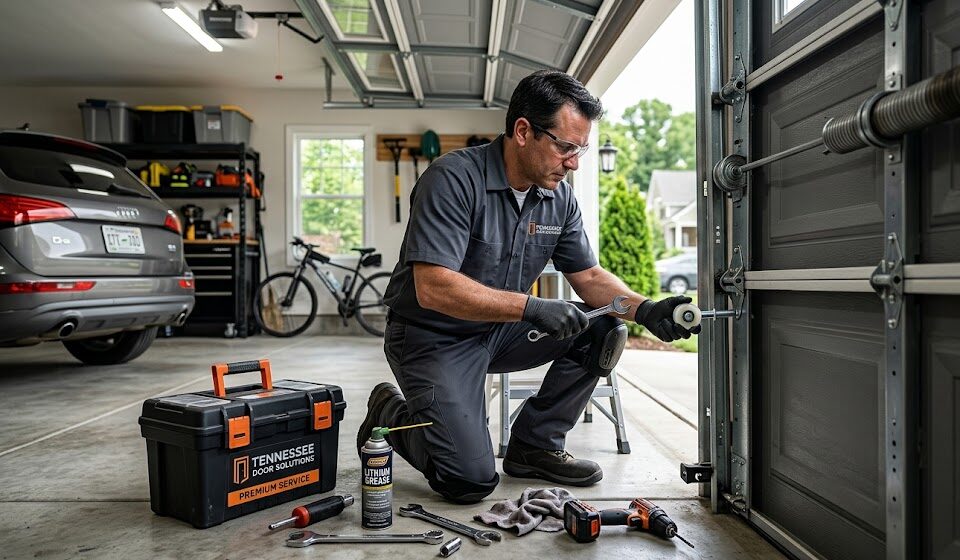
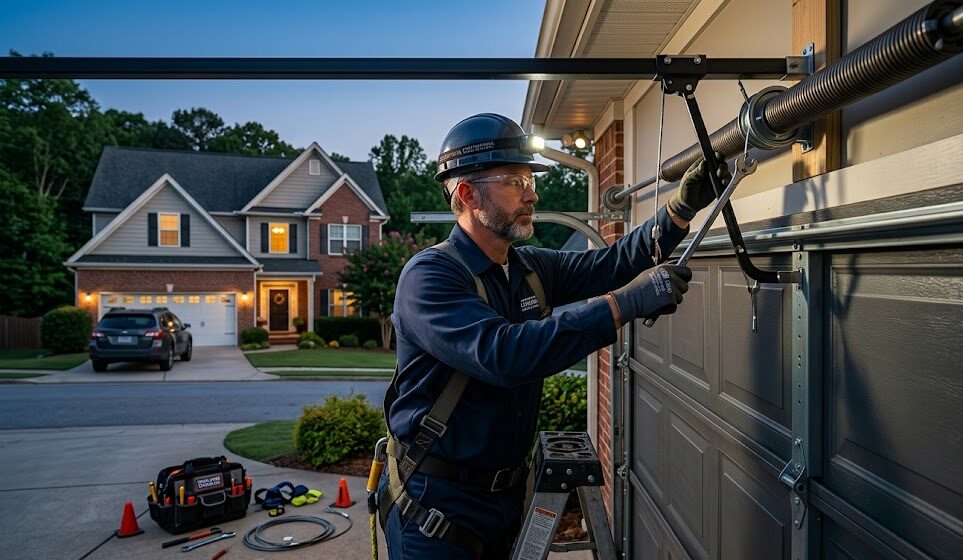
A bent track only gets worse with time. Call today for a free, no‑pressure inspection and a written estimate from Chattanooga's track repair experts.
Get Your Free Estimate →Schedule Your Garage Door Track Repair – Free Estimate & Fast Service
Don't let a bent track cause further damage. Book your professional track repair, alignment fix, or emergency off-track service today. Licensed technicians, same‑day response, and a satisfaction guarantee.
Book Your Garage Door Track Repair Today
A bent track doesn't wait, and neither should you. Every time your door opens, that misalignment is grinding down rollers, straining cables, and forcing the opener to work against resistance it wasn't designed for. Ignoring it risks a sudden derailment—an event that can leave your garage open, your vehicle trapped, and your family at risk. At Chattanooga Garage Doors Pro, we respond fast, diagnose with precision, and repair with the durable, cold‑straightening or sectional replacement method that the situation demands. No pressure, no unnecessary upsells—just a clear, photo‑documented assessment and a written estimate before any work begins. Call now to secure your free inspection and get your door back to moving smoothly and safely.