Garage Door Making Loud Noise: Causes and Fixes
A homeowner in Chattanooga TN once called for help early in the morning because their garage door started making a loud grinding sound every time it opened. The noise was so sharp that it could be heard inside the house. At first, they ignored it, but within a week, the door stopped working properly.
This is a very common situation in residential areas across Chattanooga TN, especially in older garage systems that have not been serviced regularly.
When a garage door making loud noise issue starts, it is usually a warning sign. The system is telling you that something is wearing out, misaligned, or damaged. Ignoring it often leads to expensive repairs or complete system failure.
In this guide, we will break down every cause, simple troubleshooting steps, and when you should call a professional for garage door repair Chattanooga TN services.
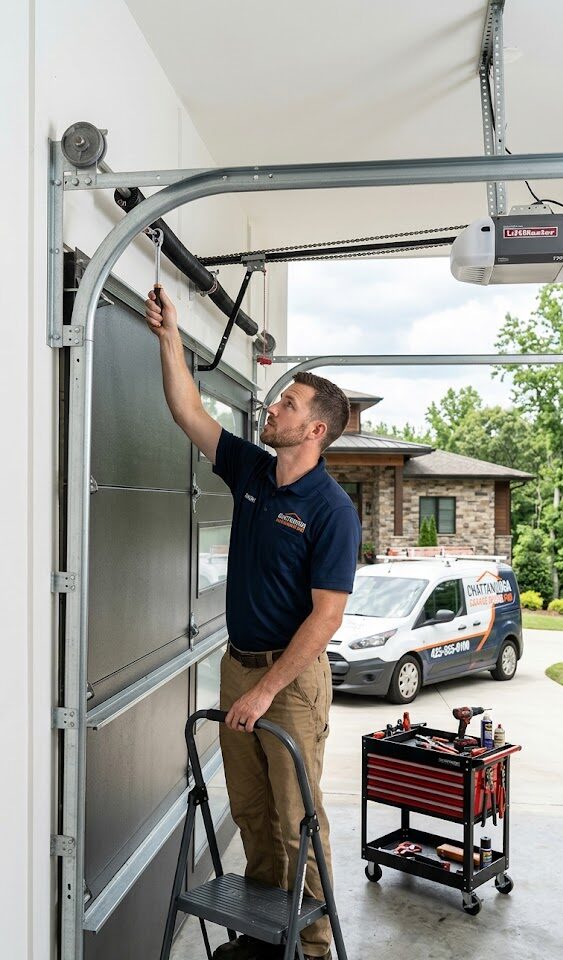
Garage Door Roller Noise Issues
One of the most common causes of a garage door making loud noise is roller failure. When rollers wear out, become dirty, or fall out of alignment, the door produces grinding, squeaking, or banging sounds that signal the need for professional attention.
Worn Rollers
Old steel rollers create a loud grinding or scraping sound when moving along the track. Over time, they lose smooth rotation and develop flat spots that cause friction and noise.
- Grinding or scraping sound
- Jerky door movement
- Visible wear on roller surfaces
Dry or Dirty Rollers
Dust, rust, and debris accumulate on rollers over time, increasing friction and causing squeaking noises. Without proper lubrication, the rollers seize and create a high-pitched squeal during operation.
- Squeaking or squealing sounds
- Visible dirt or rust on rollers
- Door moves sluggishly
Misaligned Rollers
When rollers move unevenly, they hit the track edges and create banging sounds. Misalignment often results from loose brackets, bent tracks, or impact damage that shifts the roller position.
- Banging or clanking sounds
- Door shifts sideways during operation
- Visible gap between rollers and tracks
Fix Approach
Technicians often replace steel rollers with nylon rollers for quieter operation and smoother movement. Nylon rollers are designed to reduce friction, minimize noise, and extend the life of your garage door system.
Why Your Garage Door Making Loud Noise Happens
Learn why your garage door is making loud noise — common causes include worn rollers, dry parts, loose hardware, damaged tracks, faulty openers, and broken springs in Chattanooga TN.
Why Your Garage Door Making Loud Noise Happens
A noisy garage door is not normal. It usually indicates friction, damage, or lack of maintenance.
Common reasons include:
- Worn rollers creating friction
- Dry or unlubricated moving parts
- Loose hardware vibrating during movement
- Damaged garage door tracks
- Faulty opener motor strain
- Broken springs under stress
In Chattanooga TN, humidity and temperature changes often increase metal expansion and contraction, making noise issues more frequent.
A garage door making loud noise should always be treated as an early warning, not just an annoyance.
Garage Door Opener Noise Problems
Sometimes the noise is not from the door itself but from the opener system. A garage door making loud noise from the opener should be inspected immediately to avoid motor failure and costly repairs.
Motor Strain
A struggling motor creates humming or grinding sounds. This often indicates that the motor is working harder than it should due to resistance from worn components or an unbalanced door.
- Humming or buzzing sound
- Door moves slowly
- Motor overheating
Worn Gear System
Plastic gears inside the opener wear out over time and produce loud mechanical noise. This is a common issue in older openers that have seen years of regular use.
- Grinding or crunching sounds
- Gear slipping or skipping
- Door stops mid-cycle
Chain or Belt Issues
Loose chains or belts cause rattling during operation. As they stretch over time, they can begin to slap against the rail or skip teeth, creating a loud clattering sound.
- Rattling or slapping sounds
- Visible sagging chain or belt
- Door operation feels jerky
Lack of Lubrication
Dry opener components increase vibration and sound. Without proper lubrication, metal parts grind against each other, creating squeaks, squeals, and general operational noise.
- Squeaking or squealing sounds
- Increased vibration felt on door
- Components show visible wear
A garage door making loud noise from the opener should be inspected immediately to avoid motor failure. Early diagnosis prevents costly repairs and extends the life of your system.
Garage Door Track Problems Causing Noise
Learn how loose hardware, bent tracks, misalignment, and obstructions cause garage door noise. Expert track repair in Chattanooga TN.
Garage Door Track Problems Causing Noise
If your garage door makes loud banging or metal-on-metal sounds, the issue may be in the track system.
Loose Hardware
Bolts and brackets loosen over time, causing vibration noise during movement.
Bent Tracks
A bent track forces rollers to scrape instead of roll smoothly.
Misalignment
Even a small shift in track position can create loud grinding sounds.
Obstructions in Tracks
Small objects like stones or debris can block movement.
This type of garage door making loud noise often leads to full garage door track problems if ignored. Learn more about track-related issues →
Professional Repair for Noisy Garage Doors
Learn why professional garage door repair is critical in Chattanooga TN. Accurate diagnosis, safe repairs, and local expertise for humid, seasonal conditions.
Professional Repair for Noisy Garage Doors
A garage door making loud noise is often a sign of deeper mechanical issues.
Why Professionals Are Needed
- Accurate diagnosis of hidden damage
- Safe handling of high-tension parts
- Proper track realignment
- Roller and spring replacement
- Long-term performance restoration
Local Chattanooga TN Factors
- Humid weather causes rust buildup
- Seasonal temperature changes affect metal parts
- High residential usage increases wear
Ignoring noise often leads to emergency garage door repair situations.
Broken Springs or Cables
A major cause of loud noise in garage doors is spring failure. Learn the signs of broken springs and cable issues, and understand why professional repair is essential for safety.
Broken Springs or Cables
A major cause of loud noise in garage doors is spring failure.
Signs of Broken Springs
- Loud "bang" sound
- Door feels extremely heavy
- Uneven lifting
Cable Issues
- Snapping sound
- Loose hanging cable
- Door tilt during movement
When springs or cables fail, the system becomes unsafe. This type of garage door making loud noise requires immediate professional attention.
Never attempt spring repair yourself. High tension systems can cause serious injury.
Garage Door Troubleshooting for Noise Problems
Homeowners can safely perform basic checks to identify the source of a garage door making loud noise. Follow these steps to diagnose the issue before deciding if professional help is needed.
Listen for Source
Identify whether noise is from rollers, tracks, or opener. Stand in different positions while the door operates to pinpoint the exact location of the sound.
Visual Inspection
Look for:
- Loose bolts
- Rust
- Misalignment
Lubrication Check
Apply safe garage door lubricant to rollers and hinges. Use a silicone-based or lithium-based lubricant — never grease or WD-40 on moving parts.
Check Opener Function
Test if noise happens during motor start or movement. This helps determine if the problem is in the motor, gears, or chain/belt system.
Observe Door Movement
Watch for shaking or uneven motion. A door that moves erratically often indicates track issues, worn rollers, or spring problems.
When NOT to DIY
- Broken springs
- Bent tracks
- Cable issues
At this point, contact garage door repair Chattanooga TN professionals.
Need Garage Door Repair in Chattanooga TN?
If your garage door making loud noise is getting worse, do not ignore it. What starts as a small noise can quickly turn into a full system failure.
We serve all Chattanooga TN neighborhoods and surrounding communities with fast response and reliable service.
Preventing Garage Door Making Loud Noise
Learn how to prevent garage door noise with essential maintenance tips and early warning signs. Protect your system from costly repairs in Chattanooga TN.
Preventing Garage Door Making Loud Noise
Prevention is more affordable than repair.
Maintenance Tips
- Lubricate every 3–6 months
- Tighten loose bolts
- Replace worn rollers early
- Inspect tracks regularly
- Schedule yearly professional maintenance
Early Warning Signs
- Squeaking sounds
- Slow movement
- Vibrations during opening
Preventive care reduces risk of garage door track problems and motor failure.