Garage Door Maintenance Checklist for Tennessee Homeowners
A garage door maintenance checklist is one of the simplest ways Tennessee homeowners can avoid expensive repairs and unexpected breakdowns. Imagine getting ready for work only to discover your garage door will not open because of a broken spring. Or picture a family trying to secure their home during a severe Chattanooga storm while their garage door refuses to close.
Garage doors are the largest moving systems in most homes. They operate multiple times every day and rely on many components working together, including springs, cables, rollers, tracks, and openers. When one part fails, the entire system can become unsafe or unusable.
Ignoring maintenance often leads to:
- Sudden breakdowns
- Costly repairs
- Safety hazards
- Reduced door lifespan
- Increased strain on the opener
Tennessee's changing weather conditions can also affect garage door performance. Humidity, heavy rain, seasonal storms, and temperature fluctuations can cause wear on moving parts and electronic components.
This guide explains how homeowners can inspect, maintain, and protect their garage door system while knowing when professional help is the safest option. If you are already experiencing problems like a garage door that won't close or a door that won't open at all, immediate attention may be needed.
What Should Tennessee Homeowners Include in a Garage Door Maintenance Checklist?
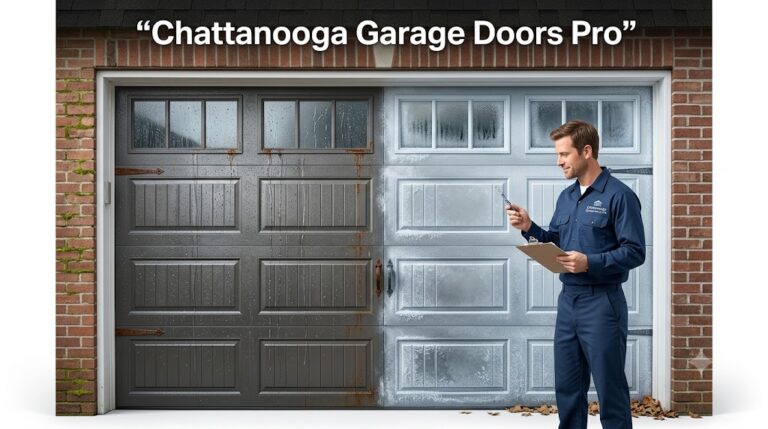
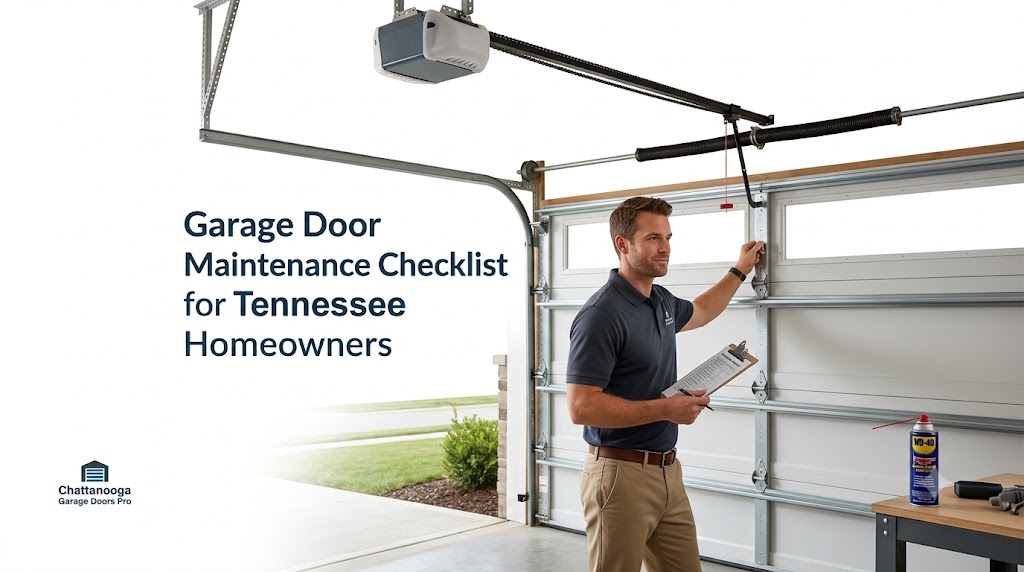
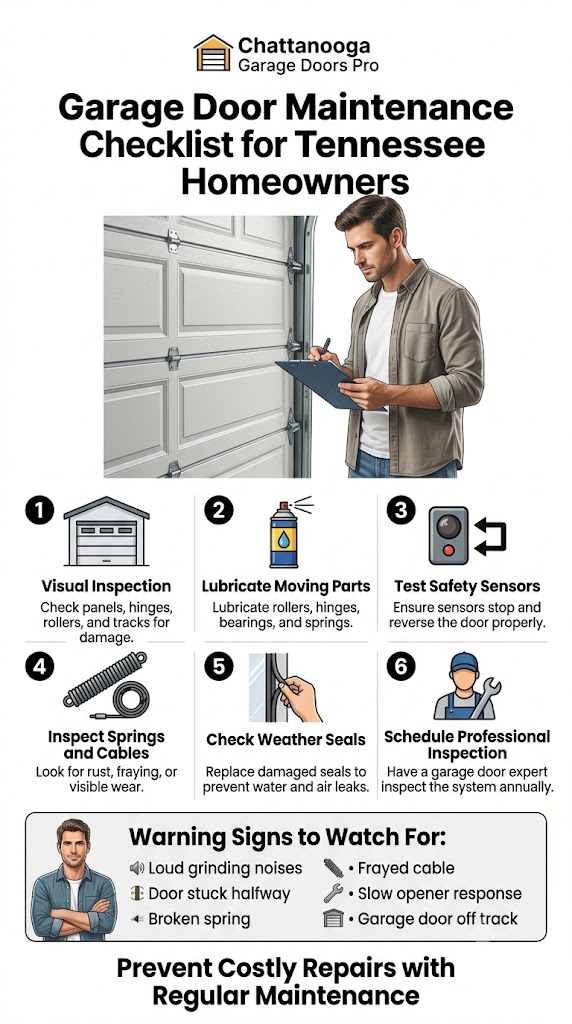
A complete maintenance routine starts with a visual inspection. Walk around the garage door and look for obvious signs of wear, damage, rust, or loose hardware. Small problems often become major repairs when ignored.
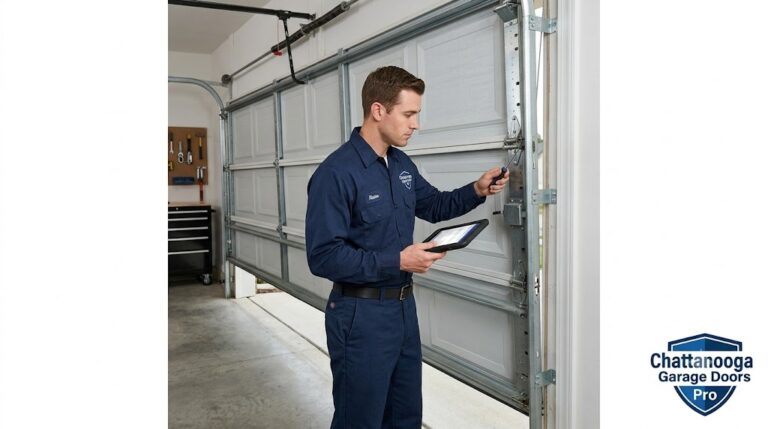
Check all moving parts including rollers, hinges, cables, and tracks. If you notice frayed cables, bent tracks, or damaged rollers, schedule professional service immediately. You may need garage door track repair or cable repair to restore safe operation.
Inspect weather seals around the bottom and sides of the door. Tennessee storms can allow moisture to enter through damaged seals, leading to higher energy costs and potential water damage.
Monthly maintenance should include:
- Visual inspection of all components
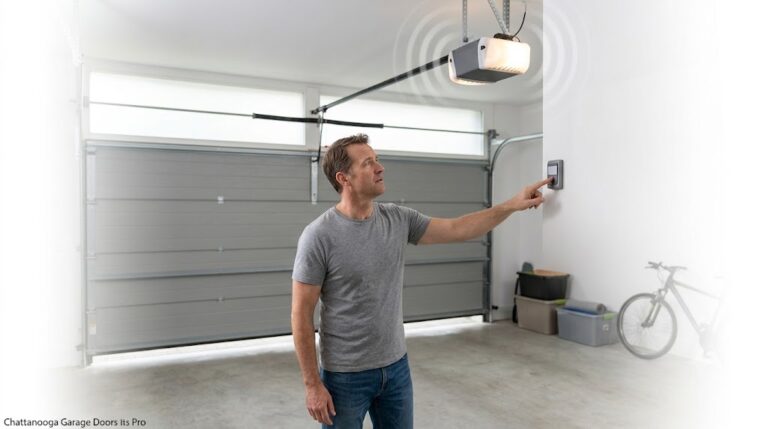
- Testing the opener
- Checking safety sensors
- Lubricating moving parts
- Examining weather seals
- Tightening visible hardware
Many Chattanooga homeowners schedule annual inspections through professional garage door repair services to identify hidden issues before they become emergencies.
A proactive maintenance routine often reduces the need for extensive repairs and helps preserve the overall performance of the garage door system.
How Can You Safely Inspect Garage Door Springs and Cables?
Garage door springs and cables are under significant tension and should always be treated with caution.
Start by visually examining the torsion spring mounted above the garage door. Look for gaps, rust, stretching, or signs of wear. A broken spring often leaves a visible separation in the coil.
Inspect cables running along both sides of the door. Fraying, unraveling, or corrosion indicates a problem that requires immediate professional attention.
Never attempt to adjust or remove garage door springs yourself. Serious injuries can occur when springs release stored tension unexpectedly.
Real-Life Example #1
A Chattanooga homeowner discovered the garage door would only open a few inches before stopping. Inspection revealed a broken torsion spring.
Problem: Garage door would not lift properly.
Cause: Worn spring reached the end of its service life.
Solution: Professional garage door spring repair.
Outcome: Same-day repair restored normal operation and prevented additional damage to the opener.
If spring damage is suspected, professional garage door spring repair is the safest and most effective solution.
Why Is Lubrication Important for Garage Door Performance?
Proper lubrication reduces friction and helps components operate smoothly.
Without lubrication, moving parts experience excessive wear, leading to noisy operation and premature failure.
Focus on lubricating:
- Rollers
- Hinges
- Bearings
- Spring coils
- Pivot points
Avoid applying lubricant directly to tracks. Instead, clean tracks with a dry cloth to remove debris.
Signs your garage door may need lubrication include:
- Squeaking noises
- Grinding sounds
- Jerky movement
- Slow operation
Tennessee's humidity can accelerate rust formation, making regular lubrication especially important.
A well-lubricated system places less strain on the opener and may help prevent future garage door opener repair needs.
How Do You Test Garage Door Safety Features?
Modern garage doors include critical safety systems designed to protect people, pets, and property.
Begin by testing the photo-eye sensors located near the bottom of the tracks. Place an object in the sensor path and attempt to close the door.
The door should immediately reverse.
Next, test the automatic reversal feature by placing a small piece of wood beneath the door. When the door contacts the object, it should reverse direction.
If either safety feature fails, stop using the door until repairs are completed.
Faulty safety systems can create serious injury risks.
Homeowners should perform these tests monthly as part of a residential garage door maintenance tips routine.
Professional inspections can identify hidden electrical or alignment problems before they affect safety.
What Garage Door Problems Are Most Common During Tennessee Storms?
Storms frequently expose weaknesses in garage door systems.
Heavy rain, wind, humidity, and temperature changes can affect mechanical and electrical components.
Real-Life Example #2
A family in Chattanooga experienced severe weather overnight and discovered their garage door would not close.
Problem: Garage door stuck partially open.
Cause: Sensor alignment shifted due to vibration and weather exposure.
Solution: Sensor adjustment and inspection.
Outcome: Door secured properly before additional rain entered the garage.
Common storm-related issues include:
- Sensor misalignment
- Water intrusion
- Rust formation
- Power surges affecting openers
- Damaged weather stripping
Regular inspections help homeowners identify vulnerabilities before severe weather arrives.
Preventive maintenance is often less expensive than emergency garage door repair after storm damage.
How Can Homeowners Troubleshoot Garage Door Opener Issues?
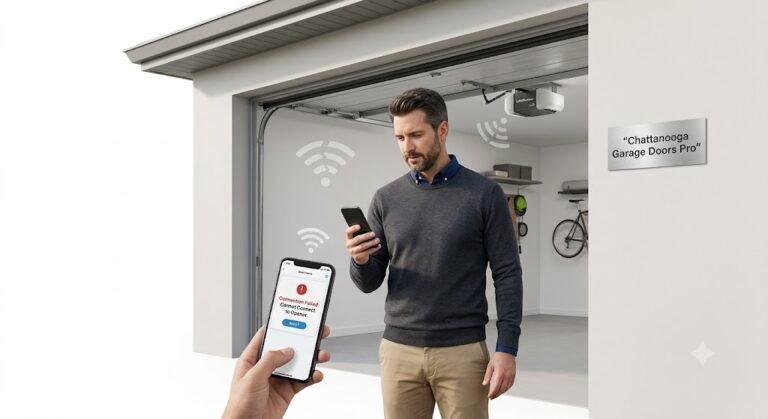
Garage door openers are responsible for much of the system's convenience, but they can develop problems over time.
Start by checking:
- Power supply
- Remote batteries
- Wall control function
- Sensor alignment
- Opener lights and indicators
Real-Life Example #3
A homeowner pressed the remote and heard clicking from the opener, but the door did not move.
Problem: Opener responded but door remained stationary.
Cause: Broken spring prevented the opener from lifting the door.
Solution: Professional inspection and spring replacement.
Outcome: Full system restored safely.
If troubleshooting does not resolve the issue, professional garage door opener repair may be necessary to prevent additional damage.
Ignoring opener issues can place excessive stress on other components and increase repair costs.
When Should a Garage Door Be Repaired Instead of Replaced?
Not every garage door problem requires replacement.
Repairs are usually appropriate when:
- Individual components fail
- Damage is minor
- Door panels remain in good condition
- System is relatively new
Replacement may be the better option when:
- Multiple components repeatedly fail
- Door has extensive structural damage
- Energy efficiency is poor
- System is nearing the end of its lifespan
A qualified garage door technician can evaluate whether repair or garage door replacement provides the best long-term value.
Homeowners considering upgrades often combine garage door replacement with improved insulation and modern safety features. You can also explore garage door installation options for new construction.
When Is Professional Garage Door Service Necessary?
Many maintenance tasks are safe for homeowners, but certain repairs require specialized tools and training.
Professional service is recommended for:
- Broken springs
- Damaged cables
- Bent tracks
- Off-track doors
- Opener failures
- Safety system problems
Never attempt DIY repairs involving springs or cables.
These components store significant energy and can cause severe injuries when handled improperly.
Tennessee homeowners often benefit from same-day service when unexpected failures disrupt daily routines. The garage door repair services in Chattanooga can quickly identify root causes and restore safe operation.
Helpful Maintenance Schedule for Homeowners
Monthly
- Inspect door operation
- Test safety sensors
- Check weather seals
- Listen for unusual noises
Every 3–6 Months
- Lubricate moving parts
- Tighten visible hardware
- Clean tracks
Annually
- Schedule professional inspection
- Check spring condition
- Evaluate opener performance
- Inspect cables and rollers
Following an annual garage door maintenance checklist can significantly reduce unexpected breakdowns and keep your system running smoothly throughout the year.
Frequently Asked Questions
How much does garage door repair cost?
Costs vary depending on the problem, required parts, and labor involved. Minor repairs are generally less expensive than spring replacements or major component failures.
Can I repair a garage door spring myself?
No. Garage door springs are under extreme tension and should only be repaired or replaced by trained professionals.
Why does my garage door reverse when closing?
Common causes include sensor misalignment, obstructions, dirty sensors, or issues with the opener's safety settings.
How long does garage door repair take?
Many common repairs can be completed during a same-day service appointment, depending on parts availability and the complexity of the issue.
When should I replace my garage door?
Replacement is often recommended when structural damage is extensive, repair costs continue to increase, or the door has reached the end of its expected lifespan.
Need Professional Garage Door Help?
If your garage door is making unusual noises, moving unevenly, refusing to open, or showing signs of wear, professional assistance can prevent larger problems.
Call Now: Schedule an inspection with Chattanooga Garage Doors Pro if you notice signs of spring damage, cable wear, opener issues, or safety concerns.
Free Quote: Get a no-obligation estimate for repair, maintenance, installation, or replacement services.
Emergency Service: When your garage door becomes stuck open, refuses to close, or creates a security concern, prompt professional service can help restore safe operation quickly.
Conclusion
Following a garage door maintenance checklist helps Tennessee homeowners protect one of the most important moving systems in their homes. Regular inspections, lubrication, safety testing, and seasonal maintenance can prevent costly breakdowns and improve overall reliability.
Common issues such as worn springs, damaged cables, sensor problems, and opener failures often begin as minor warning signs. Addressing these concerns early improves safety and reduces repair expenses.
While homeowners can handle basic inspections and maintenance, repairs involving springs, cables, tracks, or openers should be left to trained professionals. A proactive approach helps ensure your garage door remains safe, reliable, and ready to perform throughout every season in Chattanooga and across Tennessee.