Garage Door Lubrication Guide: What to Use and What to Avoid
The garage door lubrication guide is something most homeowners ignore until their garage door starts making loud squeaking sounds, moving unevenly, or getting stuck halfway. A common situation in Chattanooga TN is a homeowner trying to leave for work when the garage door suddenly jams due to dry rollers or a stiff spring. These issues may look small, but they can quickly turn into costly repairs or safety hazards.
In most cases, the problem comes from lack of lubrication on key moving parts like rollers, hinges, springs, and tracks. Without proper care, friction increases and the system begins to wear out faster. Chattanooga's humid weather can also speed up rust formation, making lubrication even more important.
Homeowners should understand that lubrication is not just about noise reduction. It is about preventing breakdowns, avoiding emergency situations, and extending the life of the entire garage door system. If ignored, you may end up needing full garage door repair services instead of simple maintenance. Following a preventive maintenance checklist that includes regular lubrication can significantly extend your system's lifespan.
Why does garage door lubrication matter for smooth and safe operation?
Garage door systems are made of multiple moving metal parts that constantly rub against each other. Without proper lubrication, friction increases and this leads to noise, wear, and mechanical failure over time.
In Chattanooga homes, we often see doors becoming noisy after seasonal changes. For example, a homeowner in Tennessee might notice grinding sounds during winter mornings when metal contracts and becomes stiffer.
Proper lubrication helps in:
- Reducing friction between moving parts
- Preventing rust caused by humidity
- Improving door balance and movement
- Extending life of springs and rollers
Important safety note: Improper lubrication or over-application can attract dust and cause more damage instead of solving the issue.
If your door already feels stiff or uneven, it may require professional garage door maintenance service instead of just lubrication. For a complete understanding of how maintenance prevents costly repairs, read our guide on garage door preventive maintenance.
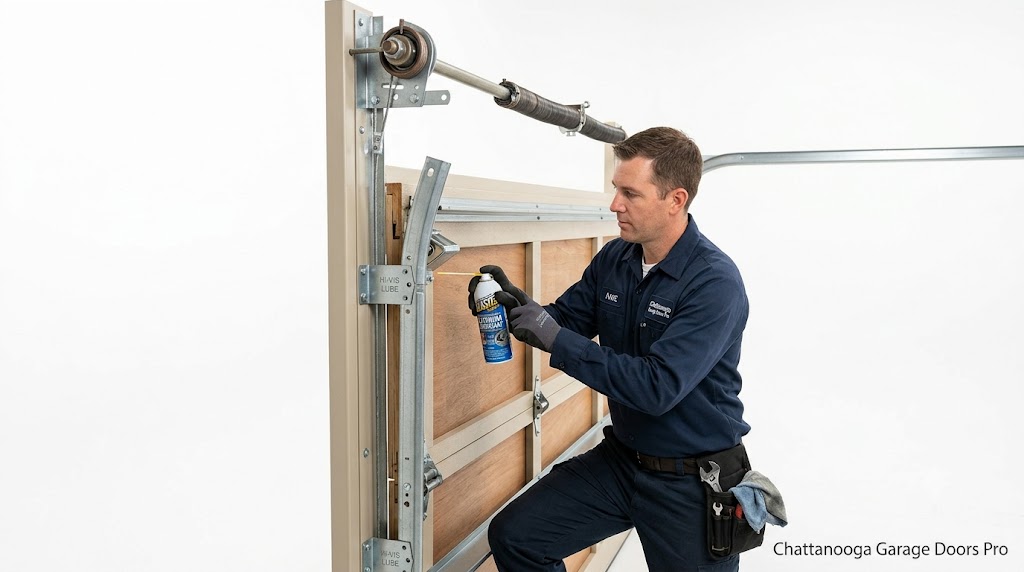
What parts of a garage door should be lubricated and how?
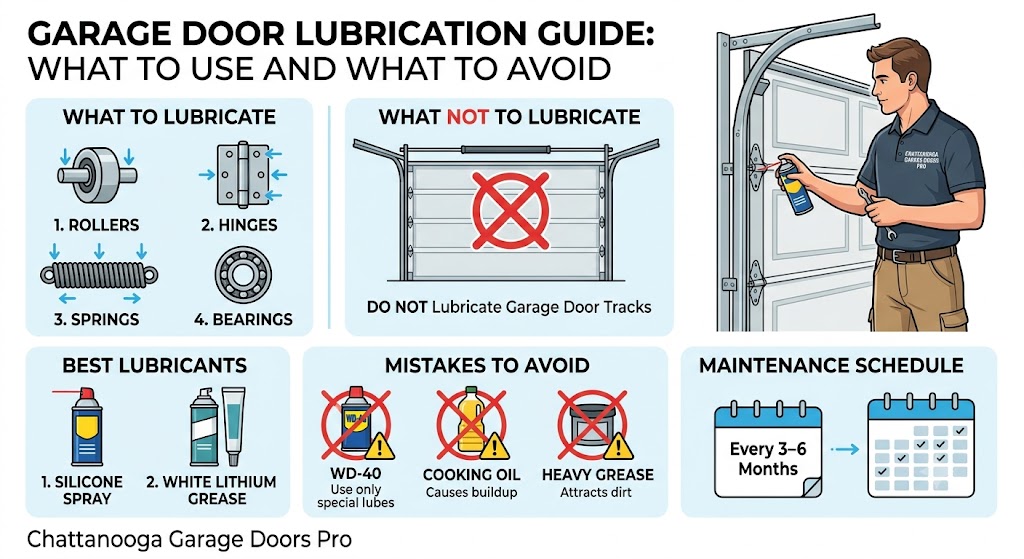
Not all garage door components require lubrication. Knowing where to apply it is critical for safe performance. A homeowner often makes the mistake of spraying lubricant everywhere, including the garage door track, which should actually remain dry.
Key parts that should be lubricated:
- Rollers – apply light silicone spray for smooth movement
- Hinges – reduce metal-on-metal noise
- Springs – helps reduce tension noise and wear
- Bearing plates – improves rotation efficiency
Example: A Chattanooga homeowner complained that their garage door opener was struggling. After inspection, the issue was dry rollers causing resistance. A simple lubrication fixed the noise and improved movement instantly.
For deeper issues like misalignment or broken parts, professional garage door repair is recommended instead of DIY fixes. If your door is already off-track or making grinding noises, you may need track repair services to restore proper alignment.
What products should you use or avoid for garage door lubrication?
Choosing the right lubricant is as important as applying it correctly. Many homeowners in Tennessee use WD-40 for everything, which is a common mistake in garage door care.
✅ Recommended Products
- Silicone-based spray lubricant
- White lithium grease (for heavy metal parts)
- Special garage door lubricants
❌ Products to Avoid
- WD-40 (it is a cleaner, not a long-term lubricant)
- Heavy oils that attract dust
- Household cooking oils
Example: A family in Chattanooga used cooking oil on squeaky hinges. It worked temporarily, but within weeks dust buildup made the door worse and required emergency garage door repair in Chattanooga.
For safe and long-lasting results, always use products designed for garage door maintenance and lubrication steps. When combined with professional spring maintenance, proper lubrication helps extend the life of your entire system.
How often should homeowners lubricate their garage door?
Lubrication is not a one-time job. In areas like Chattanooga TN, weather changes affect metal parts throughout the year.
Recommended schedule:
- Every 3–6 months for regular homes
- Every 2–3 months in humid or coastal-like conditions
- Before winter and summer season changes
Signs your door needs lubrication:
- Squeaking or grinding noises
- Slow or uneven movement
- Jerky opener response
- Visible rust on metal parts
Example: One homeowner noticed their garage door opener clicking but the door not moving. The issue was dry rollers and stiff springs. After lubrication and inspection, the system worked smoothly again.
If lubrication does not fix movement issues, it may indicate deeper damage requiring garage door spring repair. Knowing how often springs should be replaced can help you plan ahead.
When should lubrication be replaced with professional repair?
Lubrication can solve noise and minor friction issues, but it cannot fix broken or worn-out components. Knowing the difference is important for safety.
You should call a technician if:
- The door is stuck or off-track
- Springs are broken or stretched
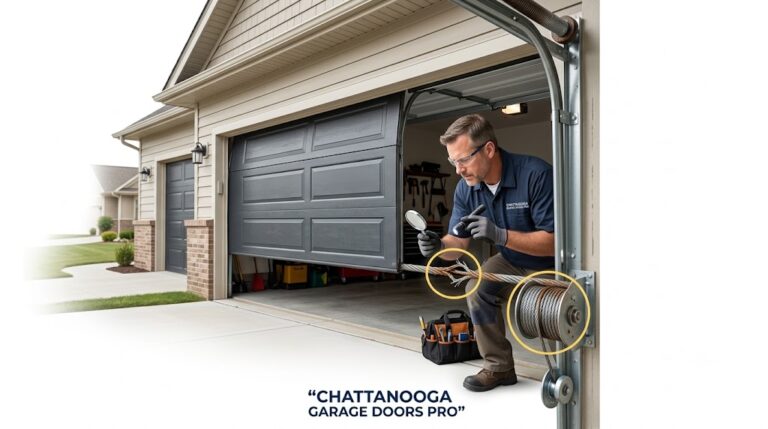
- Cables appear frayed or loose
- Opener motor is straining
Never attempt to repair garage door springs yourself. They are under high tension and can cause serious injury.
Example: A Chattanooga homeowner ignored a broken cable and kept lubricating the system. Eventually, the door collapsed unevenly and required full garage door cable repair instead of a simple fix. Watch for signs your cables are about to fail to avoid emergency situations.
In such cases, contacting a trusted garage door technician in Chattanooga TN ensures safe and long-term repair solutions.
Real-Life Examples from Chattanooga Homeowners
Example 1: Broken Spring Before Work
A homeowner discovered a loud snap early morning. The issue was a broken spring. Lubrication could not help. A same-day garage door spring repair restored safe operation before the family left for work.
Example 2: Door Stuck During Storm
During heavy rain, a garage door refused to close. The cause was dry rollers and rust buildup. After lubrication and adjustment, the door closed properly, restoring home security. For persistent closing issues, check why your garage door won't close.
Example 3: Opener Clicking but Not Moving
A garage door opener clicked but did not lift the door. The issue was friction in hinges and rollers. After lubrication and inspection, movement became smooth again. If lubrication doesn't resolve the issue, you may need garage door opener repair.
Can homeowners safely do garage door lubrication themselves?
Yes, basic lubrication can be done by homeowners, but only if the system is in good condition. It requires caution and proper technique.
Steps include:
- Turn off power to opener
- Clean visible dust from moving parts
- Apply small amount of lubricant
- Test door movement manually
However, if the door shows structural issues like a door that won't open or visible damage, it is safer to use professional garage door repair services rather than DIY fixes.
Need Professional Garage Door Service?
Expert Garage Door Lubrication & Maintenance in Chattanooga TN
If your garage door is noisy, slow, or showing early signs of wear, professional help can prevent costly damage. Chattanooga Garage Doors Pro provides comprehensive inspections, lubrication services, and repairs for all garage door systems.
Call now for expert support in Chattanooga TN • Request a free quote for inspection and maintenance • Emergency garage door repair available for urgent issues
FAQ
How much does garage door repair cost?
It depends on the issue. Minor lubrication or adjustment costs less, while spring or cable replacement costs more due to labor and safety requirements.
Can I repair a garage door spring myself?
No. Springs are under high tension and can cause serious injury. Always use a trained technician.
Why does my garage door reverse when closing?
It usually happens due to sensor misalignment, track issues, or friction caused by lack of lubrication.
How long does garage door repair take?
Most common repairs take 1–2 hours depending on the issue and part availability.
When should I replace my garage door?
If the door has repeated failures, structural damage, or high repair costs, replacement becomes more cost-effective. Learn about garage door replacement options.
Conclusion
A proper garage door lubrication guide helps homeowners prevent noise, reduce wear, and avoid emergency breakdowns. Most issues start with simple friction problems in rollers, springs, or hinges, especially in Chattanooga's changing weather conditions.
While basic lubrication can be handled at home, safety-critical parts like springs, cables, and tracks require professional attention. Regular maintenance not only improves performance but also extends the life of the entire system. For a complete maintenance plan, refer to our comprehensive maintenance checklist and learn how often springs need replacement.
For long-term safety and reliable operation, scheduled inspection and timely garage door maintenance in Chattanooga TN remain the most effective approach for homeowners throughout Tennessee.