How Weather Affects Garage Doors in Tennessee
How weather affects garage doors in Tennessee becomes very clear when a homeowner suddenly wakes up to a door that refuses to open on a cold morning or gets stuck halfway during a rainy storm. In Chattanooga and across Tennessee, shifting temperatures, humidity, and seasonal storms put constant pressure on garage door systems. A garage door is not just a simple panel; it is a mechanical system made of springs, cables, rollers, and an opener that all react to weather changes.
When temperatures drop, metal parts contract. When humidity rises, rust begins to form. During storms, power surges can affect the opener system. These changes may seem small at first, but over time they lead to serious issues like broken springs, misaligned tracks, or failing garage door openers. For homeowners, this becomes a safety concern as well as a daily inconvenience. Understanding how long a garage door lasts in Tennessee helps put these weather impacts into perspective.
Understanding these weather-related effects helps prevent unexpected breakdowns. It also helps homeowners know when a small issue can be fixed at home and when professional garage door repair is needed.
Why does Tennessee weather cause garage door problems more often than expected?
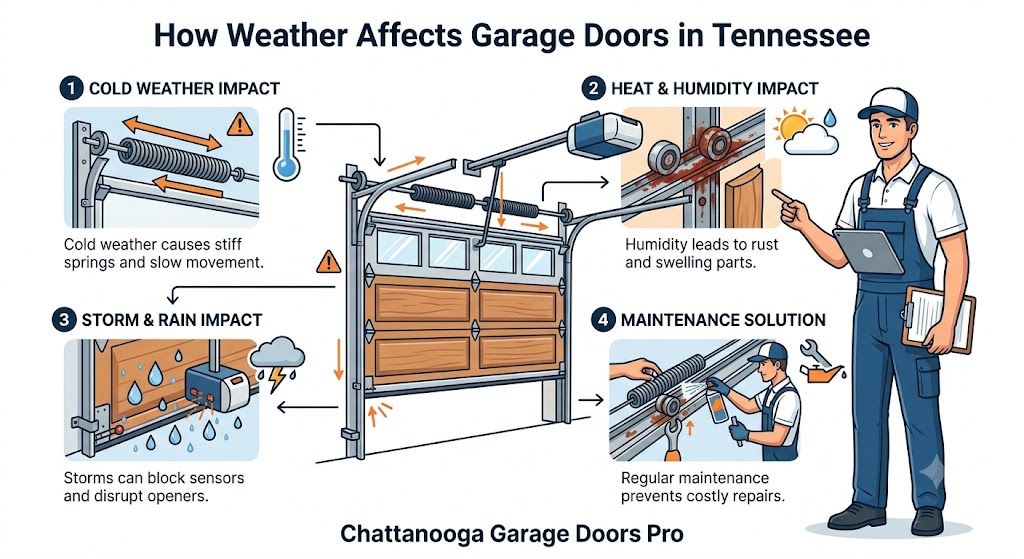
Tennessee weather is not stable throughout the year. Chattanooga experiences hot summers, humid air, cold winters, and sudden storms. This combination creates constant expansion and contraction in garage door materials.
For example, metal parts like torsion springs and garage door cables tighten in cold weather and loosen in heat. This movement weakens them over time. Wooden doors may swell in humidity, making them harder to open or close smoothly. These are among the most common garage door problems we see seasonally.
Common weather-related issues include:
- Door sticking in winter mornings
- Slow movement during humid summers
- Rust forming on rollers and hinges
- Noisy operation after rain exposure
A homeowner in Chattanooga once reported that their door worked perfectly in summer but jammed every winter morning. The cause was not mechanical failure but contraction of metal tracks and weak lubrication.
To reduce damage:
- Apply seasonal lubrication to moving parts (refer to our garage door lubrication guide)
- Inspect weather seals regularly
- Schedule preventive garage door maintenance service before winter
How does cold and heat damage garage door springs and cables?
Cold and heat directly affect garage door springs and garage door cables, which are the most stressed components of the system. In cold temperatures, metal contracts and becomes more brittle. In extreme cases, springs can snap without warning.
In hot Tennessee summers, the opposite happens. Metal expands and loses tension. This imbalance causes uneven lifting and strain on the opener. A door that shakes when opening or closing may be showing early signs of weather-related spring fatigue.
A common real-world situation: A homeowner leaves for work on a freezing morning. The garage door opens halfway and suddenly stops. The cause is a weakened spring that lost elasticity overnight.
What homeowners can do:
- Listen for unusual snapping or grinding sounds
- Check if the door feels heavier than normal
- Look for visible rust or cable fraying
Temporary steps:
- Keep the door closed and avoid repeated forcing
- Disconnect the opener carefully if needed
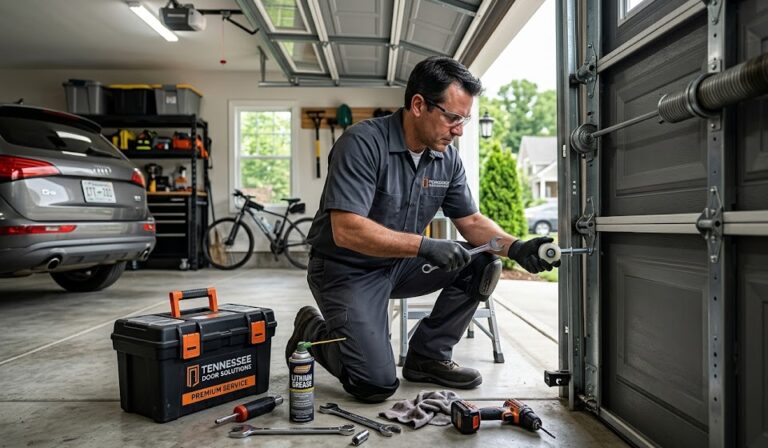
Professional solution: A trained technician from a garage door spring repair service should handle spring or cable replacement because these parts hold extreme tension. Learn how often springs should be replaced to plan ahead.
Why do garage doors stop working properly during storms in Chattanooga?
Storms in Tennessee bring heavy rain, wind, and power fluctuations. These conditions directly affect garage door systems, especially electronic openers and safety sensors.
Rain and moisture can interfere with photo-eye sensors, causing the door to reverse or refuse to close. Power surges may disrupt the garage door opener system, leaving the motor clicking but not moving. A door that won't close during a storm is a common emergency call.
Example situation: A family in Chattanooga experiences a storm. Their garage door refuses to close even after multiple attempts. The sensors are blocked by moisture and misaligned due to wind pressure.
Steps homeowners can take:
- Wipe sensor lenses gently
- Check alignment of sensors
- Reset the opener system once power stabilizes
When problems continue, it usually requires professional garage door opener repair to restore safe operation. Storm-related issues often indicate deeper electrical or alignment problems that need expert attention. A tune-up service before storm season can catch vulnerabilities early.
How does humidity in Tennessee affect garage door metal parts and tracks?
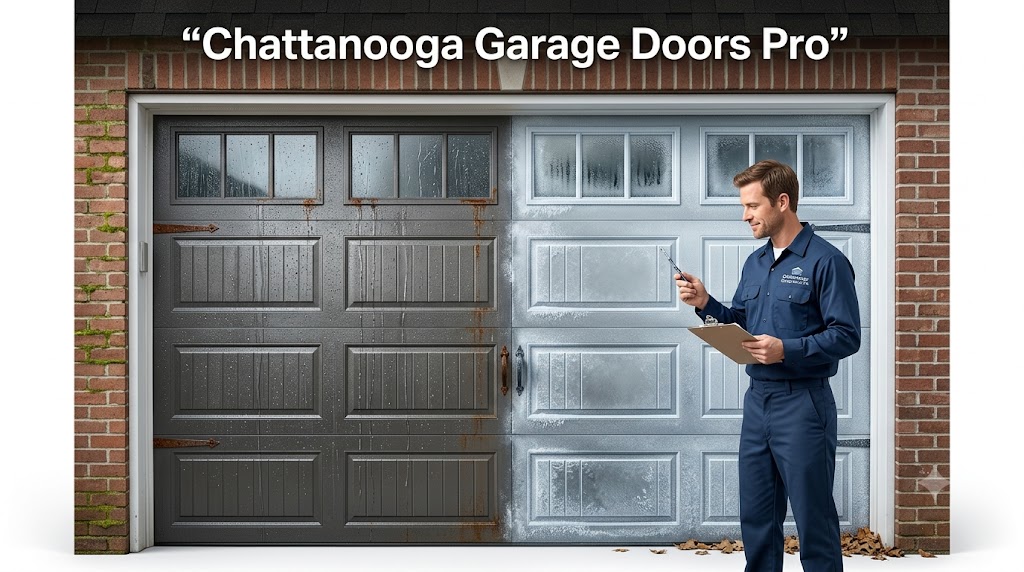
Humidity is one of the most underestimated causes of garage door problems in Tennessee. Moist air slowly creates rust on garage door tracks, rollers, and hinges. Over time, this leads to friction, noise, and uneven movement. This is a primary reason garage door rollers wear out faster in our climate.
In Chattanooga's humid summers, even well-maintained doors can start showing early signs of wear. Steel parts absorb moisture, and lubrication becomes less effective.
A typical homeowner scenario: The garage door starts shaking every time it opens. The cause is rust buildup on rollers combined with dry hinges.
What to check:
- Rust spots on metal tracks
- Grinding noise during movement
- Uneven lifting or shaking
Simple maintenance steps:
- Clean tracks with a dry cloth
- Apply silicone-based lubricant
- Remove debris from track corners
For deeper issues, a garage door repair services inspection is necessary to prevent track damage or roller failure. Also watch for signs your cables are about to fail, as humidity accelerates cable wear.
When should homeowners replace instead of repair a weather-damaged garage door?
Not all weather damage can be repaired. Over time, repeated exposure to Tennessee weather weakens structural components. At some point, repair becomes less effective than replacement.
Signs replacement may be needed:
- Multiple broken springs or cables
- Severe rust on panels or tracks
- Door imbalance even after repair
- Repeated opener failures
- Visible warping or structural damage
A homeowner example: After years of humidity and storm exposure, a garage door becomes uneven and noisy. Repairs help temporarily, but the door continues failing every few months. The final solution is full replacement.
In such cases, a garage door replacement ensures safety, reliability, and energy efficiency. A new garage door installation with modern weather-resistant materials can better withstand Tennessee's climate.
Replacement also improves insulation, which helps during Tennessee's hot summers and cold winters.
Real-Life Examples from Tennessee Homeowners
Example 1: Broken Spring Before Work
A homeowner in Chattanooga hears a loud snap early morning. The door becomes extremely heavy. Cause: Broken torsion spring due to cold weather contraction. Solution: Emergency spring replacement. Outcome: Door restored the same day through emergency garage door repair service.
Example 2: Storm Prevents Door from Closing
A family cannot close their garage door during heavy rain. Cause: Moisture on safety sensors. Solution: Cleaning and realignment of sensors. Outcome: Door functions normally after adjustment.
Example 3: Opener Clicks but Door Does Not Move
Homeowner hears clicking sound but door stays still. Cause: Stripped gear inside opener motor. Solution: Opener repair and calibration. Outcome: Restored smooth operation through technician service. A humming motor often signals the same issue.
When should you call a professional garage door technician?
Homeowners should call a technician when:
- Springs are broken or loose
- Door is off track or stuck
- Opener is unresponsive
- Cables are frayed or snapped
- Door movement becomes unsafe or unpredictable
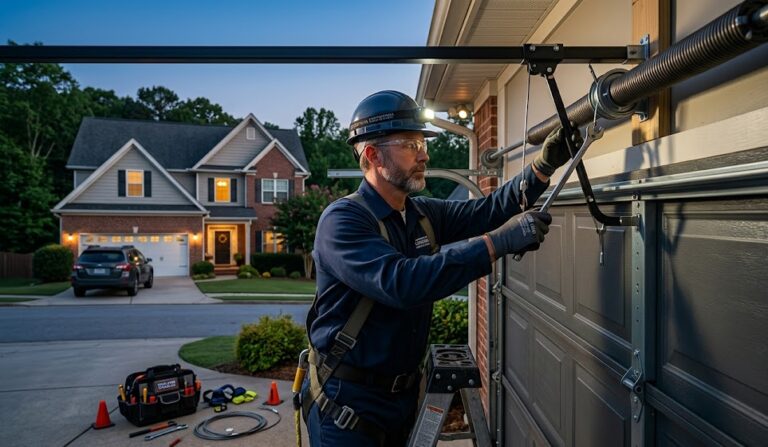
A professional garage door technician understands how Tennessee weather affects mechanical systems and can identify hidden damage before it becomes dangerous. Following our garage door maintenance checklist and safety tips helps prevent weather-related emergencies.
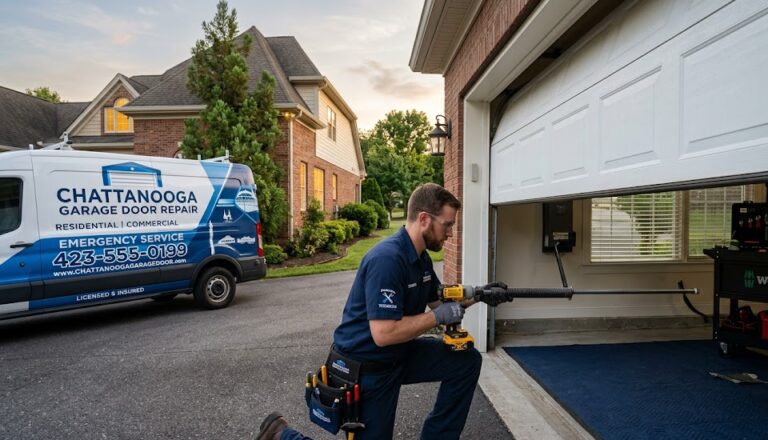
For fast help, Chattanooga Garage Doors Pro provides same-day service and reliable inspection for all major garage door issues.
What safety risks should homeowners know about?
Garage doors are heavy systems under tension. Weather damage increases risk significantly.
Key risks include:
- Sudden spring breakage causing injury
- Door falling due to cable failure
- Electrical shock from opener damage
- Pinched fingers from misaligned tracks
For families with young children, also review our child and pet safety guide for garage doors.
Regular inspection and maintenance reduce these risks significantly.
Frequently Asked Questions
How much does garage door repair cost?
Cost depends on the issue. Minor adjustments are lower, while spring or opener repairs are higher. Weather damage often increases repair needs in Tennessee homes.
Can I repair a garage door spring myself?
No. Springs are under extreme tension. Attempting repair without tools can cause serious injury. Always use professional service.
Why does my garage door reverse when closing?
This often happens due to misaligned photo-eye sensors, dirty lenses, or weather-related shifting in the track system.
How long does garage door repair take?
Most common repairs like springs or cables take 1–2 hours. Complex weather-related damage may take longer depending on parts.
When should I replace my garage door?
Replace it when damage is frequent, structural integrity is weak, or repair costs become too high compared to a new system. Explore garage door replacement options.
Conclusion
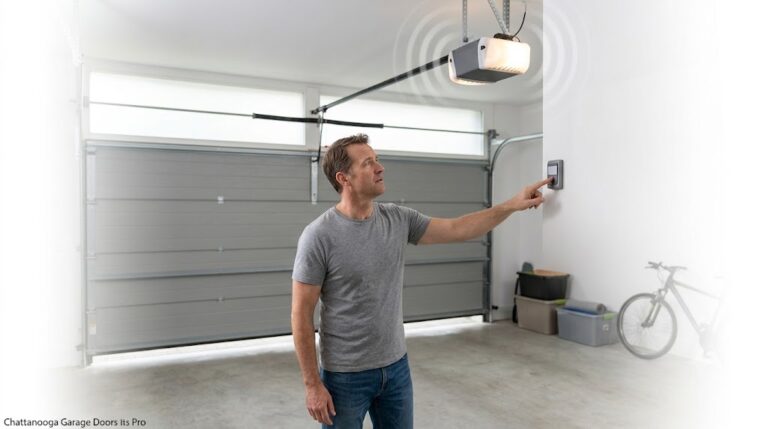
Tennessee weather plays a direct role in garage door performance. Cold temperatures damage springs, humidity causes rust, and storms affect openers and sensors. These combined effects lead to common problems like stuck doors, broken cables, and noisy operation. For newer technology, also consider how smart garage door openers handle weather-related connectivity challenges.
Homeowners in Chattanooga should focus on preventive care, early troubleshooting, and safe handling of small issues. However, when damage involves springs, cables, or electrical systems, professional repair is the safest choice.
Regular maintenance and timely inspection from Chattanooga Garage Doors Pro helps extend the life of your garage door system and prevents unexpected breakdowns during extreme weather conditions.