Child and Pet Safety Around Garage Doors
Child and pet safety around garage doors becomes a serious concern when a garage door suddenly refuses to stop, reverses without reason, or starts closing while a child or pet is nearby. Many Chattanooga TN homeowners face situations like a garage door not closing properly during rainy weather, or a door that starts moving while a pet runs underneath it. These moments are not just inconvenient; they can quickly become dangerous if the system is not working correctly.
A garage door is the largest moving object in most homes, and it depends on parts like garage door springs, photo-eye sensors, and the auto-reverse system to function safely. When any of these components fail, the risk of accidents increases, especially for children who may not understand the danger or pets that move unpredictably.
Homeowners should never ignore signs like slow movement, sensor blinking, or sudden reversals. These issues often point to underlying mechanical or electrical faults. In many cases, simple maintenance or timely professional inspection can prevent serious safety risks and expensive damage. Our comprehensive garage door safety tips provide additional guidance for families.
Understanding how garage doors work and what causes unsafe behavior is the first step in protecting your family. Below, we break down real problems, safety risks, and practical solutions that every homeowner should know.
Why is garage door safety important for children and pets?
Garage doors move with heavy force, often weighing more than 150 pounds. When something goes wrong, the impact can be immediate and dangerous. Children may not recognize warning signs, and pets often move suddenly, increasing the risk of injury.
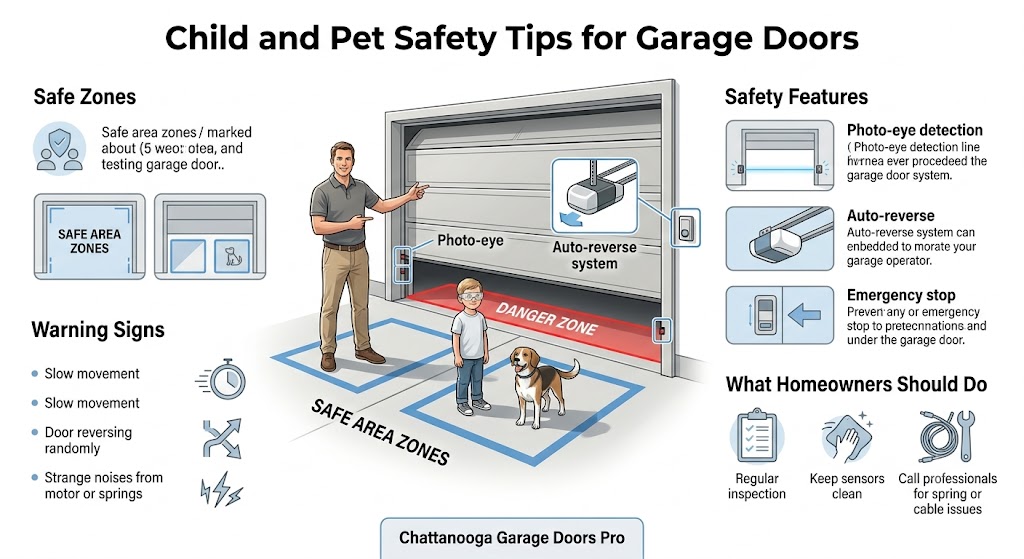
A common issue in Chattanooga homes is a door that closes too quickly or fails to reverse. This usually happens when photo-eye sensors are dirty or misaligned. In such cases, the door may not detect movement underneath it, which creates a serious hazard.
Typical safety risks include:
- Pinching injuries from closing doors
- Crushing hazards from broken springs
- Sudden drops due to cable failure
- Sensor failure during rain or dust buildup
A real example: a homeowner in Tennessee noticed their dog running under the garage door while it was closing. The door did not reverse due to a blocked sensor. The issue was fixed by cleaning and realigning the sensors, but it highlighted how small faults can create serious risks.
Preventive care and regular inspection through a trusted garage door maintenance service reduces these dangers significantly. Following our safety checklist helps identify hazards early.
What are the most common garage door risks for kids and pets?
Most safety problems come from mechanical wear or lack of maintenance. In Chattanooga's changing weather, humidity and temperature shifts can affect door alignment and sensor performance.
Key risks include:
- Faulty auto-reverse system
- Broken or stretched garage door springs
- Misaligned track system
- Worn-out rollers causing jerky movement
- Weak or frayed cables
When a garage door shakes or moves unevenly, it often signals deeper mechanical stress. This is especially dangerous in homes with active children or pets playing nearby. A shaking door is one of the most common garage door problems homeowners face.
For example, one family experienced a door that suddenly reversed while closing. The issue was traced to a failing sensor connection combined with dirt buildup. A quick garage door repair services visit resolved the issue before any accident occurred.
How can homeowners improve garage door safety at home?
Homeowners can reduce risks by following simple but consistent safety practices. Most accidents happen because warning signs are ignored or maintenance is delayed.
Start with these steps:
- Test the auto-reverse function monthly
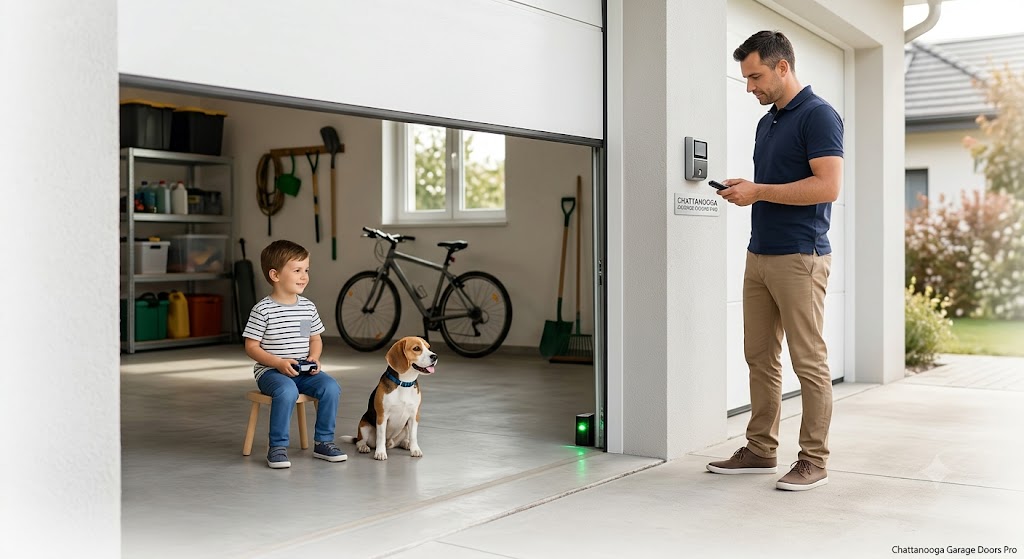
- Keep photo-eye sensors clean and aligned
- Inspect springs and cables for visible wear
- Avoid letting children use wall buttons unsupervised
- Keep pets away from the garage entrance during operation
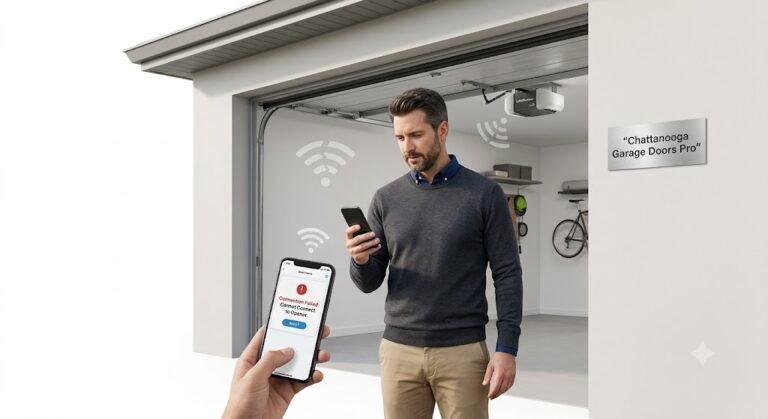
Another example: a Chattanooga homeowner noticed their garage door opener clicking but not moving the door. The cause was a worn gear inside the opener motor. The repair prevented a possible sudden drop and restored safe operation through garage door opener repair. A humming motor is another sign that requires immediate attention.
Regular inspections are especially important in Tennessee, where humidity can affect metal components and cause slow corrosion over time. Use our garage door lubrication guide to keep parts moving smoothly.
When should you call a garage door technician for safety issues?
Not all garage door problems are safe to handle alone. Some issues involve high-tension parts like springs and cables, which can cause serious injury if touched without proper tools.
Call a professional when:
- Door suddenly drops or slams shut
- Springs appear broken or stretched
- Door is off track or tilted
- Sensors fail repeatedly after cleaning
- Opener works but door does not move
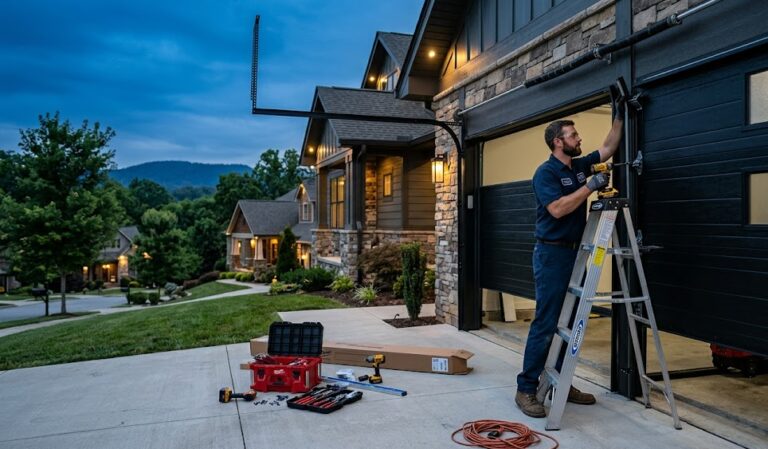
Example: a homeowner preparing for work found a broken spring early in the morning. The door was completely unusable. A technician provided same-day service through emergency garage door spring repair, restoring safe operation before the family left the house.
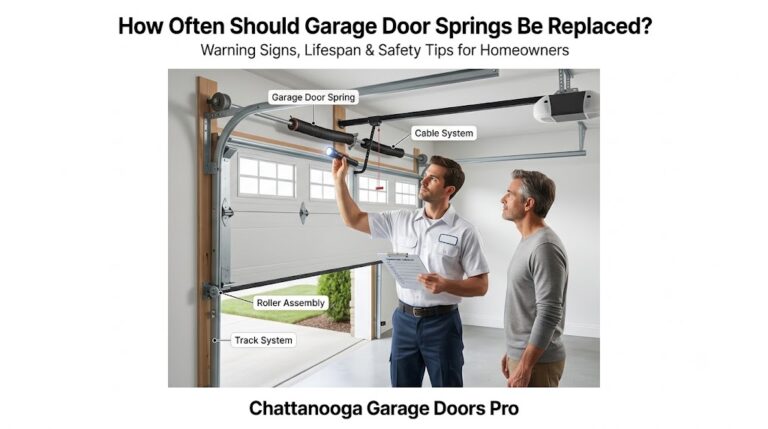
Learn how often garage door springs should be replaced and watch for signs your cables are about to fail to prevent unexpected failures.
What safety systems protect children and pets in garage doors?
Modern garage doors include multiple built-in safety features designed to prevent accidents. However, they only work properly when maintained.
Key systems include:
- Photo-eye sensors that detect movement
- Auto-reverse mechanism that stops closing doors
- Force settings in garage door openers
- Manual emergency release system
If any of these systems fail, safety is compromised. For example, sensors blocked by dirt or spider webs may stop working without obvious signs.
A Chattanooga homeowner once reported their garage door closing fully even when a box was placed underneath. The issue was a misaligned sensor. A quick inspection and adjustment restored full safety functionality.
Professional garage door installation ensures these systems are correctly set up from the beginning, reducing long-term risks. Also understand how long a garage door lasts in Tennessee to plan replacements before safety features become outdated.
Real-Life Homeowner Examples
Example 1: Broken Spring Before Work
A homeowner noticed a loud bang in the garage early morning. The door would not open. The issue was a broken garage door spring. A technician replaced it the same day, restoring safe access and preventing further damage.
Example 2: Storm Emergency with Stuck Door
During heavy Tennessee rain, a family found their garage door stuck halfway. Water and wind were entering the garage. The problem was a track misalignment. Emergency service stabilized the door and restored full closure.
Example 3: Opener Clicks but Door Does Not Move
A homeowner heard the opener clicking but the door stayed still. The issue was a worn gear system inside the motor. Quick repair prevented sudden failure and ensured safe daily use. If your door won't open at all, it could be a similar issue.
Need Professional Garage Door Safety Inspection?
Expert Garage Door Service in Chattanooga TN
If your garage door shows signs of unsafe movement, delayed response, or sensor issues, it should not be ignored.
Call for immediate inspection • Request a free safety quote • Get emergency support when needed
Frequently Asked Questions
How much does garage door repair cost?
Cost depends on the issue. Minor sensor or alignment fixes are lower, while spring or cable replacement is higher due to labor and safety risks.
Can I repair a garage door spring myself?
No. Garage door springs are under high tension and can cause serious injury. Always use a trained technician.
Why does my garage door reverse when closing?
Usually due to misaligned sensors, dirt on photo-eye sensors, or incorrect force settings in the opener. See why your garage door won't close.
How long does garage door repair take?
Most repairs take 30 minutes to 2 hours depending on the problem and part availability.
When should I replace my garage door?
If the door has repeated failures, heavy rust, or structural damage, replacement is more cost-effective than frequent repairs. Explore garage door replacement options.
Conclusion
Child and pet safety around garage doors depends on regular maintenance, proper sensor function, and awareness of mechanical risks. Most problems come from worn springs, misaligned sensors, or neglected maintenance, all of which can be prevented with timely inspection.
Homeowners in Chattanooga TN should pay attention to early warning signs and avoid handling high-tension parts themselves. Professional repair ensures both safety and long-term reliability. For complete protection, follow our garage door safety tips and preventive maintenance schedule.
Routine care and expert support from Chattanooga Garage Doors Pro not only protect your home but also prevent accidents involving children and pets.