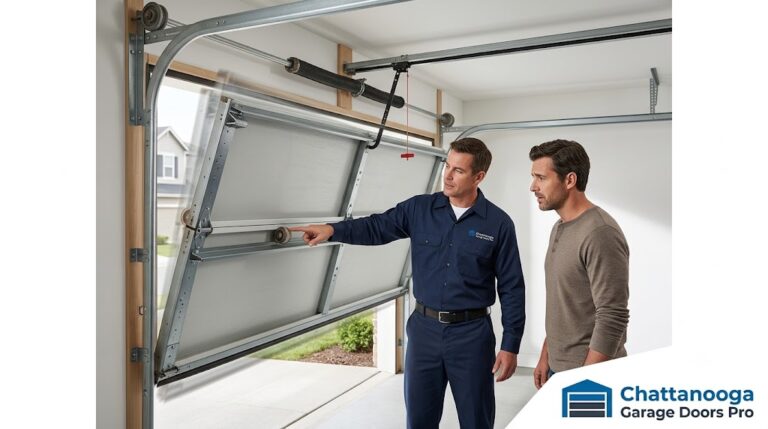
Most Common Garage Door Problems Homeowners Face
Most common garage door problems homeowners face often start with a simple moment that quickly turns stressful: the door refuses to open before work, gets stuck halfway, or starts making loud grinding noises late at night. In many homes across Chattanooga, TN, garage doors are used multiple times a day, which makes wear and tear unavoidable.
These problems matter because a garage door is not just an entry point—it protects vehicles, tools, and the home itself. When it fails, homeowners face safety risks, security concerns, and disruption to daily routine. In many cases, issues come from broken springs, worn cables, misaligned tracks, or a failing opener system.
Common causes include poor maintenance, weather changes in Tennessee, and aging mechanical parts. Sudden temperature shifts and humidity can also affect metal components, leading to stiffness or failure. Following a garage door maintenance checklist can prevent many of these issues.
Homeowners should avoid forcing a stuck door. Instead, basic observation can help identify whether the issue is mechanical, electrical, or safety-related. In many cases, professional inspection is the safest next step.
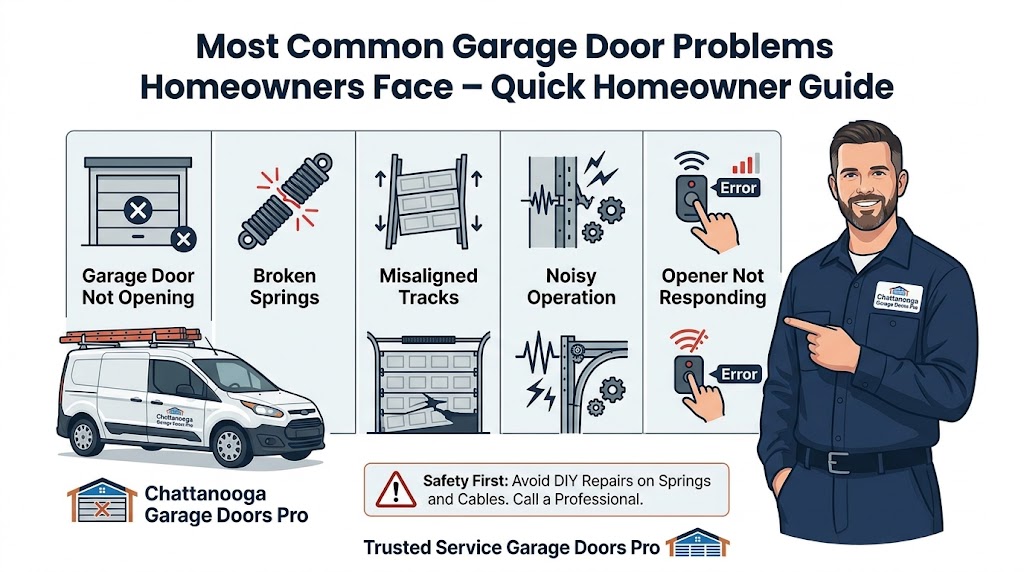
Why is my garage door not opening or closing properly?
A garage door that refuses to open or close is one of the most common issues homeowners experience. In Chattanooga, this often happens early in the morning when people are rushing to leave, making the situation more stressful.
The problem usually comes from a few key areas:
- Dead or weak remote batteries
- Misaligned safety sensors
- Broken garage door springs
- Faulty garage door opener motor
For example, a homeowner may press the remote and hear a clicking sound, but the door does not move. This often indicates the opener is trying to work but lacks the force due to spring failure. If your door won't open at all, the spring may be broken.
Temporary checks you can do:
- Replace remote batteries
- Check if sensors are blocked or dirty
- Ensure the opener is plugged in
- Look for visible cable or spring damage
A real-world example in Tennessee homes: a family found their garage door stuck during a rainstorm. The cause was a misaligned sensor due to moisture buildup. Cleaning and realignment fixed the issue temporarily, but a technician later replaced the faulty sensor for long-term safety.
Professional technicians from garage door repair services typically inspect the full system to ensure the opener, springs, and tracks work together correctly.
What causes a garage door to become noisy, shaky, or uneven?
Noisy or shaking garage doors are early warning signs that something is wearing out. Many homeowners ignore these sounds until the door completely fails. A door that shakes when opening or closing is a clear red flag.
Common causes include:
- Worn rollers or hinges
- Loose hardware
- Bent tracks
- Aging opener motor
- Lack of lubrication
A shaking door often means the track system is not aligned properly. If ignored, this can lead to the door coming off track, which becomes a safety hazard.
Troubleshooting steps:
- Tighten visible bolts (only if safe and accessible)
- Apply garage door lubricant to moving parts (refer to our garage door lubrication guide)
- Check for debris in tracks
- Observe movement for uneven lifting
Example: A Chattanooga homeowner noticed loud banging every time the door closed. The issue was worn rollers combined with dry hinges. After a technician performed garage door maintenance service, the noise stopped completely and the door operated smoothly again.
If shaking continues, it often signals deeper mechanical wear that requires professional inspection.
Why does a garage door opener click but not move the door?
A clicking sound with no movement is one of the most confusing issues for homeowners. It usually points to a disconnect between the opener motor and the door system. A humming motor with no movement is a related symptom.
Typical causes include:
- Broken torsion spring
- Stripped opener gears
- Disconnected emergency release
- Power fluctuations
In one common scenario, a homeowner hears repeated clicking but the door remains still. This usually means the motor is working, but the spring system is not supporting the door weight.
Simple checks:
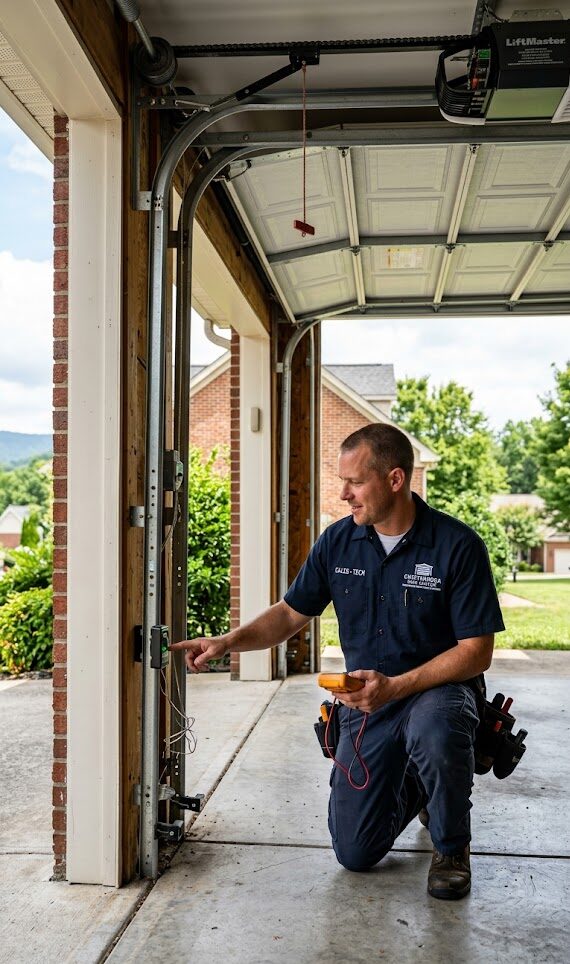
- Confirm power supply to opener
- Check if manual release was accidentally pulled
- Inspect visible spring condition
Example: A family in Chattanooga experienced this issue during winter. The spring had snapped due to metal fatigue. A technician provided garage door spring repair, restoring full operation within a short visit.
A professional garage door technician will test the motor load, spring tension, and gear condition before repairing the system.
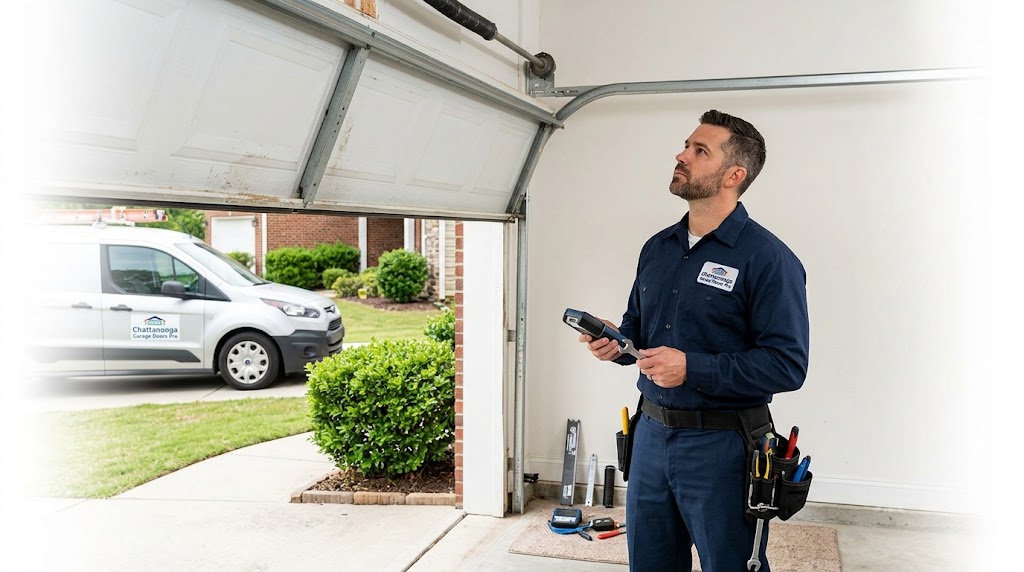
What should homeowners know about broken springs and cables?
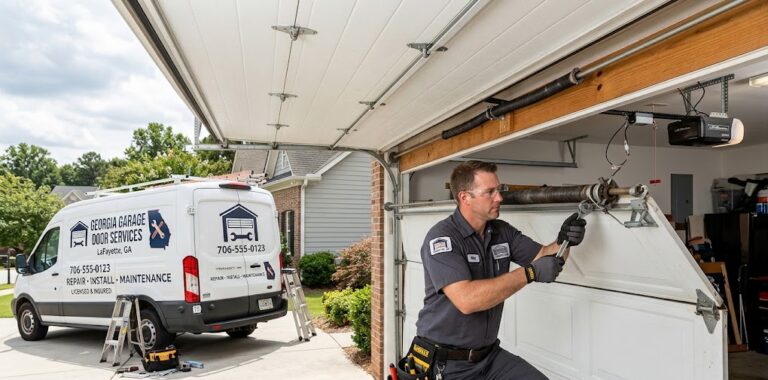
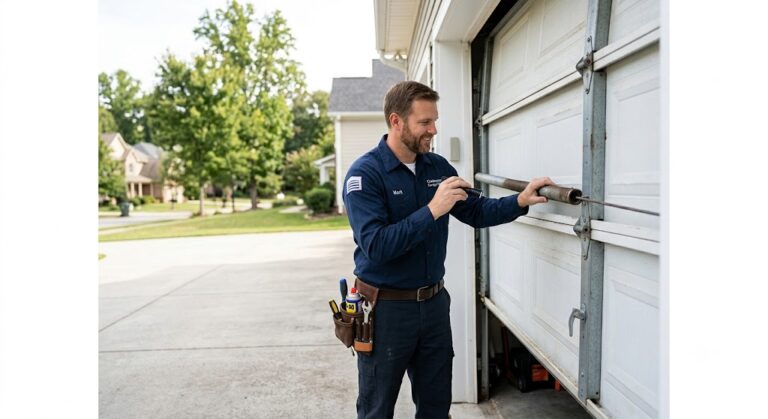
Garage door springs and cables carry most of the door's weight. When they fail, the door becomes extremely dangerous to operate.
Signs of spring or cable issues:
- Door feels heavy or won't lift
- Loud snapping sound
- Visible gap in spring coil
- Loose or hanging cables
Weather in Tennessee contributes to metal fatigue. Cold mornings followed by warm afternoons can weaken tension over time. Learn how often springs should be replaced and watch for signs your cables are about to fail.
What homeowners can do:
- Stop using the door immediately
- Disconnect the opener
- Avoid manual lifting attempts
Example: A homeowner preparing for work noticed a loud snap in the garage. The spring had broken overnight. Emergency garage door repair prevented further damage and restored safe access the same day.
Professional replacement is required because springs are under high tension and can cause injury if handled incorrectly.
For long-term safety, scheduled garage door maintenance helps detect early wear before failure.
How can homeowners prevent common garage door problems?
Preventing issues is easier and cheaper than emergency repairs. Most garage door failures happen due to neglected maintenance.
Basic prevention steps:
- Lubricate moving parts every 3–6 months (see our lubrication guide)
- Inspect springs and cables visually
- Test safety sensors monthly
- Keep tracks clean and aligned
- Schedule yearly inspection
Chattanooga homeowners especially benefit from seasonal maintenance due to humidity and temperature changes that affect metal components. A comprehensive maintenance checklist keeps you on track.
Example: A homeowner who followed a maintenance routine avoided a major failure when a technician identified early cable fraying during inspection. The repair was simple compared to a full breakdown scenario.
Preventive care also extends the life of the system and reduces the need for garage door replacement.
Regular service from garage door maintenance service professionals ensures all components remain balanced and safe.
When should you call a professional garage door technician?
You should contact a technician immediately when:
- Door does not open or close
- Springs or cables are broken
- Door is off track
- Opener motor is not working correctly
- Loud grinding or shaking occurs
DIY fixes may work for minor issues, but mechanical systems involve high tension parts that require expertise.
Example: A Chattanooga homeowner tried to fix a misaligned track, but the door slipped off completely. A technician had to perform emergency garage door repair to prevent further structural damage.
Professional services include diagnosis, safe repair, and system balancing to ensure long-term reliability. For track issues, track repair may be needed. For opener problems, opener repair can restore function.
Frequently Asked Questions
How much does garage door repair cost?
Costs vary depending on the issue. Minor repairs like sensor alignment are lower, while spring or cable replacement costs more due to labor and safety requirements.
Can I repair a garage door spring myself?
No. Springs are under high tension and require professional tools and training. DIY repair is unsafe.
Why does my garage door reverse when closing?
This is usually caused by sensor misalignment or obstruction in the door path. See why your garage door won't close for detailed troubleshooting.
How long does garage door repair take?
Most standard repairs take 1–2 hours depending on the issue and parts required.
When should I replace my garage door?
If the door has repeated failures, severe damage, or outdated safety systems, replacement is more cost-effective than continuous repair. Learn about garage door replacement and installation. Also consider how long a garage door lasts in Tennessee to plan ahead.
Call to Action
Expert Garage Door Repair in Chattanooga TN
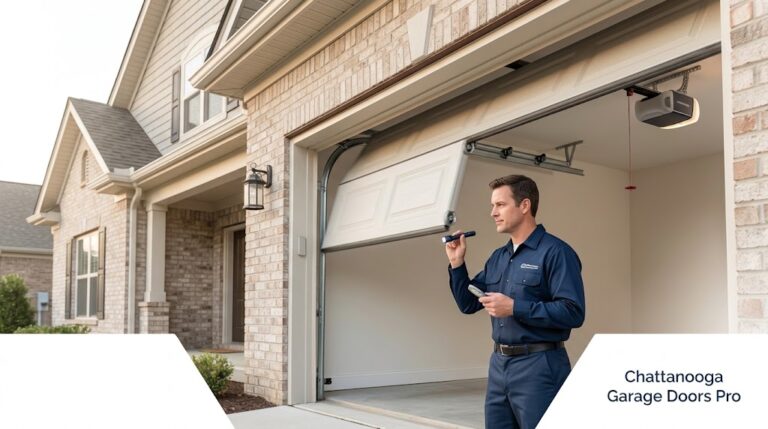
If your garage door is stuck, noisy, or not working properly, immediate help is available. Contact Chattanooga Garage Doors Pro for fast inspection, clear diagnosis, and reliable repair solutions.
Call now for service support in Chattanooga, TN • Request a free quote for repair or replacement options • Emergency garage door service is available for urgent situations
Conclusion
Most garage door problems come from worn springs, damaged cables, misaligned tracks, or failing openers. These issues often start small but can quickly become safety risks if ignored.
Homeowners in Chattanooga, TN should focus on early troubleshooting, regular maintenance, and avoiding unsafe DIY repairs. Simple checks can help, but mechanical failures require professional handling.
With proper care and timely service from experienced technicians, garage doors remain safe, reliable, and long-lasting. Preventive maintenance is the most effective way to avoid unexpected breakdowns and costly repairs. For all your garage door needs, trust Chattanooga Garage Doors Pro.