Garage Door Shakes When Opening or Closing
A garage door should move smoothly from start to finish. If your garage door shakes when opening or closing, something within the system is no longer working correctly. While a slight vibration can happen occasionally, repeated shaking usually points to worn parts, loose hardware, damaged tracks, or an opener problem that should not be ignored.
Imagine getting ready for work on a Monday morning. You press the remote, and instead of opening smoothly, the garage door begins jerking from side to side while making loud rattling noises. Besides being frustrating, this can become a serious safety concern if the problem worsens.
For homeowners in Chattanooga, TN, changing temperatures, humidity, and regular daily use place continuous stress on garage door components. Small issues that seem harmless today can eventually lead to damaged rollers, broken springs, bent tracks, or even complete system failure.
Knowing the warning signs early helps you avoid unexpected breakdowns and expensive emergency repairs. In this guide, we'll explain why a garage door shakes, what you can safely inspect yourself, and when it's time to contact a professional for garage door repair services.
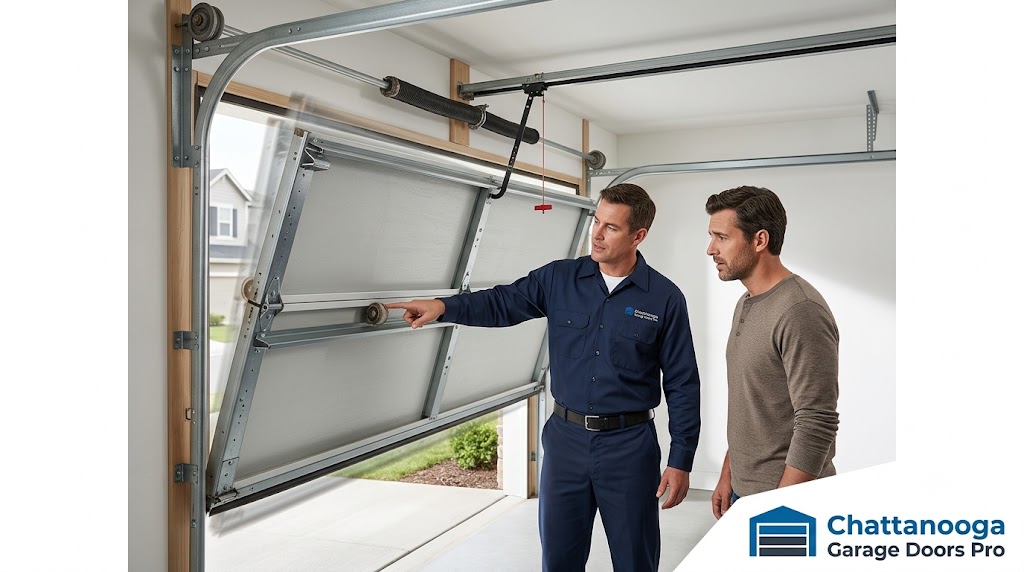
Why Does My Garage Door Shake When Opening or Closing?
A shaking garage door is usually a symptom rather than the actual problem. Multiple parts work together every time the door moves. If just one component becomes loose, worn, or damaged, the entire system may begin vibrating.
Most garage doors complete thousands of open-and-close cycles each year. Over time, normal wear affects moving parts. Without regular maintenance, small mechanical issues gradually become larger repair problems.
In Chattanooga, Tennessee, moisture and seasonal weather changes can also contribute to rust, expansion, and premature wear. These conditions make annual inspections especially valuable for local homeowners. Following a comprehensive maintenance checklist helps catch issues before they escalate.
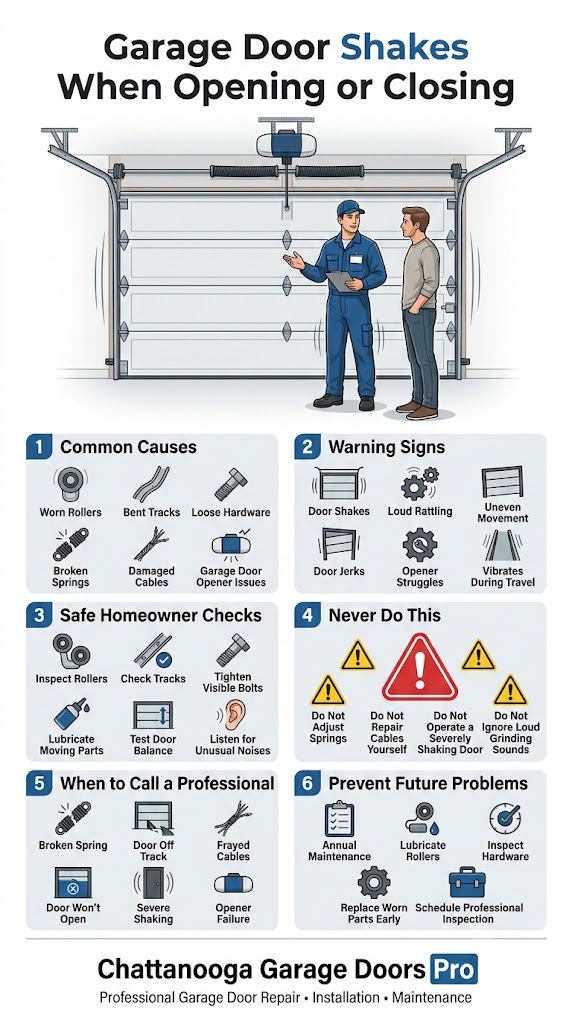
Some of the most common causes include:
- Worn garage door rollers
- Bent garage door tracks
- Loose hinges or brackets
- Broken or weak garage door springs
- Damaged garage door cables
- Unbalanced garage door
- Loose opener mounting brackets
- Worn drive chain or belt
- Misaligned panels
- Lack of lubrication
Not every shaking door requires a major repair. However, identifying the actual cause early often prevents more expensive damage later.
What Causes a Garage Door to Vibrate During Operation?
Garage door vibration usually develops gradually. Homeowners often notice a small wobble before the shaking becomes severe.
1. Worn Garage Door Rollers
Garage door rollers guide the door along the tracks. As they age, the bearings wear out and movement becomes rough. Signs include squeaking, grinding, side-to-side movement, and jerky operation.
Replacing worn rollers often restores smooth movement before additional parts become damaged.
2. Bent or Damaged Garage Door Tracks
The garage door tracks keep the door aligned. If a vehicle bumps the track or hardware loosens over time, the rollers cannot travel smoothly. Warning signs include visible bends, gaps between rollers and tracks, door wobbling, and loud banging noises.
Never attempt to force a damaged track back into position with a hammer. Improper repairs can make alignment worse. Professional garage door track repair ensures correct alignment and safe operation.
3. Loose Hardware
Garage doors contain hundreds of moving components. After years of vibration, bolts, hinges, brackets, and fasteners naturally loosen. Look for loose bolts, moving hinges, rattling sounds, and excessive vibration.
A professional inspection ensures all hardware is tightened to manufacturer specifications without over-tightening critical components. Regular preventive maintenance catches loose hardware early.
4. Broken or Weak Springs
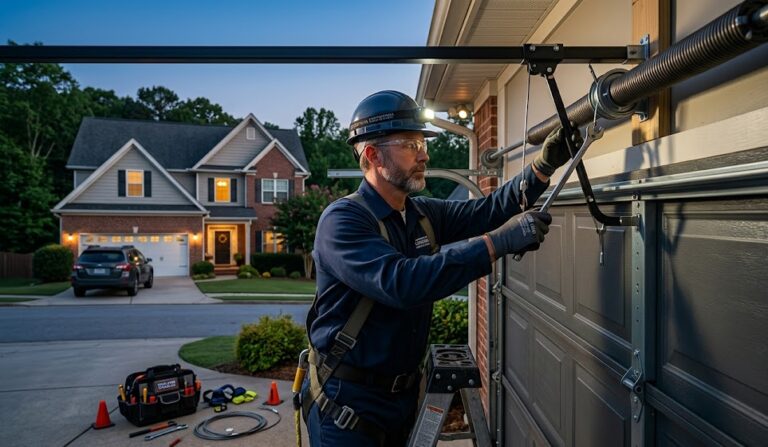
Torsion springs carry most of the garage door's weight. When a spring weakens, the opener must work much harder, causing the entire door to shake. If the door feels unusually heavy or opens unevenly, the spring system may be compromised.
Professional garage door spring repair is the safest solution. To understand spring lifespan, read about how often garage door springs should be replaced.
5. Garage Door Opener Problems
Sometimes the door itself is fine, but the opener struggles. Common opener issues include worn gears, loose mounting brackets, damaged drive chain, loose drive belt, and motor wear. If you hear clicking but little movement, the opener may require professional garage door opener repair before further damage occurs.
How Can Homeowners Troubleshoot a Shaking Garage Door Safely?
Before scheduling service, there are several basic inspections homeowners can perform safely. Always disconnect the opener before inspecting moving parts.
Step 1: Watch the Door Operate
Observe the door while someone else operates it. Watch for uneven movement, one side rising faster, sudden jerks, excessive vibration, and loud grinding noises. These observations help identify where the problem begins.
Step 2: Inspect the Rollers
Check whether the rollers move smoothly. Look for cracks, flat spots, broken bearings, and excessive wobbling. Damaged rollers usually become noisier before they completely fail.
Step 3: Check Track Alignment
Inspect both vertical and horizontal tracks. Look for visible dents, rust, loose brackets, and debris inside the tracks. Clean debris using a dry cloth. Avoid applying grease directly inside the tracks because it attracts dirt.
Step 4: Lubricate Moving Parts
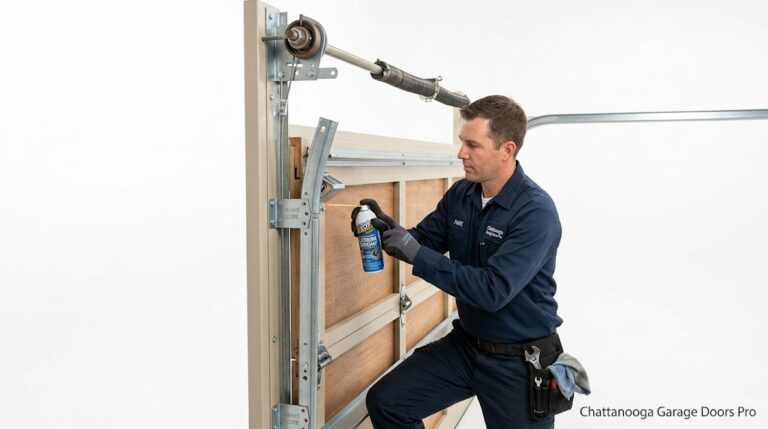
Many shaking problems become worse simply because the system is dry. Use garage-door-approved lubricant on rollers, hinges, bearings, springs (light coating), and pivot points. Refer to our garage door lubrication guide for proper techniques. Avoid household oils that collect dust and dirt.
Step 5: Test Door Balance
Disconnect the opener. Lift the door halfway manually. A properly balanced door should stay in place. If it quickly falls or rises on its own, the spring system likely requires adjustment by a trained technician.
What Safety Risks Should Homeowners Know About?
Many homeowners continue using a shaking garage door because it still opens and closes. Unfortunately, that can turn a small repair into a much larger and more expensive problem. A garage door is one of the heaviest moving parts of a home, often weighing between 130 and 300 pounds depending on its size and material.
When the door shakes, it places extra strain on every connected component. Over time, this additional stress can damage rollers, tracks, hinges, cables, springs, and even the garage door opener. Ignoring the warning signs may shorten the life of the entire system.
For Tennessee homeowners, frequent rain, humidity, and seasonal temperature changes can speed up rust and wear on metal components. Regular inspections become even more important because weather-related corrosion often develops gradually and goes unnoticed.
Never ignore these warning signs: the door jerks violently during movement, one side moves higher than the other, the opener strains or makes grinding noises, cables appear loose or frayed, springs show visible gaps or damage, rollers come out of the track, or the door stops midway before continuing.
If you notice any of these issues, stop operating the door until it has been inspected. Continuing to use a damaged garage door increases the risk of property damage and personal injury. Watch for signs your cables are about to fail as part of your safety checks.
When Should You Call a Professional Garage Door Technician?
Some maintenance tasks, such as cleaning the tracks or lubricating moving parts, are safe for homeowners. However, many repairs require specialized tools and training. Garage door systems operate under significant mechanical tension. Incorrect repairs can damage the door further or create serious safety hazards.
You should schedule professional garage door repair if:
- The shaking becomes worse each week.
- The garage door leans to one side, similar to why a garage door opens slowly or unevenly.
- The opener struggles to lift the door.
- A spring has broken.
- Cables have become loose or frayed.
- The tracks are bent.
- Rollers repeatedly come off the track.
- The garage door reverses unexpectedly or won't close.
A qualified technician can inspect the complete system, identify the root cause, and recommend the most cost-effective repair instead of replacing parts unnecessarily. If the inspection reveals worn springs, professional garage door spring repair can restore proper balance. Likewise, damaged motors or failing drive systems may require garage door opener repair.
Could My Garage Door Need Repair or Replacement?
Not every shaking garage door needs to be replaced. In many cases, replacing a few worn components is enough to restore smooth performance.
A repair is often the best option when rollers are worn, tracks need realignment, hinges have loosened, the opener needs adjustment, springs are nearing the end of their service life, or minor hardware has worn out.
A replacement may be worth considering if multiple panels are damaged, the door has extensive rust or corrosion, structural cracks are visible, repairs have become frequent, or the garage door is more than 20 years old with recurring mechanical issues.
When replacement becomes the smarter long-term investment, a professional garage door replacement can improve safety, energy efficiency, and reliability. Homeowners planning a remodel may also benefit from a modern garage door installation.
What Real-Life Situations Show Why This Problem Shouldn't Be Ignored?
Example 1: Broken Spring Before Work
A Chattanooga homeowner pressed the remote early one morning before leaving for work. The garage door began shaking violently before stopping only a few inches off the ground. The cause was a worn torsion spring that finally broke. A technician replaced both springs, balanced the system, and tested the opener, preventing additional damage.
Example 2: Garage Door Wouldn't Close During a Storm
During heavy rain, a family noticed their garage door shaking each time it attempted to close. Eventually, it stopped halfway, leaving the garage exposed. Inspection revealed bent tracks and damaged rollers from months of loose hardware. After realignment and new rollers, the door closed securely. For similar issues, see why your garage door won't close.
Example 3: Opener Clicked but the Door Didn't Move
Another homeowner heard the opener click but the door barely moved before shaking violently. The inspection found a worn drive gear and an unbalanced door. Professional repairs restored the opener and balanced the system. If your door won't open at all, check why your garage door won't open.
How Can Preventive Maintenance Help Prevent Garage Door Shaking?
Preventive maintenance is one of the easiest ways to extend the life of a garage door system. Many major repairs begin as small maintenance issues that go unnoticed for months.
A good maintenance routine includes:
- Inspect rollers for wear.
- Tighten loose hardware.
- Lubricate moving components (use our lubrication guide).
- Test door balance.
- Check safety sensors.
- Inspect cables for fraying (watch for cable failure signs).
- Examine springs for wear (know when springs need replacement).
- Clean the tracks.
- Test the opener.
- Schedule annual professional maintenance.
Many Chattanooga homeowners choose routine garage door maintenance service because it helps detect problems before they become emergency repairs. Following our comprehensive maintenance checklist keeps your system running smoothly year-round.
Frequently Asked Questions
1. How much does it cost to repair a garage door that shakes?
The cost depends on the cause. Replacing worn rollers or tightening loose hardware is usually less expensive than repairing broken springs, damaged tracks, or a failing opener. A professional inspection provides an accurate estimate.
2. Can I fix a shaking garage door myself?
Homeowners can safely perform basic maintenance such as cleaning tracks and lubricating approved parts. Never attempt to repair garage door springs, cables, or bottom brackets yourself, as these components are under high tension and can cause serious injury.
3. Why does my garage door shake only when closing?
If the door only shakes while closing, the issue could be worn rollers, a misaligned track, an unbalanced door, or an opener that needs adjustment. Damaged hinges or loose hardware may also cause vibration during downward travel.
4. How long does a typical garage door repair take?
Most common repairs, such as replacing rollers, adjusting tracks, or repairing an opener, can often be completed in a single visit. Complex repairs may require additional time.
5. When should I replace my garage door instead of repairing it?
Replacement may be better if the door has severe structural damage, multiple failing components, extensive rust, or recurring repair issues. Learn about garage door replacement options.
Need Professional Help With a Shaking Garage Door?
Expert Garage Door Repair in Chattanooga TN
If your garage door shakes every time it opens or closes, don't wait until a small issue becomes a major repair. A professional inspection can identify worn components, restore smooth operation, and improve the safety of your entire garage door system.
Call now for prompt professional service • Request a free quote and detailed inspection • Emergency garage door service available for urgent issues
Conclusion
A garage door that shakes when opening or closing is usually a warning that one or more components need attention. Worn rollers, damaged tracks, loose hardware, aging springs, failing cables, or an overworked garage door opener can all cause the door to vibrate during operation.
Ignoring these warning signs can lead to larger repairs, higher costs, and unnecessary safety risks. Performing simple maintenance, keeping moving parts lubricated, and scheduling regular inspections helps extend the life of your system. For all your garage door needs, trust Chattanooga Garage Doors Pro for reliable, professional service.