How Often Should Garage Door Springs Be Replaced?
Garage door springs are one of the hardest-working parts of any garage door system. Most homeowners never think about them until the day the garage door refuses to open, gets stuck halfway, or makes a loud snapping sound. When that happens, a simple morning routine can quickly turn into a stressful situation.
A common example is a homeowner getting ready for work and pressing the opener button only to discover that the door will not move. In many cases, the real problem is a broken spring rather than the opener itself. Since springs carry the weight of the door, a failure can make the door unsafe and difficult to operate.
Ignoring spring wear can lead to additional problems involving garage door cables, rollers, tracks, and even the opener system. Understanding how long springs last and when they should be replaced can help prevent costly repairs and unexpected breakdowns.
For Tennessee homeowners, seasonal temperature changes, humidity, and daily usage patterns can all affect spring lifespan. Knowing the warning signs allows you to schedule repairs before an emergency occurs. If you are currently facing a door that won't open or won't close, the springs may already be the culprit.
What Is the Average Lifespan of Garage Door Springs?
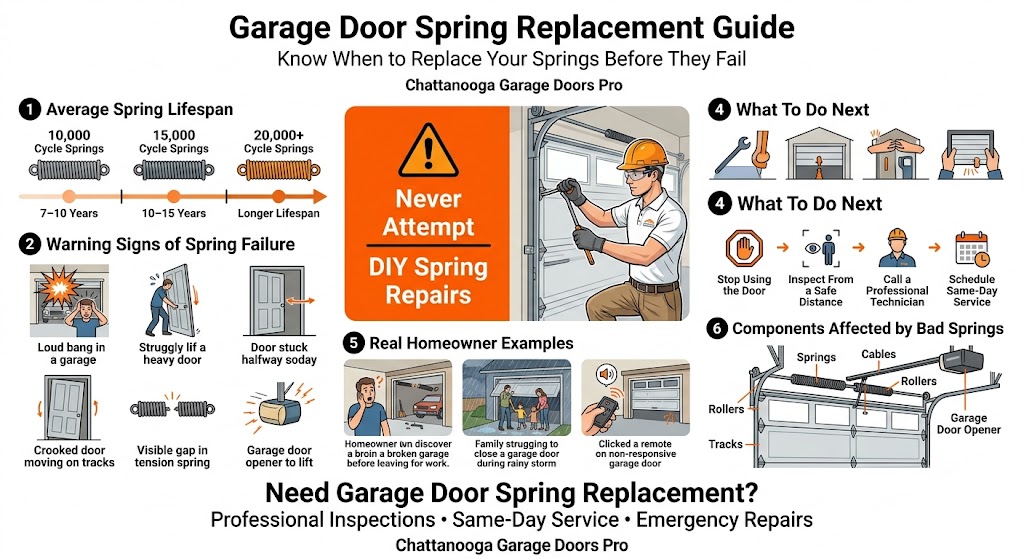
Garage door springs are typically rated by cycles. One cycle equals the door opening and closing once.
Most standard torsion springs are designed for approximately:
- 10,000 cycles
- 15,000 cycles
- 20,000+ cycles for premium options
For many households, this translates to roughly:
| Daily Usage | Estimated Lifespan |
|---|---|
| 2-4 cycles per day | 7-12 years |
| 6-8 cycles per day | 4-7 years |
| 10+ cycles per day | 3-5 years |
The lifespan depends heavily on how often the garage door is used. Families who enter through the garage multiple times each day place significantly more stress on the springs.
Weather conditions also play a role. Chattanooga's changing temperatures can cause metal components to expand and contract over time, increasing wear on spring systems.
Regular inspections and a professional garage door maintenance schedule can help maximize spring life while reducing the risk of unexpected failures.
What Signs Indicate That Garage Door Springs Need Replacement?
Garage door springs usually provide warning signs before they fail completely.
Some of the most common indicators include:
- Garage door feels heavier than normal
- Door opens unevenly
- Door stops halfway
- Loud squeaking or popping noises
- Visible gaps in the spring
- Opener struggles to lift the door
- Door closes too quickly
Homeowners often mistake these symptoms for opener issues. However, springs are frequently the root cause.
Real-Life Example
A Chattanooga homeowner noticed that their opener was making noise but the door barely moved. After inspection, a worn spring was found to be placing excessive strain on the opener motor. A professional garage door opener repair assessment revealed that replacing the spring prevented additional damage to the opener system.
If you notice any of these warning signs, schedule a professional inspection before a complete failure occurs.
Why Do Garage Door Springs Break Earlier Than Expected?
Even high-quality springs can fail sooner than expected under certain conditions.
Several factors contribute to premature wear:
- Frequent daily use
- Poor maintenance
- Rust buildup
- Incorrect spring sizing
- Extreme weather fluctuations
- Previous improper repairs
Rust is one of the biggest contributors to early spring failure. Corrosion increases friction and weakens the metal over time.
Another common issue occurs when springs are incorrectly matched to the weight of the door. A spring that is too weak must work harder during every cycle, leading to faster deterioration.
Homeowners who schedule periodic inspections through professional garage door spring repair services often identify these issues before they become major problems.
What Happens If You Continue Using Worn-Out Springs?
Using worn springs can create serious safety and mechanical concerns.
A failing spring should never be ignored.
As spring tension decreases, additional strain is transferred to other components, including:
- Garage door opener
- Cables
- Rollers
- Tracks
- Hinges
A family in Chattanooga experienced this during a severe storm. Their garage door would not close completely, leaving the garage exposed to wind and rain. The underlying cause was a weakened spring that could no longer maintain proper balance. After emergency service, the spring was replaced and the door function was restored safely.
Delaying replacement often results in more expensive repairs because multiple parts may become damaged.
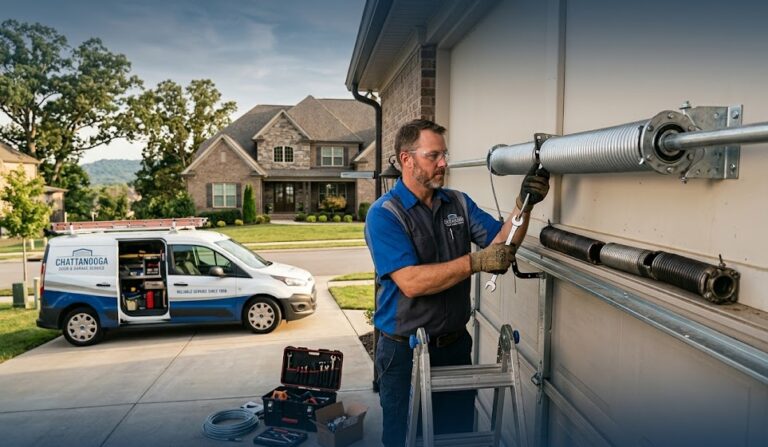
In severe cases, a broken spring can cause the door to fall unexpectedly, creating a significant safety hazard. For urgent situations, emergency garage door repair services in Chattanooga can help restore safety quickly.
How Can Homeowners Check Their Garage Door Springs Safely?
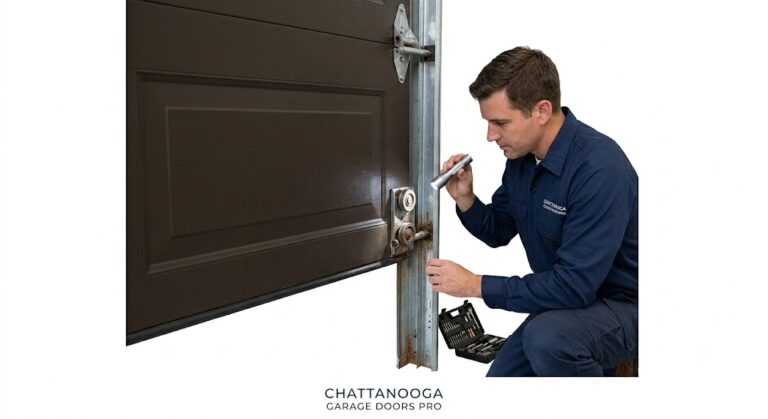
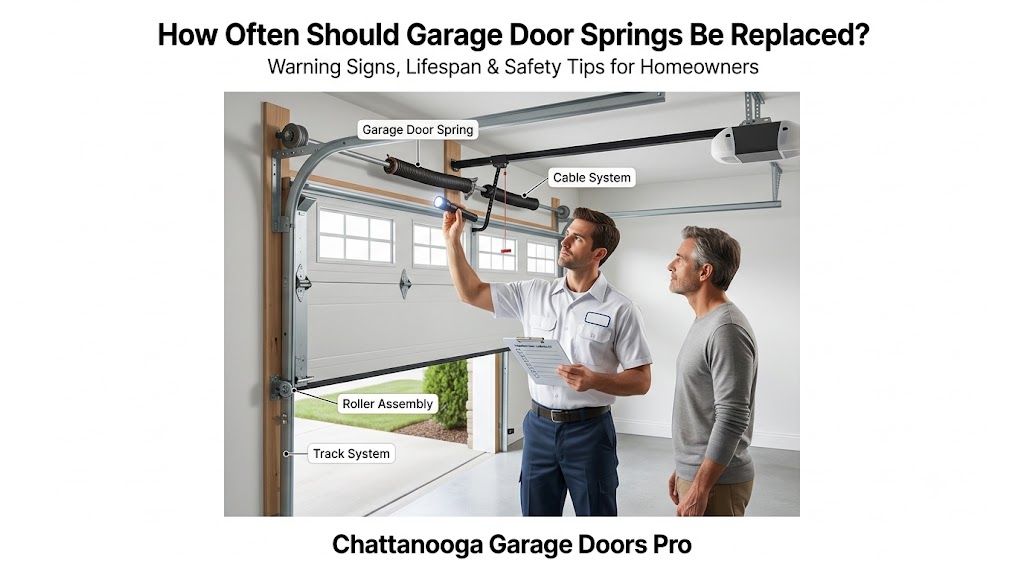
While spring repairs should be left to trained professionals, homeowners can perform basic visual inspections.
Look for:
- Rust accumulation
- Visible separation in the spring
- Loose mounting hardware
- Uneven door movement
- Excessive noise during operation
Another simple check involves observing whether the door remains balanced when partially opened.
Never attempt to disconnect, adjust, or remove garage door springs yourself.
Torsion springs are under extreme tension and can cause serious injury if handled improperly.
If anything appears unusual, contact a qualified technician for an inspection rather than attempting a DIY repair.
When Should Springs Be Replaced Instead of Repaired?
In some situations, repair may be possible. However, replacement is usually the safest long-term solution.
Replacement is generally recommended when:
- A spring has broken completely
- Springs are near the end of their cycle life
- Significant rust is present
- Door balance cannot be restored
- Multiple spring failures have occurred
When one spring fails on a two-spring system, many technicians recommend replacing both springs at the same time because they typically wear at a similar rate.
In some cases, homeowners may also consider a complete garage door replacement if the entire system is aging and multiple components require repair.
A professional inspection can help determine the most cost-effective option.
How Does Preventive Maintenance Extend Spring Life?
Preventive maintenance is one of the best ways to avoid emergency breakdowns.
A maintenance visit typically includes:
- Spring inspection
- Hardware tightening
- Roller evaluation
- Track alignment checks
- Door balance testing
- Safety system testing
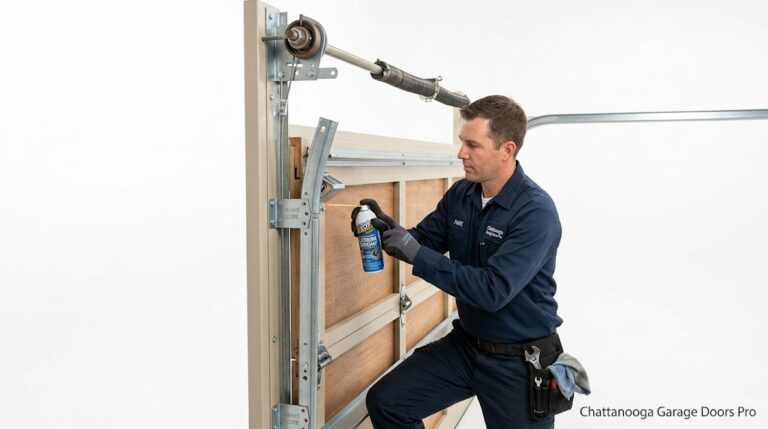
- Lubrication of moving parts
A homeowner who schedules annual garage door maintenance service appointments often experiences fewer unexpected failures and longer spring lifespan.
Routine inspections also help identify worn components before they create larger problems.
This proactive approach is especially beneficial for Tennessee homeowners who rely heavily on their garage doors throughout the year.
When Should You Call a Professional Garage Door Technician?
Professional service is recommended whenever:
- A spring breaks
- The door becomes unusually heavy
- The opener struggles to lift the door
- The door is stuck halfway
- The system becomes unbalanced
- Cables appear loose or damaged
Consider this example. A homeowner heard a loud bang in the garage and assumed something had fallen. The next morning, the opener clicked but the door would not move. Inspection revealed a broken spring. A same-day technician replaced the spring and restored safe operation before additional damage occurred.
Because spring systems involve high tension, professional service is always the safest choice.
For urgent situations, homeowners often benefit from fast-response garage door repair services that can restore operation quickly and safely.
Frequently Asked Questions
How often should garage door springs be replaced?
Most garage door springs should be replaced every 7 to 12 years, depending on usage frequency and maintenance.
Can I replace a garage door spring myself?
No. Garage door springs are under extreme tension and can cause serious injury. Professional replacement is strongly recommended.
How much does garage door spring replacement cost?
Costs vary depending on spring type, door size, and labor requirements. A professional inspection provides the most accurate estimate.
Should both springs be replaced at the same time?
Yes. If one spring fails on a dual-spring system, replacing both is usually recommended because they wear at similar rates.
How long does spring replacement take?
Most professional spring replacements can be completed within one to two hours, depending on the system and any additional repairs needed.
Need Fast Garage Door Spring Service?
If your garage door is stuck, making unusual noises, or showing signs of spring failure, professional assistance can help prevent further damage and safety risks.
Call Now: Schedule prompt service from Chattanooga Garage Doors Pro.
Free Quote: Receive an inspection and repair estimate tailored to your garage door system.
Emergency Service: Same-day assistance is available for urgent garage door spring failures and related repair needs.
Conclusion
Knowing how often should garage door springs be replaced helps homeowners avoid unexpected breakdowns and costly repairs. Most springs last between 7 and 12 years, but usage frequency, maintenance habits, and local weather conditions can significantly affect lifespan.
Watch for warning signs such as loud noises, uneven movement, heavy door operation, or visible spring damage. While basic visual inspections are safe, spring repairs and replacements should always be handled by trained professionals.
Regular maintenance, timely inspections, and proactive replacement can improve garage door safety, extend component life, and reduce the likelihood of emergency repairs. For Chattanooga homeowners, staying ahead of spring wear is one of the most effective ways to keep a garage door operating reliably year-round.