Garage Door Bracket Repair: What Homeowners Should Know
When most homeowners think about garage door repairs, they think about springs, cables, or openers. The brackets rarely cross their minds — until something goes wrong. Yet these small steel fittings are the structural connective tissue of your entire garage door system. They anchor the lift cables, hold the torsion shaft, connect the panels to the tracks, and distribute the door’s enormous weight across the mechanism. When a bracket fails, the consequences can range from a door that won’t close to a complete system collapse. In Chattanooga and across the Tennessee Valley, bracket repair is one of the most common — and most misunderstood — service calls we get. This guide will explain what brackets do, how to spot the warning signs of failure, what repair actually costs, and which repairs you can safely handle yourself versus which require a licensed technician.
If your door is already making strange noises or refusing to open, bracket damage may be the culprit. Our guides on garage door makes clicking noise but won’t open and garage door opener light blinking cover related symptoms that often trace back to bracket problems.
What Are Garage Door Brackets and Why Do They Matter?
Garage door brackets are steel hardware fittings that connect the door panels to the track and cable system, allowing the door to lift and lower smoothly. They serve as pivotal connectors that hold various components together, allowing for smooth operation and reducing wear and tear over time. Without them, the door would have no structural connection to the lifting mechanism — it would simply be a stack of panels sitting in a frame.
Brackets matter for three critical reasons. Safety: A faulty bottom bracket can cause cables to snap under tension, and a failed center bracket can release the torsion spring system entirely. Balance: Brackets help distribute the door’s weight evenly across the mechanism. When one bracket fails, the door tilts and the entire system strains. Longevity: Worn brackets put stress on other components — springs, cables, rollers, and the opener — leading to expensive cascade repairs. A bracket that costs a few dollars to replace can cause hundreds of dollars in damage if ignored.
Types of Garage Door Brackets
Not all brackets are created equal — and not all of them carry the same risk level for a DIY repair. Understanding which bracket you’re dealing with is the first step before picking up any tools.
| Bracket Type | Location | Function | DIY-Safe? |
|---|---|---|---|
| Bottom Bracket | Bottom corner of door | Anchors lift cable to door — bears the heaviest load | No — high tension risk |
| Center Bracket | Middle of top door section | Supports torsion spring shaft and distributes force | No — leave to professionals |
| Top Bracket | Top corner of door panel | Connects door to opener arm / cable | Yes (if no spring tension) |
| Flag Bracket | Side of door, horizontal track | Holds horizontal track and torsion shaft | Proceed with caution |
| Roller Bracket | Along each panel hinge | Holds rollers inside the track | Yes — low risk |
| Jamb Bracket | Vertical track to wall | Secures vertical tracks to the garage wall | Yes — tightening only |
The bottom bracket and center bracket are the two that homeowners should never touch. Bottom brackets anchor the lift cables and are under extreme tension at all times. Center brackets support the torsion spring shaft — the component that stores enough energy to lift a car. A single mistake with either can cause catastrophic injury. Top, roller, and jamb brackets, by contrast, are low-risk if the door is properly secured and the springs are not under tension.
Signs Your Garage Door Bracket Needs Repair
Bracket failures rarely happen instantly. They develop over months or years, giving homeowners plenty of warning signs — if they know what to look for. The problem is that most people never look at the inside of their garage door. When was the last time you inspected the brackets? If it’s been more than a year, it’s worth doing now. Here are the warning signs that indicate a bracket is failing:
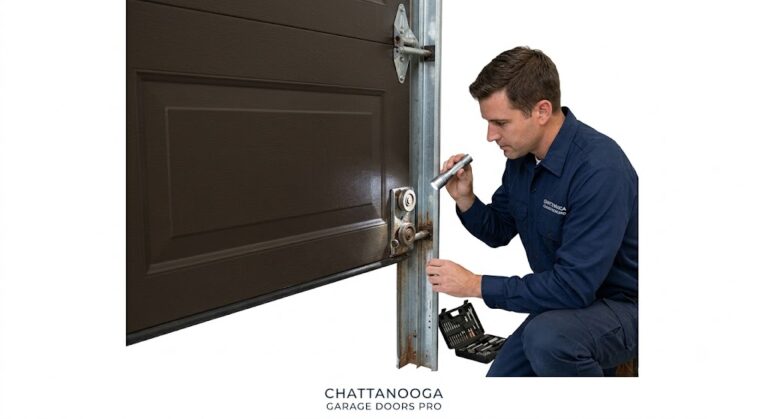
- Visible cracks, bends, or rust on the bracket body. Any visible crack means the bracket can no longer carry the load of the door. Deep rust, flaking metal, or orange streaks indicate the bracket is structurally compromised and can no longer support weight. Bent metal, elongated fastener holes, or frayed cable contact points are also red flags.
- The door shakes or rattles as it moves. If you notice the door wobbling or rattling during operation, a loose or failing bracket is often the cause. Loose mounting bolts that keep working free are a classic sign of bracket fatigue.
- The door tilts to one side or sits unevenly. A door that looks crooked or misaligned when closed usually has a bracket problem on one side. The bracket is no longer holding its corner of the door at the correct height.
- Grinding, popping, or scraping noises during operation. A damaged bracket can cause the door to bind against the track, producing grinding or scraping sounds. A persistent clicking sound from one side of the door is often an early warning that a bracket is cracking where the cable connects.
- Rollers regularly jumping off the track. When a bracket bends or shifts, it pulls the roller out of alignment with the track. If you’re constantly re-seating rollers, the underlying bracket may be the problem.
- The door hesitates, judders, or drops unexpectedly. A door that hesitates mid-travel or drops a centimetre before catching itself may have a bracket that’s failing under load. This is a serious safety concern and should be inspected immediately.
If you notice multiple symptoms at once, there’s a good chance more than one bracket is compromised. A full inspection by a professional is a smart move before attempting any repair.
How Much Does Garage Door Bracket Repair Cost?
The cost of bracket repair depends on whether you tackle it yourself or hire a professional, and on which bracket is involved. Replacement brackets themselves are inexpensive — typically $8 to $30 each for standard types. The cost difference comes from labor, safety equipment, and the complexity of the repair.
DIY repair for a safe bracket type (top, roller, or jamb) typically costs $30 to $270, including the bracket, new bolts, and any tools you need to purchase. Professional repair for a single bracket runs $150 to $500, including labor charges of $75 to $160 per hour plus the cost of parts. In the Chattanooga area specifically, track or roller repairs — which often include bracket work — average $150 to $350, while spring or cable replacement (which frequently involves bottom brackets) runs $200 to $500. Emergency or after-hours service adds $75 to $150 to the bill.
For a bottom bracket repair — the most common type — the total cost typically falls between $125 and $250 when no structural work is needed. Multi-point reinforcement, where several brackets are replaced or reinforced, runs $225 to $450. If the bracket failure has damaged the cable or spring, the total will be higher — often $300 to $600 or more depending on the components involved. If you’re concerned about the overall cost of a repair versus replacement, our guide to garage door installation cost in Chattanooga TN can help you compare.
DIY vs. Professional Repair: The Safety Line
This is the most important section of this guide. Garage door bracket repair is not a uniform task — some brackets are safe to replace yourself, and others can kill you if you get it wrong. Top and jamb bracket issues can sometimes be handled by experienced DIYers, especially if you’re just tightening bolts. But bottom or center bracket problems require a professional. Torsion spring systems are nothing to mess with.
The bottom bracket is the most dangerous component on a garage door. It anchors the lift cable, which is connected to a torsion spring wound to hundreds of pounds of tension. A cracked bottom bracket that fails completely can release that cable with enough force to cause severe injury or death. DIY repairs on bottom brackets can lead to severe injuries — professional service is the safest choice. The center bracket is equally dangerous because it supports the torsion spring shaft itself. Adjusting or replacing it requires releasing and re-winding the springs, a procedure that requires calibrated winding bars and years of experience.
If you’re considering DIY bracket work, here is the safe list: lubricating hinges and rollers, tightening loose bolts on top or jamb brackets with a socket wrench, and replacing roller brackets on a door that is fully secured with the opener disconnected and the springs under no tension. The unsafe list: anything involving the bottom bracket, the center bracket, the torsion springs, the lift cables, or the cable drums. If you’re not sure which category your repair falls into, stop and call a professional. Our guide on when to call a garage door technician can help you make that call.
If you do attempt a safe DIY bracket replacement, the basic steps are straightforward: disconnect the opener by pulling the emergency release cord, secure the door in the closed position with locking pliers or C-clamps on the track, remove the old bracket with a socket set, install the new bracket with fresh bolts, and reconnect and test. The critical safety step is securing the door — an unsecured door can rise unexpectedly and cause injury. Never skip this step.
How a Professional Handles Bracket Repair
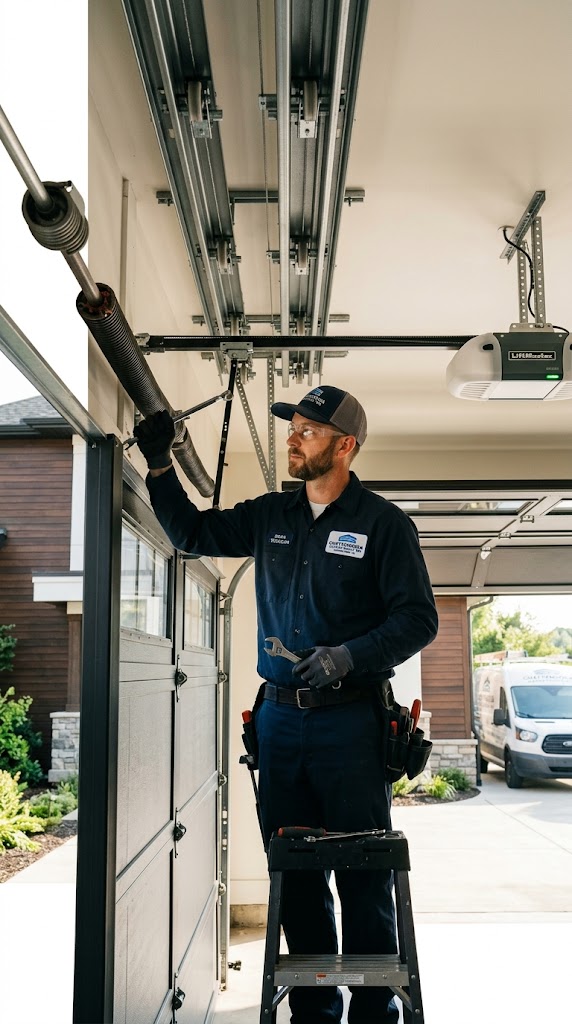
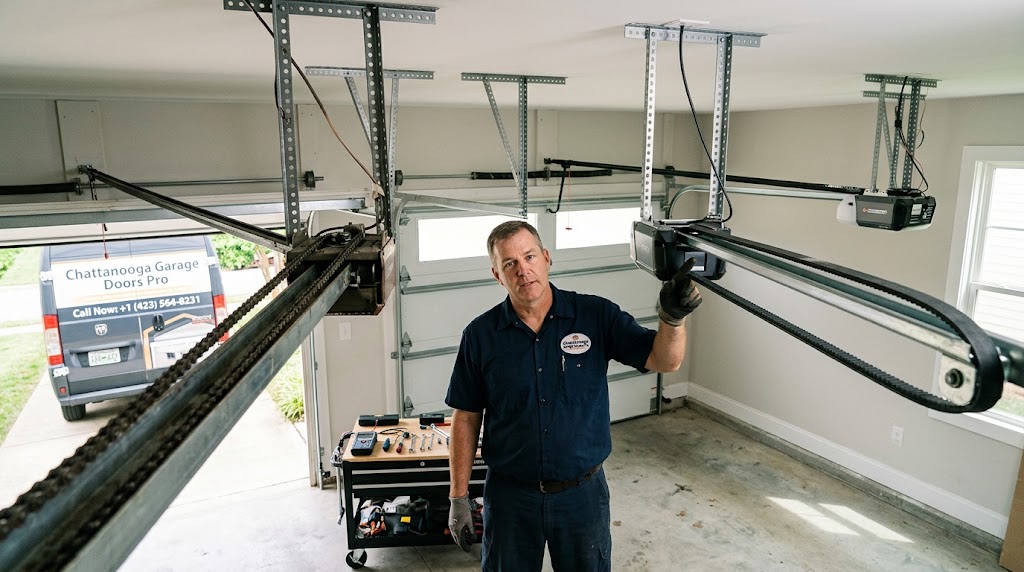
When a licensed technician arrives to repair a bracket, the job involves much more than swapping out a piece of metal. For a bottom bracket repair, the technician will first release the tension on the torsion springs using proper winding bars. Only then can the bracket be safely removed. After installing the new bracket, the technician inspects the lift cables for fraying or damage, checks the cable drums, balances the door, and tests the entire system multiple times to ensure everything operates smoothly. This comprehensive approach ensures that the repair addresses the root cause and doesn’t leave hidden problems waiting to fail.
A professional will also evaluate whether the bracket failure was caused by a deeper issue — an unbalanced door, a worn spring, or an opener that’s applying too much force. Replacing a bracket without addressing the underlying cause often leads to the new bracket failing the same way. If you’re wondering how to find a reliable pro, our guide on how to choose the best garage door company in Chattanooga walks you through the questions to ask and the red flags to avoid.
Prevention: Keep Your Brackets Healthy
Brackets don’t fail overnight. They rust, loosen, and crack over years of exposure to humidity and constant load. A little preventive attention goes a long way:
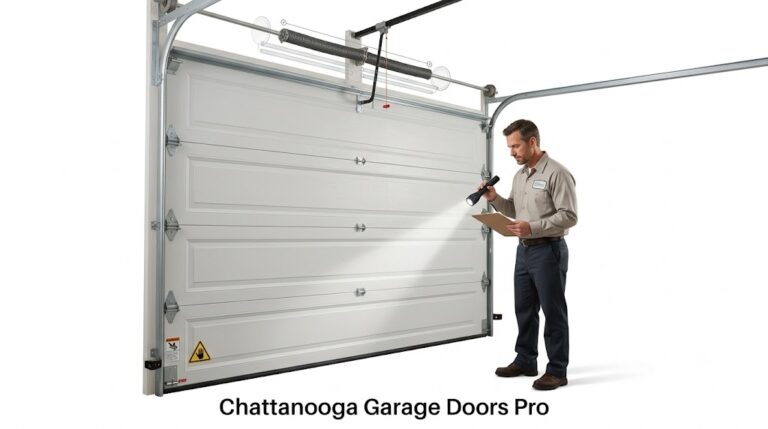
- Inspect the brackets twice a year. With the door closed, look at every visible bracket for rust, cracks, or loose bolts. Pay particular attention to the bottom corners where the cables attach.
- Tighten loose bolts carefully. Use a socket wrench — not an impact driver — and don’t overtighten, which can strip the threads or distort the bracket.
- Keep the door balanced. An unbalanced door puts uneven stress on brackets. Test the balance annually by disconnecting the opener and lifting the door halfway — it should stay in place.
- Lubricate the moving parts. Use a silicone-based or white lithium grease on rollers and hinges twice a year to reduce the strain on all components.
- Schedule a professional tune-up every 12–18 months. A technician can catch bracket fatigue before it becomes a failure. Our seasonal garage door maintenance guide for Chattanooga homes explains what to check each season.
For more troubleshooting tips and maintenance advice, browse our blog. If you’re comparing drive systems for a new opener, our guide on garage door chain or belt covers the pros and cons of each.
Frequently Asked Questions
1. What are the most common signs of a failing garage door bracket?
The most common signs are visible cracks or rust on the bracket, a door that shakes or rattles during operation, a door that tilts to one side, grinding or popping noises, rollers jumping off the track, and loose mounting bolts that keep working free. A persistent clicking sound from one side of the door is often an early warning of a cracked bottom bracket.
2. Can I replace a garage door bracket myself?
It depends on which bracket. Top, roller, and jamb brackets are safe DIY repairs if the door is fully secured and the springs are not under tension. Bottom brackets and center brackets should never be handled by a homeowner — they’re under extreme tension and a mistake can cause serious injury or death.
3. How much does garage door bracket repair cost?
DIY repair for a safe bracket type costs $30 to $270, including parts. Professional repair for a single bracket runs $150 to $500, including labor. In the Chattanooga area, track or roller repairs average $150 to $350, and bottom bracket repairs with cable work typically fall between $200 and $500. Multi-point reinforcement runs $225 to $450.
4. Why is my garage door bracket rusting?
Rust is caused by humidity and moisture exposure. In Tennessee’s humid climate, uncoated steel brackets can begin rusting within a few years. Surface rust is mostly cosmetic, but deep rust with flaking metal means the bracket has lost structural integrity and needs replacement. Keeping the garage ventilated and applying a light coat of lubricant to brackets can slow rust formation.
5. What happens if I ignore a broken bracket?
A broken bracket can lead to a cascade of failures. If a bottom bracket fails, the lift cable can snap, the door can drop unevenly, and the tracks, rollers, and panels can be seriously damaged. In the worst case, it becomes a safety hazard for anyone standing nearby. Ignoring a bracket problem almost always results in a more expensive repair down the line.
6. How often should brackets be inspected?
Twice a year is the recommended interval — ideally in spring and fall when you’re already doing seasonal maintenance. Look for rust, cracks, loose bolts, and any signs of bending. If you use your garage door heavily (multiple times per day), consider a professional inspection every 12 months.
Don’t Let a Small Bracket Become a Big Repair
A garage door bracket is a small, inexpensive part that most homeowners never think about — until it fails. And when it fails, the consequences can be far more serious than a door that won’t open. A cracked bottom bracket carrying hundreds of pounds of force can release a cable, drop a door, or cause injury to anyone nearby. In Chattanooga, Hixson, East Ridge, and Ooltewah, our licensed technicians inspect brackets during every service call and can safely repair or replace any bracket on your door — including the high-tension ones that homeowners should never touch. We test the full system after every repair, replace worn parts with factory-spec components, and never leave a job until the door operates the way it should. Call now to schedule your bracket inspection or repair.
Call (423) 564-8231