Garage Door Tracks: Common Problems and Solutions
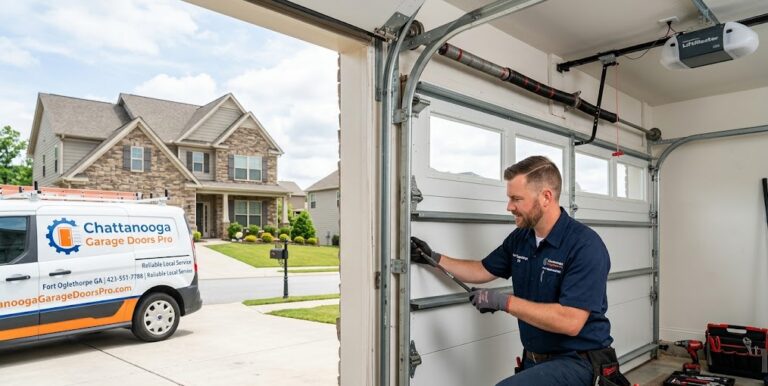
Your garage door tracks are the steel rails that guide the door as it opens and closes. They're easy to overlook — until the door starts grinding, shuddering, or refusing to move. In Chattanooga and across the Tennessee Valley, track problems are one of the most common reasons homeowners call for garage door repair. The good news is that most track issues have clear warning signs, and catching them early can save you from a costly overhaul.
This guide covers the most common track problems — misalignment, bends, debris, and wear — along with the solutions for each. You'll learn which fixes are safe to try yourself, which require a licensed technician, and how to keep your tracks running smoothly for years. If you're also dealing with noisy operation, our guide on garage door rollers: nylon vs steel explains how upgrading your rollers can dramatically reduce noise and wear on your tracks.

Why Garage Door Tracks Matter
Tracks are the backbone of your garage door system. They keep the rollers aligned, guide the door through its vertical and horizontal travel, and bear the lateral forces the door generates as it moves. When tracks are misaligned, bent, or obstructed, the door can bind, jump the track, or fall completely off. A door that comes off track is a serious safety hazard — it can drop without warning and cause injury or property damage. That's why track maintenance isn't optional. It's a fundamental part of keeping your garage door safe and operational.
Common Garage Door Track Problems
1. Track Misalignment
Track misalignment is the most common track issue. Over time, the bolts holding the tracks to the wall can loosen, or the tracks can shift from a minor impact — a vehicle bumper, a stray basketball, or even seasonal ground movement. When tracks move out of alignment, the rollers bind, the door jerks, and the opener strains. The result is uneven wear, excessive noise, and eventually a door that won't open or close properly.
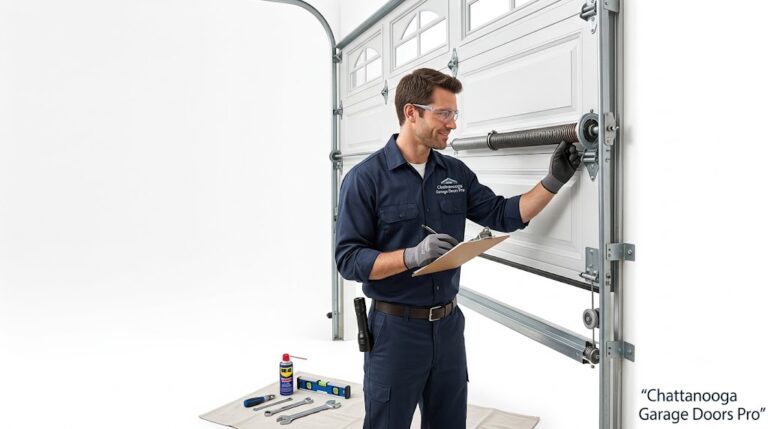
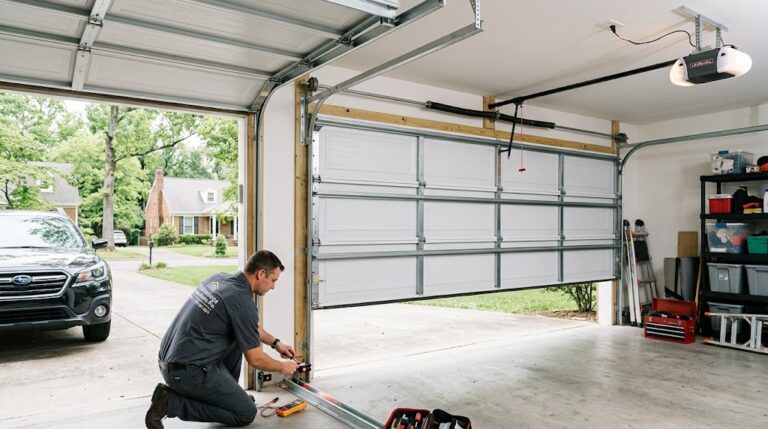
Solution: Track alignment is a precise job. The vertical tracks must be perfectly plumb, and the horizontal tracks must be level and parallel. A professional uses a level and measuring tape to verify alignment and adjusts the track brackets accordingly. Attempting this yourself without the right tools can make the problem worse. If you suspect misalignment, call a technician. If you're also dealing with noisy operation, our guide on garage door tracks covers related issues.
2. Bent or Damaged Tracks
Bent tracks are a close second. A car bumper that taps the vertical track, a door that comes off track and bends the rail, or a shifting foundation can all cause bends. Even a minor bend can create a rough spot where rollers catch and bind. A track with a sharp crease or significant bending has lost its structural integrity — straightening it leaves a weak point that will fail again.
Solution: Minor bends can sometimes be straightened with a wood block and a rubber mallet, but only if the bend is gentle and the track isn't creased. A track with a sharp crease or significant bending needs full replacement. Replacement track sections cost $40 to $120 each, and a professional can replace one or both tracks in about an hour. Never attempt to straighten a track while the door is under spring tension — this is dangerous and can cause the door to fall.
3. Debris and Buildup in the Tracks
Dirt, leaves, gravel, and even small pebbles can get lodged in the tracks. In Chattanooga's humid climate, spider webs and insect nests are also common. Debris in the tracks causes the rollers to catch and grind, creating noise and uneven movement. Over time, this buildup can cause the door to jump the track entirely.
Solution: Clean the tracks with a dry cloth or soft brush to remove loose debris. For stubborn grime, use a damp cloth with mild soap and water. Avoid using grease or oil on the tracks — grease attracts dirt and makes the problem worse. After cleaning, apply a light coat of silicone-based lubricant to the rollers (not the track itself). Our guide on garage door maintenance covers the full cleaning and lubrication process.
4. Loose Track Bolts
The bolts that secure the tracks to the wall and to the door frame can loosen over time from constant vibration and door movement. Loose bolts allow the tracks to shift, which throws off alignment and causes the door to bind. This is one of the easiest track problems to fix — and one of the easiest to ignore until it causes a bigger issue.
Solution: With the door closed, check each track bolt with a socket wrench. Tighten any loose bolts snugly, but don't overtighten — you can strip the threads or distort the track. If you find multiple loose bolts, the tracks may need realignment after tightening. This is a safe DIY task, provided the door is fully closed and at rest.
5. Rust and Corrosion
In humid climates like Tennessee's, steel tracks can rust. Surface rust is mostly cosmetic, but deep rust with pitting weakens the track and creates a rough surface that wears down rollers. If rust is widespread or the tracks feel rough to the touch, replacement may be the better option.
Solution: For light surface rust, clean the tracks with a wire brush and apply a rust-inhibiting primer followed by a coat of paint. For severe rust, replace the track sections. Keep the garage ventilated and dry to slow rust formation. Our guide on how weather affects garage doors in Tennessee explains the seasonal factors that accelerate corrosion.
6. Door Off Track
When rollers jump out of the track, the door often hangs at an angle, visibly separated from the rail. This can be caused by a snapped cable, a bent track, a worn roller, or a severe impact. A door off track is a serious safety hazard — it can fall without warning. Do not attempt to force it back into place.
Solution: Stop using the door immediately. Disconnect the opener by pulling the emergency release cord. Do not attempt to re-seat the rollers yourself — a door that's off track can drop suddenly and cause injury. Call a licensed technician. Off-track repair typically costs $150 to $300 and takes 30 to 60 minutes for a professional. If the door is off track due to a broken spring or cable, those issues must be addressed first. Our guide on emergency garage door repair signs explains when a track problem becomes an emergency.
How Much Does Track Repair Cost?
Track repair costs vary depending on the severity of the problem and whether parts need replacement. Here's a general breakdown:
- Track realignment: $100 to $200 — often part of a routine service call.
- Straightening a bent section: $125 to $200.
- Replacing one track section: $150 to $300 (parts $40 to $120, plus labor).
- Replacing both tracks with labor: $250 to $400.
- Off-track repair: $150 to $300.
- Full track replacement (both sides): $300 to $500, depending on door size and track type.
These prices are for the Chattanooga area and may vary slightly by contractor. If the track damage is accompanied by a broken spring, cable, or roller, the total repair cost will be higher. For a full breakdown of garage door repair pricing, see our guide on garage door installation cost in Chattanooga TN.
DIY vs. Professional: What You Can Safely Handle
Some track maintenance is safe for a confident DIYer. Others require a professional. Here's the breakdown:
Safe DIY tasks: Cleaning debris from the tracks, tightening loose track bolts (with the door fully closed), and lubricating the rollers. These tasks don't involve the door's tension system and are low-risk if you follow basic safety precautions.
Unsafe DIY tasks: Straightening bent tracks, realigning tracks, replacing track sections, and re-seating rollers on a door that's off track. These tasks involve the door's weight and tension system. A mistake can cause the door to fall, the springs to release, or the track to fail completely. Torsion springs are under extreme tension — never attempt to adjust or repair anything that involves the spring system. If you're unsure which category your repair falls into, call a professional. Our guide on when to call a garage door technician can help you decide.
Prevention: Keep Your Tracks in Good Shape
Most track problems develop gradually. A little preventive maintenance goes a long way toward keeping your door running smoothly:
- Clean the tracks twice a year. Wipe down the inside of the tracks with a dry cloth or soft brush to remove debris. For stubborn grime, use a damp cloth with mild soap and water.
- Check for loose bolts twice a year. With the door closed, check each track bolt with a socket wrench and tighten any that are loose.
- Lubricate the rollers, not the tracks. Apply a silicone-based lubricant to the roller bearings and stems twice a year. Never grease the tracks — grease attracts dirt and causes buildup.
- Inspect for bends and rust. Look along both tracks for visible bends, dents, or rust. Catching a minor bend early prevents it from becoming a major repair.
- Keep the door balanced. An unbalanced door puts uneven stress on the tracks. Test the balance annually by disconnecting the opener and lifting the door halfway — it should stay in place. If it slides down, the springs need adjustment.
- Schedule a professional tune-up every 12–18 months. A technician can catch alignment issues, worn rollers, and early track damage before they cause a failure. Our seasonal garage door maintenance guide for Chattanooga homes explains what to check each season.
For more troubleshooting tips and maintenance advice, browse our blog. If your tracks are fine but your door is still noisy, our guide on garage door rollers: nylon vs steel can help you choose the right replacement rollers for a quieter door.
Frequently Asked Questions
1. What are the most common signs of garage door track problems?
The most common signs are grinding or scraping noises during operation, the door shaking or jerking as it moves, rollers jumping off the track, the door looking crooked or misaligned, and visible bends, dents, or rust on the tracks. If you notice any of these, inspect the tracks before using the door again.
2. Can I fix a bent garage door track myself?
Minor bends can sometimes be straightened with a wood block and a rubber mallet, but only if the bend is gentle and the track isn't creased. A track with a sharp crease or significant bending needs full replacement. Never attempt to straighten a track while the door is under tension — this is dangerous and can cause the door to fall. If you're unsure, call a professional.
3. How much does garage door track repair cost?
Track realignment costs $100 to $200. Straightening a bent section costs $125 to $200. Replacing one track section costs $150 to $300. Replacing both tracks with labor costs $250 to $400. Off-track repair costs $150 to $300. These prices are for the Chattanooga area and may vary slightly by contractor.
4. What happens if I ignore a track problem?
A minor track problem can escalate quickly. Misaligned or bent tracks cause the rollers to bind, which strains the opener and wears down the rollers. Eventually, the door can come off the track entirely, which is a serious safety hazard. Ignoring a track problem almost always leads to a more expensive repair down the line.
5. Should I lubricate my garage door tracks?
No. Tracks should be kept clean and dry, not lubricated. Grease or oil on the tracks attracts dirt, dust, and grit, which builds up and impedes smooth operation. Lubricate the rollers and hinges instead — the moving parts that actually need it. Use a silicone-based lubricant designed for garage doors.
6. How can I prevent track problems?
Clean the tracks twice a year, check for loose bolts, lubricate the rollers (not the tracks), inspect for bends and rust, keep the door balanced, and schedule a professional tune-up every 12–18 months. These simple steps prevent most track problems before they start.
Don't Let Track Problems Derail Your Door
Garage door tracks are easy to overlook — until they fail. A misaligned or bent track can cause the door to bind, jump the rail, or fall entirely. In Chattanooga, Hixson, East Ridge, and Ooltewah, our licensed technicians inspect tracks during every service call and can straighten, realign, or replace damaged track sections — often in a single visit. We test the full system after every repair, replace worn parts with factory-spec components, and never leave a job until the door operates the way it should. Call now to schedule your track inspection or repair.
Call (423) 564-8231