Garage Door Won't Close: Causes and Solutions
Simple troubleshooting tips and professional repair advice for homeowners throughout Chattanooga TN and surrounding communities. Learn why your garage door won't close and how to fix it.
Garage Door Won't Close: Causes and Solutions
Simple troubleshooting tips and professional repair advice for homeowners throughout Chattanooga TN and surrounding communities.
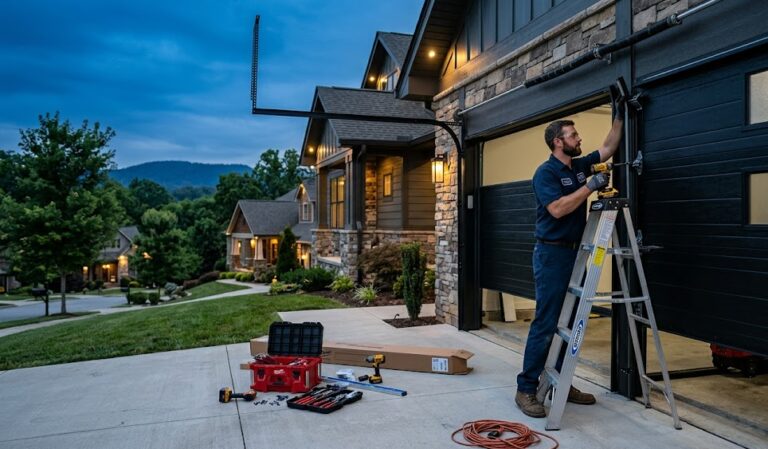
A Chattanooga homeowner was preparing to leave for work early one morning. As they pressed the wall button, the garage door began closing but suddenly reversed back open. After several attempts, the door refused to close completely.
Situations like this are extremely common throughout Chattanooga TN. Whether the issue involves safety sensors, track obstructions, opener settings, broken springs, or damaged cables, understanding the cause can help you determine whether the problem is a quick fix or requires professional service.
In this guide, we'll explain the most common reasons a garage door won't close, how to troubleshoot the problem safely, and when to call a professional garage door repair technician.
Why Your Garage Door Won't Close
Common causes of garage doors not closing: sensor issues, track damage, opener settings, broken springs, broken cables, obstructions, power issues, and weather-related problems. Expert guide for Chattanooga TN homeowners.
Why Your Garage Door Won't Close
A garage door that refuses to close is frustrating — and often unsafe. Understanding the root cause is the first step toward a solution. Below are the most common reasons why your door won't go down, and what you can do about each one.
Sensor Issues
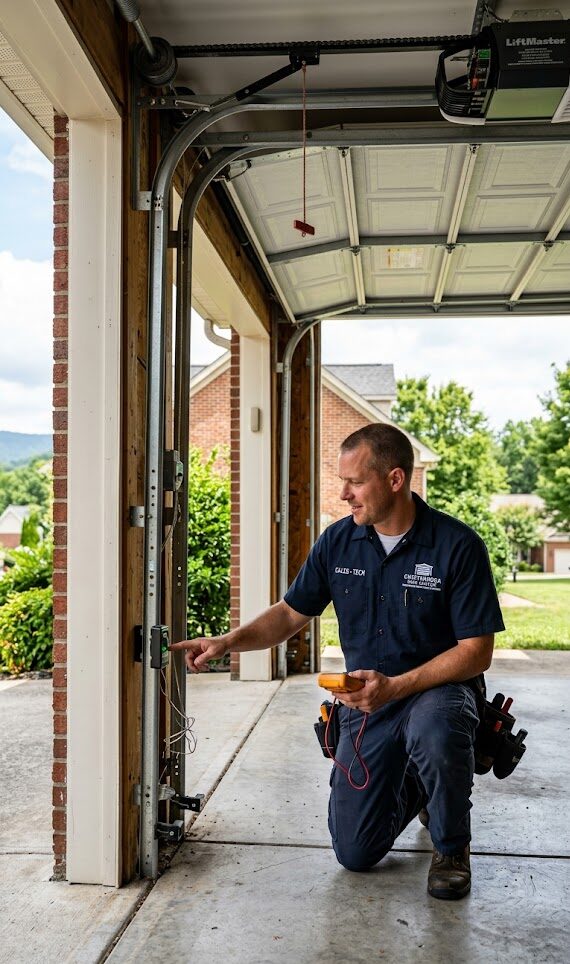
Misaligned, dirty, or obstructed safety sensors are the #1 reason a garage door won't close. Sensors detect objects in the door's path and trigger an automatic reversal. Even slight misalignment or a layer of dust can stop the door from closing.
💡 Check for blinking lights on the sensors.Track Damage
Bent, misaligned, or dented tracks can obstruct the door's path, causing it to reverse or stop midway. Even minor track damage can create enough friction to trigger the safety reversal system or prevent the door from seating properly.
💡 Look for visible dents or gaps between the rollers and the track.Opener Settings
Incorrect travel or force limit settings can prevent the opener from completing a full close cycle. If the force settings are too low, the opener will stop or reverse when it encounters normal resistance. Travel limits determine how far the door moves.
💡 Refer to your opener's manual to adjust limit and force settings.Broken Springs
Springs counterbalance the door's weight. When a torsion or extension spring breaks, the door becomes too heavy for the opener to lower safely. The opener will often stop or reverse to prevent motor damage.
💡 Never attempt to repair springs yourself — call a professional.Broken Cables
Cables work alongside springs to lift and lower the door. If a cable snaps or becomes disconnected, the door will become unbalanced. The opener will detect this imbalance and stop the door from closing to prevent further damage.
💡 Check for loose, frayed, or visibly broken cables.Obstructions
Objects blocking the photo-eye sensors, debris in the tracks, or physical items in the door's path can easily prevent a garage door from closing. Even a small stone or a child's toy can trip the safety sensors.
💡 Clear the tracks and ensure the sensor lenses are clean.Power Issues
A power outage, unplugged opener, or tripped circuit breaker can stop your door completely. While this seems obvious, it's often overlooked. Check your breaker panel and make sure the opener is securely plugged in.
💡 Test the wall outlet with another device to confirm power.Weather-Related Issues
Extreme cold can freeze tracks or thicken lubricant, causing the door to stick. Ice and snow can block sensors or create obstructions in the door's path. Heavy rain can also misalign or damage sensitive electrical components.
💡 Clear ice and snow from the bottom of the door and around the tracks.Still having trouble? Check our complete guide on what to do if your door won't open.
From sensor resets to emergency repair tips, our Garage Door Not Opening Guide covers everything you need to know — including when it's time to call a professional.
Check the Garage Door Safety Sensors
Safety sensors are a critical safety feature designed to prevent the door from closing on people, pets, or objects. When sensors are blocked, dirty, or misaligned, the door may refuse to close or reverse unexpectedly.
Dirty Sensors
Dust, spider webs, pollen, and debris can accumulate on the sensor lenses over time, blocking the infrared beam. This is one of the most common causes of sensor failure and is easily fixed with a soft cloth and gentle cleaning.
Misaligned Sensors
Sensors must face each other directly. If one gets bumped or knocked out of position, the beam breaks and the door won't close. Look for blinking indicator lights — a steady light usually means proper alignment, while blinking signals an issue.
Damaged Sensor Wiring
Wires connecting the sensors to the opener can become frayed, chewed by pests, or disconnected over time. Loose connections or damaged insulation can interrupt the signal and cause intermittent sensor failures.
For more in‑depth information on diagnosing and resolving sensor issues, explore our complete guide:
Inspect the Garage Door Tracks
Learn how to inspect your garage door tracks for bends and obstructions. Safety tips and professional advice for homeowners in Chattanooga TN.
Inspect the Garage Door Tracks
The tracks guide your garage door as it opens and closes. Over time, they can become bent, misaligned, or blocked by debris — all of which can prevent the door from closing properly. Here's what to look for.
Bent Tracks
Even a minor bend in the track can throw off the door's alignment. When tracks are bent, the rollers can get stuck or the door may refuse to close completely. Common causes include accidental vehicle bumps, heavy objects falling against the track, or general wear and tear over time.
Impact on alignment: Bent tracks force the door to travel unevenly, creating friction that can trigger the safety reversal system or cause the door to stop mid‑close. Visually inspect the vertical and horizontal sections of both tracks for any dents, curves, or gaps between the track and the rollers.
Track Obstructions
Rocks, debris, hardware, and even small objects can get lodged in the tracks, preventing the door from closing. Obstructions create resistance that the opener detects as an obstacle, triggering the auto‑reverse feature.
Common culprits: Pebbles, dirt clumps, rust flakes, fallen nuts or bolts, and even spider webs. Check both tracks thoroughly, especially the bottom section near the floor where debris naturally accumulates. Clear any visible obstructions with a stiff brush or a cloth.
⚠️ Safety Notice
Never attempt major track realignment without proper tools. Adjusting tracks requires precise alignment and the correct tools. Improper adjustments can cause the door to derail, leading to property damage, injury, or even death. If you notice significant bends or cannot clear an obstruction, call a professional garage door track repair technician.
What you can do safely: Visually inspect tracks, remove loose debris with a brush, and lubricate the track surface with a silicone‑based spray. Leave complex repairs to licensed professionals.
Look for Problems With the Garage Door Opener
The garage door opener is the brain of your garage door system. When it malfunctions, the door may not respond, operate erratically, or fail to open or close completely. Understanding common opener issues can help you troubleshoot effectively.
Travel Limit Settings
The travel limit determines how far the door opens and closes. If the limit is set incorrectly, the door may stop too early, open partially, or hit the floor before fully closing. Improper travel settings can also put unnecessary strain on the motor and springs.
Force Adjustment Settings
The force adjustment controls how much power the opener uses to lift and lower the door. If the force is set too low, the door may reverse unexpectedly. If set too high, it can damage the door, opener, or cause injury. Proper force calibration ensures smooth operation.
Garage Door Opener Not Working
When the opener fails completely, the issue could be a dead motor, faulty logic board, dead remote batteries, or a tripped breaker. Modern openers also have safety features that may temporarily lock the system. Diagnosing the root cause requires systematic testing.
Need expert diagnosis and repair for your garage door opener?
Check for Broken Springs or Cables
Springs and cables are the most critical components of your garage door system — and the most dangerous when they fail. Knowing the warning signs can help you identify problems early and avoid serious injury.
Signs of a Broken Spring
- 💥 Loud bang — A sudden snapping sound like a gunshot or firecracker
- 🏋️ Heavy door — The door feels extremely heavy when lifted manually
- 🔍 Visible spring gap — A clear separation or gap in the torsion spring
Signs of a Damaged Cable
- 🌀 Loose cable — Cables appear sagging or hanging loosely
- 🧵 Frayed cable — Visible fraying, rust, or broken strands
- 📐 Uneven door movement — Door moves crookedly or one side lifts first
Safety Warning
Broken springs are dangerous and should only be repaired by trained technicians. Garage door springs are under extreme tension — attempting to fix or replace them without proper tools and training can cause serious injury or death. Always call a professional for spring and cable repairs.
For more detailed information on diagnosing spring issues and professional repair options, explore our complete guide:
Garage Door Closes Then Reverses: What It Means
Why your garage door closes then reverses: sensor interruption, travel limits, force settings, track resistance, and obstructions. Expert advice for Chattanooga TN homeowners.
Garage Door Closes Then Reverses: What It Means
It's frustrating when your garage door starts to close, then suddenly reverses back up. This safety feature is designed to protect people and property — but when it happens repeatedly, it's a sign that something needs attention. Here's what could be causing it.
Sensor Interruption
Dirty, misaligned, or obstructed safety sensors are the most common cause. The system thinks something is in the way and reverses the door.
Incorrect Travel Limits
If the close‑limit is set too low, the opener believes the door has hit the floor before it actually has, triggering a reversal.
Excess Force Settings
If the force required to close exceeds the opener's limit, the system reverses to prevent damage. This often happens with worn springs or stiff rollers.
Track Resistance
Bent tracks, debris, or lack of lubrication create friction that the opener detects as an obstacle, causing the door to reverse.
Obstructions
Any object in the door's path — a toy, a tool, or even a misplaced shoe — can trigger the auto‑reverse safety feature.
A Real‑Life Example from Chattanooga
A family in the East Ridge neighborhood called us after their garage door started closing halfway, then reversing back up. They tried multiple times, but the door wouldn't stay down. They were worried about security and safety.
When our technician arrived, he discovered that one of the safety sensors had been knocked slightly out of alignment — likely from a lawnmower bump. The sensor's LED light was blinking rapidly instead of glowing steady. After a quick realignment and cleaning of the lenses, the door closed smoothly and stayed down.
The homeowner was relieved it wasn't a major repair. This story is common in Chattanooga, where sensor misalignment is the #1 cause of closing‑and‑reversing issues, especially after lawn care, storms, or heavy vibration from nearby traffic.
Get Professional Diagnostics in Chattanooga
If your garage door keeps reversing and you can't find the cause, our licensed technicians can pinpoint the issue and fix it — often the same day. Schedule an inspection today.
Common Garage Door Closing Problems in Chattanooga TN
Chattanooga's unique climate and weather patterns create specific challenges for garage door systems. From humidity to seasonal temperature swings, local conditions can affect how your door operates. Understanding these regional factors can help you identify problems early.
Humidity Effects
Chattanooga's high humidity levels can cause wooden garage doors to warp, swell, or stick. Moisture can also rust springs, cables, and tracks, leading to rough operation and premature failure. Condensation can affect sensor lenses, triggering false obstructions.
Storm Damage
Severe thunderstorms, high winds, and hail — common in the Chattanooga area — can knock doors off track, damage panels, and loosen hardware. Lightning strikes can also fry opener circuit boards and safety sensors, causing electrical failures.
Seasonal Temperature Swings
Chattanooga experiences dramatic temperature changes throughout the year. Metal components expand in summer heat and contract during winter cold, which can throw off track alignment, sensor positioning, and travel limit settings. Rubber seals may also harden and crack.
Aging Garage Door Systems
Many homes in the greater Chattanooga area have older garage door systems that show signs of wear. Springs lose tension, opener motors weaken, safety sensors become unreliable, and moving parts wear out over time — especially in homes built before the 2000s.
We serve homeowners and businesses throughout the Chattanooga region, including Chattanooga TN, Hixson TN, East Ridge TN, Ooltewah TN, Cleveland TN, and surrounding communities.
🔧 Experiencing closing problems with your garage door in Chattanooga? Our local technicians can diagnose and fix the issue quickly.
Schedule a Service →Step-by-Step Garage Door Troubleshooting Checklist
Follow this 10-step checklist to diagnose common garage door problems: power, wall button, remote batteries, sensors, tracks, obstructions, springs, cables, and when to call a professional.
Step-by-Step Garage Door Troubleshooting Checklist
Follow this simple checklist to diagnose the most common garage door problems. Work through each step in order — many issues can be resolved with a quick check. If you reach step 10, it's time to call a professional.
Check Power Source
Ensure the opener is plugged in and the circuit breaker hasn't tripped. Test the outlet with another device.
Test Wall Button
Press the wall-mounted button. If the door responds, the opener is powered and the issue may be with the remote.
Replace Remote Batteries
Dead batteries are a common culprit. Replace with fresh batteries and test the remote again.
Clean Sensors
Dust, dirt, or spider webs on sensor lenses can block the beam. Wipe both sensors with a soft cloth.
Verify Sensor Alignment
Check that both sensors are facing each other directly. Blinking LEDs indicate misalignment — adjust gently until steady.
Inspect Tracks
Look for bends, dents, or gaps between the rollers and the track. Minor debris can be cleared with a brush.
Look for Obstructions
Check the door's path, tracks, and sensor area for any objects — toys, tools, stones, or debris blocking the way.
Check Springs
Visually inspect springs for gaps or breaks. Do not attempt to adjust or replace springs yourself — they are under extreme tension.
Check Cables
Look for fraying, loose, or broken cables. If a cable is damaged, the door is unsafe to operate — call a professional.
Call Professional If Unresolved
If you've completed all steps and the door still isn't working, call a licensed technician. Do not attempt repairs beyond your skill level.
Stuck on Step 10? We're Here to Help.
If your garage door still won't operate after troubleshooting, our licensed technicians can diagnose and fix the problem — often the same day. Don't risk injury or further damage.
When DIY Repairs Are Safe and When to Call a Professional
Not all garage door repairs are created equal. Some tasks are safe for homeowners to handle, while others require specialized training, tools, and experience. Understanding the difference can save you time, money, and prevent serious injury.
Safe DIY Tasks
👍 Do It Yourself- ✓ Clean sensors
- ✓ Replace batteries
- ✓ Remove debris from tracks
- ✓ Basic visual inspections
Professional Repairs
⚠️ Call a Pro- ✕ Spring replacement
- ✕ Cable replacement
- ✕ Track repair
- ✕ Opener motor repair
- ✕ Electrical diagnostics
Remember: When in doubt, call a professional. Garage door springs and cables are under extreme tension — the cost of a service call is far less than the cost of an emergency room visit.
🔧 Need professional garage door service? Our trained technicians handle all repairs safely and efficiently.
Schedule a Service →When to Call an Emergency Garage Door Repair Technician
Emergency garage door repair situations: stuck open, partially hanging, broken spring, snapped cable, off track, and safety hazards. Call for immediate assistance in Chattanooga TN.
When to Call an Emergency Garage Door Repair Technician
Some garage door problems are more than just an inconvenience — they're safety hazards that require immediate professional attention. If you experience any of these situations, don't wait. Call a licensed technician right away.
Door Stuck Open
Your garage door won't close and remains fully open, leaving your home and belongings exposed. This is a security risk and often indicates a broken spring or cable failure.
Door Partially Hanging
A door that hangs unevenly or is crooked is a sign of a broken cable, spring failure, or a door off track. It can fall at any moment, posing a serious injury risk.
Broken Spring
A snapped torsion or extension spring makes the door unsafe to operate. The door becomes extremely heavy and the opener cannot lift it. Never attempt to replace a spring yourself.
Snapped Cable
A broken cable causes the door to become unbalanced and can lead to sudden dropping. This is a high-risk situation that can damage property or injure someone nearby.
Door Off Track
When the door jumps or derails from its tracks, it can become jammed or fall. Operating the door in this state can cause severe damage to the door, tracks, and opener.
Safety Hazard
Any situation where the garage door is unstable, sparking, or making unusual noises — or if the safety sensors are completely non‑functional — constitutes an immediate hazard. Stop using the door and call for help.
Emergency Garage Door Repair Available Now
If you're experiencing any of these emergency situations, don't wait. Our licensed technicians are available for same‑day and emergency service throughout Chattanooga and surrounding areas. Call us now for immediate assistance.
Garage Door Repair Services Available in Chattanooga TN
Garage Door Repair
Fast, reliable repair for broken springs, cables, rollers, and off-track doors.
Learn More →Garage Door Installation
Professional installation of modern residential and commercial garage doors.
Learn More →Garage Door Replacement
Upgrade outdated or damaged doors with energy‑efficient, modern alternatives.
Learn More →Garage Door Spring Repair
Safe torsion and extension spring replacement by trained technicians.
Learn More →Garage Door Opener Repair
Diagnose and fix motors, remotes, logic boards, and smart opener systems.
Learn More →Garage Door Cable Repair
Fix loose, frayed, or snapped cables with professional replacement.
Learn More →Commercial Garage Door Services
Warehouse, loading dock, and industrial door solutions.
Learn More →Expert Garage Door Repair Chattanooga TN — Local Solutions You Can Trust
When your garage door won't close or your opener stops responding, you need a trusted local expert. At Chattanooga Garage Doors Pro, we specialize in garage door repair Chattanooga TN residents rely on for fast, professional service. Whether it's a broken spring, damaged cable, or a door that's come off track, our technicians have the experience and tools to get your system working again — often the same day.
One of the most common issues we encounter is a garage door won't close situation. This can be caused by misaligned safety sensors, a faulty wall switch, or problems with the opener's travel limits. Sometimes the door starts to close and then reverses — a classic sign of force adjustment issues or obstruction detection. Our garage door troubleshooting process begins with a thorough inspection to pinpoint the exact cause before any work begins.
Garage door troubleshooting is more than just guesswork — it's a systematic approach that identifies whether the problem is mechanical, electrical, or sensor-related. We check power supply, remote batteries, sensor alignment, track condition, spring tension, and opener functionality. This ensures we address the root cause, not just the symptoms.
From emergency repairs to scheduled maintenance, we offer comprehensive solutions for residential and commercial properties throughout the greater Chattanooga area. Whether you need a simple sensor cleaning or a complete garage door replacement, our team provides honest recommendations and upfront pricing.
Don't let a broken garage door disrupt your day. Contact us for reliable garage door repair Chattanooga TN service that you can count on. We're available for same-day appointments and emergency calls throughout the week.
🔧 Need a professional garage door repair in Chattanooga? Our team is ready to help.
Schedule a Service →Areas We Serve
Expert garage door services throughout Chattanooga TN, Hixson, East Ridge, Ooltewah, Cleveland, and surrounding communities. Same-day service and free estimates available.
Areas We Serve
From downtown Chattanooga to the surrounding suburbs and Georgia border towns, our licensed technicians provide expert garage door services across the entire region. We're committed to fast response times and reliable support for every community we serve.
Chattanooga TN
Hixson TN
East Ridge TN
Ooltewah TN
Cleveland TN
Signal Mountain TN
Soddy-Daisy TN
Collegedale TN
Ringgold GA
Rossville GA
Fort Oglethorpe GA
Lookout Valley TN
Homeowners and businesses throughout the Greater Chattanooga area rely on us for fast, reliable garage door repair, installation, and maintenance. We understand the local climate and common issues faced in the region — from humidity-driven rust to storm-related sensor misalignment — ensuring durable and effective solutions tailored to your needs.
We offer same-day emergency response and free estimates for all services. Whether you're in downtown Chattanooga, a suburb like Hixson or Ooltewah, or across the state line in Ringgold or Rossville, our licensed technicians are ready to help. We bring the same level of professionalism, safety, and quality to every job, no matter where you are.
Not sure if we cover your area? Contact us today and we'll confirm — we're proud to serve communities across Tennessee and Georgia.
Frequently Asked Questions
Quick answers to the most common garage door questions from homeowners in Chattanooga and surrounding areas.
A garage door that won't close all the way is often caused by misaligned safety sensors, dirty sensor lenses, or incorrect travel limit settings. When performing garage door troubleshooting, start by checking the sensors near the bottom of the tracks — they should face each other with steady indicator lights. If the garage door won't close and the sensors are clean and aligned, the issue may be with the opener's travel limits or force settings. In some cases, a worn or broken spring can prevent full closure. If you've checked the basics and the problem persists, it's time to call a professional for garage door repair Chattanooga TN residents trust.
When a garage door closes and immediately reverses, it typically indicates an obstruction, misaligned safety sensors, or improperly adjusted force limits. The auto‑reverse feature is designed to prevent injury by stopping and reversing if something blocks the door's path. However, even a small object, spider web, or dust buildup on the sensor lenses can trigger this safety mechanism. During garage door troubleshooting, inspect the area around the door, clean the sensor lenses, and check for proper alignment. If the door continues to reverse, the opener's force settings may need adjustment. Persistent issues should be evaluated by a professional offering garage door repair Chattanooga TN services.
Yes — dirty or obstructed sensors are one of the most common reasons a garage door won't close. Safety sensors use an invisible infrared beam that must remain unbroken for the door to close properly. Dust, pollen, spider webs, and even condensation can accumulate on the lenses, blocking the beam and causing the door to stop or reverse. During garage door troubleshooting, gently wipe both sensor lenses with a dry microfiber cloth to remove any debris. Make sure the sensors are facing each other and that the indicator lights are steady. If cleaning doesn't resolve the issue, check for loose wiring or misalignment before calling a professional for garage door repair Chattanooga TN service.
Absolutely not — operating a garage door with a broken spring is extremely dangerous. Springs are under high tension and counterbalance the weight of the door. When a spring breaks, the door can become extremely heavy, causing the opener to strain or fail completely. Attempting to lift or operate a door with a broken spring can result in sudden, uncontrolled movement that can cause serious injury or property damage. Signs of a broken spring include a loud bang, visible gap in the spring, or a door that feels unusually heavy. If you suspect a broken spring, stop using the door immediately and call a professional for garage door repair Chattanooga TN service. Garage door troubleshooting for springs should always be left to trained technicians.
You should call a professional for garage door repair Chattanooga TN service if you encounter any of the following: a broken spring, snapped or frayed cables, a door that's off its tracks, persistent opener motor issues, or any situation where basic garage door troubleshooting doesn't resolve the problem. If your garage door won't close after cleaning sensors and checking alignment, or if the door makes grinding or unusual noises, it's time to call an expert. Also, never attempt to repair springs, cables, or electrical components yourself — these require specialized tools and training. Professional technicians can safely diagnose and fix issues quickly, preventing further damage and ensuring your door operates safely and reliably.
🔧 Still have questions? Our team is here to help with all your garage door needs.