Garage Door Won’t Stay Open: Causes and Fixes
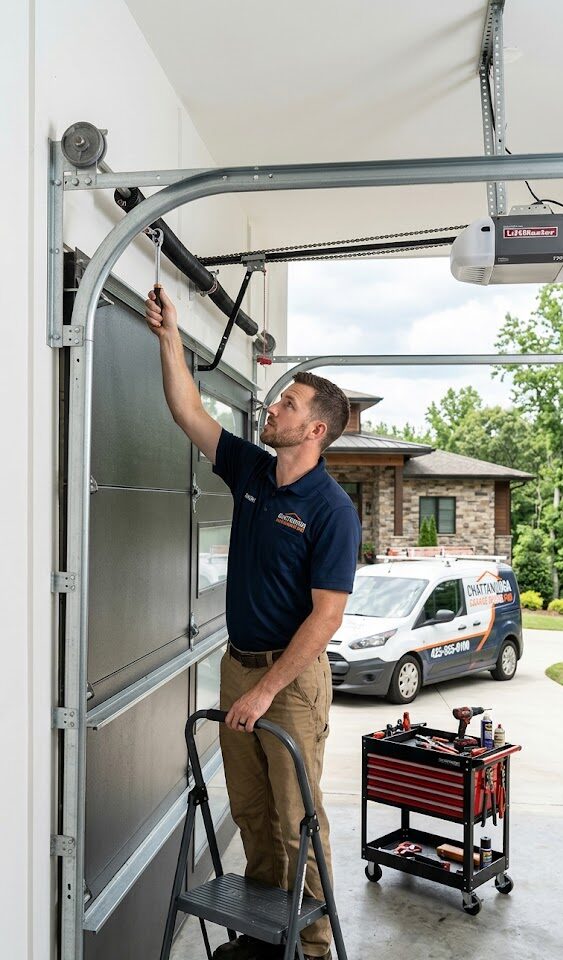
You press the button, the door rises, and then — instead of staying put — it slides right back down. Or maybe it only opens a few inches before stalling out completely. A garage door that won’t stay open is more than a daily annoyance. It’s a warning sign that something in the system — a spring, a sensor, or the opener itself — has gone out of balance. In Chattanooga and across the Tennessee Valley, this is one of the most common calls we get. The good news? In many cases, the fix is straightforward once you know what to look for.
A garage door relies on a precise counterbalance system. The springs carry the weight of the door, the opener provides the push, and the sensors and limit switches keep everything in check. When any one of these components falls out of sync, the door can fail to hold its open position. This guide will walk you through the most likely causes, show you which fixes you can safely handle yourself, and explain when it’s time to call in a licensed technician.
Why a Garage Door Won't Stay Open
Before you start troubleshooting, it helps to understand the basic mechanics. A standard residential garage door weighs between 150 and 300 pounds. The springs — whether torsion or extension — are wound or stretched to counterbalance that weight. When the door is fully open, the springs are at rest, and the door should stay put. When the springs weaken, break, or lose tension, the door becomes a dead weight. Gravity takes over, and the door slides back down. The same thing happens if the opener’s travel limits are misconfigured, or if a safety sensor is tricking the system into thinking there’s an obstruction.
Knowing which category your problem falls into — mechanical, electronic, or a combination of both — is the first step toward a fix. Ignoring the issue can lead to a full system failure, which is why recognizing the signs you need emergency garage door repair matters. A door that won’t stay open is often the earliest warning.
Cause 1: Broken or Worn Springs
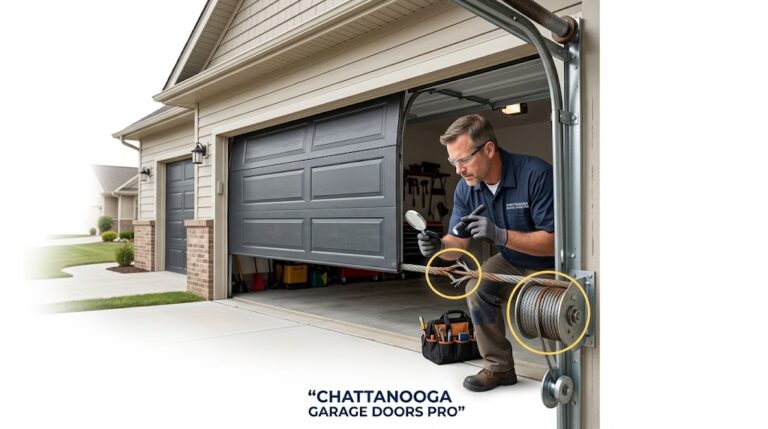
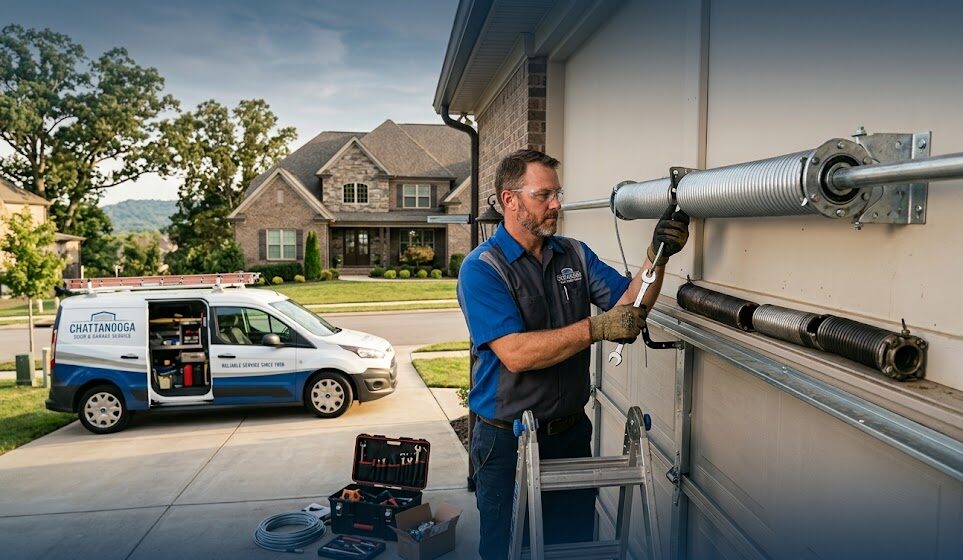
This is the number one reason a garage door refuses to stay open. Springs do the heavy lifting, and when they fail, the door becomes almost impossible to hold in the raised position. If you heard a loud bang — something like a gunshot — coming from your garage, a torsion spring has almost certainly snapped. A broken spring often leaves a visible gap in the coil, and the door may open only a few inches before the opener stalls or the door drops back down.
Even if the spring hasn’t broken yet, it may have lost enough tension to become ineffective. Warning signs include jerky movement, unusual grinding or screeching noises, and a door that feels extremely heavy when you try to lift it manually. Spring replacement is not a DIY job. Torsion springs are wound to over 800 pounds of tension, and a mistake can cause serious injury. The garage door spring replacement cost is modest compared to the risk of a DIY attempt. A licensed technician can also check whether the springs failed due to normal wear, rust, or an incorrect original installation — and recommend a high-cycle upgrade if needed.
Cause 2: Misaligned or Dirty Safety Sensors
Garage door openers use photo-eye sensors mounted near the floor on both sides of the door. These sensors project an invisible beam across the opening. If the beam is interrupted — by dirt, debris, or a misalignment — the opener interprets it as an obstruction and may refuse to keep the door open, or it may reverse immediately after opening. This is one of the most common and easily fixable causes. Check the LED lights on both sensors. If they’re blinking instead of solid, the sensors are either dirty or out of alignment.
Start by wiping the sensor lenses with a soft, dry cloth. Then check that both units are pointed at each other and that their brackets are secure. Sometimes a slight bump from a garbage can or a bicycle is enough to knock them out of alignment. If the lights are still blinking after cleaning and realigning, the issue may be a wiring fault or a deeper sensor problem. Our guide on garage door sensor issues covers this in more detail.
Cause 3: Incorrect Limit Switch Settings
The limit switch — sometimes called the travel module — tells the opener when the door has reached its fully open or fully closed position. If the up-limit is set too short, the opener may cut power before the door is fully raised, and gravity pulls it back down. If the down-limit is set too far, the door may press against the floor, detect resistance, and reverse. Symptoms include a door that stops short of the fully open position, reverses right after opening, or sits with a visible gap above the floor.
On older chain- and screw-drive openers, limit switches are adjusted with physical screws on the motor unit. Newer smart openers use electronic programming through the wall button or a panel on the opener. The adjustment process is not difficult, but it must be done carefully. After every adjustment, run a full open-close cycle to verify the door travels smoothly and stops in the correct position. If the limit switch appears to be physically damaged or the opener still behaves erratically after adjustment, the travel module may need replacement.

Cause 4: Obstructions in the Door's Path
Sometimes the problem isn’t mechanical or electronic at all — something is physically blocking the door. A toy, a garden tool, or a piece of debris caught under the door can trigger the safety reversal system. Even a small obstruction that the door barely touches can cause the opener to stop and reverse. Before assuming a major repair is needed, inspect the entire path of the door. Look along the tracks, under the bottom seal, and around the sensors. Clear any leaves, gravel, or loose objects that may have accumulated.
Ice and snow can also cause problems in colder months. If the door is frozen to the ground, the opener will strain and reverse. Never force the door open in this situation — instead, remove the ice carefully and check that the bottom seal isn’t damaged. If the door still won’t stay open after clearing the path, the issue lies elsewhere.
Cause 5: Worn or Damaged Tracks and Rollers
The door rides on rollers that travel inside metal tracks. If the tracks are bent, misaligned, or filled with debris, the door will struggle to move smoothly. A door that shakes, wobbles, or makes grinding noises during travel may have a track problem. In severe cases, the rollers can jump out of the track entirely, causing the door to hang crookedly — a clear sign of a garage door emergency. Worn rollers with damaged bearings can also cause the door to bind, which strains the opener and may prevent the door from staying open.
Lubricating the rollers and hinges with a garage-door-specific lubricant can solve minor squeaking and stiffness. However, if the tracks are visibly bent or the rollers are cracked or missing, do not attempt to force the door. A professional can realign the tracks and replace worn rollers safely. Attempting to bend a track back into shape by hand often makes the problem worse and can damage the door panels.
Cause 6: Opener Motor or Logic Board Failure
Sometimes the door itself is fine, but the opener is the problem. If the motor runs but the door doesn’t move — or moves only a few inches before stopping — the issue may be a stripped drive gear, a disconnected trolley, or a failing logic board. The logic board is the brain of the opener; when it fails, the door may open and close erratically, refuse to stay open, or stop responding to remote commands altogether. A power surge from a lightning strike or a faulty outlet can damage the board.
Diagnosing an opener motor or logic board issue requires a multimeter and a working knowledge of low-voltage electronics. If you’re not comfortable working with electrical components, this is a job for a technician. The good news is that opener repairs are often less expensive than full replacement. A professional can test the board, the travel module, and the safety sensor wiring to pinpoint the exact fault. If the opener is more than 10–12 years old, replacement may be the more economical choice — which is where our guide to garage door installation cost in Chattanooga TN can help you budget.
How to Diagnose the Problem
Before you call a technician, a few simple checks can help you narrow down the cause. Follow this step-by-step approach:
- Disconnect the opener. Pull the emergency release cord to disengage the door from the opener. If the door now stays open when you lift it manually, the problem is likely in the opener — not the springs. If it still slides down, the springs or the door’s balance is the issue.
- Test the door’s balance. With the opener disconnected, lift the door halfway and let go. A properly balanced door will stay in place. If it slides down, the springs are weak or broken. If it shoots upward, the springs are too strong.
- Check the sensors. Look at the LED lights on both photo-eye sensors. Solid lights mean they’re aligned and working. Blinking lights indicate a problem. Clean the lenses and check alignment.
- Inspect the tracks and rollers. With the door closed, look along both tracks for bends, dents, or debris. Check that all rollers are seated inside the tracks and that none are cracked or missing.
- Listen to the opener. If the motor runs but the door doesn’t move, the drive system or trolley may be disconnected. If the opener is silent, check the power supply and the circuit breaker.
These checks will give you a clear picture of whether you’re dealing with a mechanical failure, an electronic fault, or a simple adjustment issue. If you’re unsure at any point, stop and call a professional. Our guide on when to call a garage door technician can help you make that call.
When to Call a Professional
Some garage door problems are safe to troubleshoot on your own. Cleaning sensors, lubricating rollers, and clearing obstructions are all reasonable DIY tasks. But the moment the problem involves springs, cables, or the internal components of the opener, it’s time to step back. Torsion springs are under extreme tension. A snapped cable can whip free with enough force to cause serious injury. The emergency garage door repair signs — a loud bang, a visibly broken spring, a door off its tracks — are not a DIY invitation. They’re a signal to call someone who has the tools, training, and insurance to do the job safely.
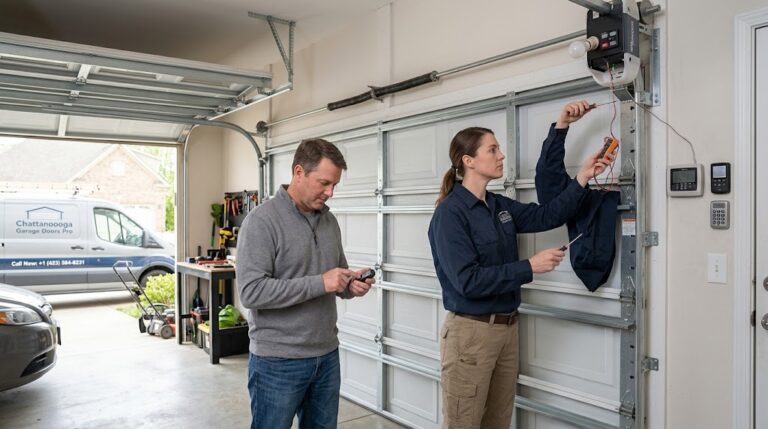
A licensed technician will do more than just fix the immediate problem. They’ll check the door’s balance, inspect the bearings, test the opener’s force settings, and lubricate all moving parts. This comprehensive approach ensures the repair addresses the root cause, not just the symptom. If you’re wondering how to find a reliable pro, our guide on how to choose the best garage door company in Chattanooga walks you through the questions to ask and the red flags to avoid.
Safety Warnings: What Not to Do
Before you attempt any troubleshooting, commit these safety rules to memory:
- Never stand under a door that is stuck open. If the springs have failed, the door can drop without warning.
- Never try to adjust or replace torsion springs yourself. The stored energy in a wound torsion spring can cause catastrophic injury.
- Never force a door that is off its tracks. Pushing or pulling a misaligned door can bend the tracks further and cause the door to fall.
- Always unplug the opener before inspecting the motor unit. This prevents accidental activation while you’re working.
- Keep children and pets away from the garage while the door is malfunctioning.
If you ever feel uncertain about what you’re seeing, stop. No repair is worth a trip to the emergency room.
Prevention Tips: Keep Your Door Working
Most garage door failures don’t happen overnight. Springs weaken gradually, tracks accumulate debris, and sensors drift out of alignment. A little preventive maintenance goes a long way. Here’s what you can do:
- Lubricate moving parts twice a year. Use a silicone-based or white lithium grease on rollers, hinges, and the torsion shaft. Avoid WD-40 as a long-term lubricant — it attracts dust.
- Test the door’s balance annually. Disconnect the opener and lift the door halfway. If it doesn’t stay in place, call a technician to adjust the springs.
- Keep the tracks clean. Wipe down the tracks with a damp cloth and check for loose bolts or brackets.
- Test the safety reverse feature. Place a piece of wood on the ground under the door and close it. The door should reverse upon contact.
- Schedule a professional tune-up every 12–18 months. A technician can catch worn parts before they fail.
A door that won’t stay open is often the first sign of a system that needs attention. Addressing it early prevents a minor repair from turning into a major overhaul. For a deeper look at maintenance and troubleshooting, browse our blog for more guides.
Frequently Asked Questions
1. Why does my garage door open and then immediately close?
This is usually caused by a safety sensor issue. The sensors may be dirty, misaligned, or blocked. It can also happen if the down-limit switch is set too far, causing the opener to detect resistance and reverse. Check the sensor lights first — if they’re blinking, clean and realign the sensors.
2. Can I fix a garage door that won’t stay open myself?
If the problem is a dirty sensor, a minor track obstruction, or a limit switch adjustment, you may be able to handle it yourself. But if the door feels heavy, you heard a loud bang, or the springs look damaged, do not attempt a DIY repair. Call a professional immediately.
3. How much does it cost to fix a garage door that won’t stay open?
The cost depends entirely on the cause. A sensor cleaning or limit switch adjustment is often part of a routine service call. A spring replacement typically ranges from $200 to $700, depending on the spring type and door weight. See our full breakdown of garage door spring replacement cost for details.
4. Is a garage door that won’t stay open an emergency?
If the door is stuck open, it’s a security risk. If you suspect a broken spring or a snapped cable, it’s an emergency — the door can fall without warning. Do not use the door and call a technician right away. Our guide to emergency garage door repair signs explains which symptoms require immediate action.
5. How do I know if my garage door springs are broken?
The most obvious sign is a loud bang or snap from the garage. You may also see a visible gap in the spring coil. The door will feel extremely heavy when lifted manually, and it may only open a few inches before stopping. Never try to operate a door with a broken spring — call a professional.
Don’t Let a Small Problem Become a Big Repair
A garage door that won’t stay open is a system warning — not something to ignore. Whether it’s a misaligned sensor, a worn spring, or a failing opener, the underlying cause will only get worse with time. In Chattanooga, Hixson, East Ridge, and Ooltewah, our licensed technicians can diagnose the problem and restore your door’s safety and security — often in a single visit. We carry the right parts, we test the full system, and we never leave a job until the door operates the way it should. Call now to schedule your repair.
Call (423) 564-8231