Garage Door Reverses Before Hitting the Floor? Here’s Why and How to Fix It
You watch the door descend, it gets within a few inches of the ground — and then it stops, reverses, and goes right back up. You try again. Same result. A garage door that reverses before hitting the floor is one of the most common service calls we get in Chattanooga and across the Tennessee Valley. It’s frustrating, and it leaves your home exposed every time the door fails to close. The good news is that the cause almost always falls into a short list of fixable problems — and in many cases, you can identify the issue in about five minutes.
Your garage door is equipped with a safety reversal system required by federal law since 1993. When the opener detects resistance, a sensor interruption, or an incorrect travel setting, it reverses to prevent injury or damage. A door that reverses before reaching the floor is telling you that one of these systems is triggering a false alarm. Understanding which one is the key to fixing the problem. This guide will walk you through the most likely causes, show you which fixes are safe to try yourself, and explain when it’s time to call a licensed technician.
Why Your Garage Door Reverses Before Closing
Modern garage door openers are built with multiple safety mechanisms designed to reverse the door the moment something goes wrong. The most well-known is the photo-eye safety sensor system, which projects an invisible infrared beam across the door opening. If that beam is interrupted, the door reverses immediately. But sensors aren’t the only trigger. The opener also monitors the force required to move the door. If it detects unexpected resistance during the down cycle, it reverses to avoid crushing whatever is in the way. And if the limit switches are misconfigured, the opener may think the door has hit the ground when it hasn’t. Understanding which system is triggering the reversal is the key to fixing the problem.
Cause 1: Safety Sensor Problems (Most Common)
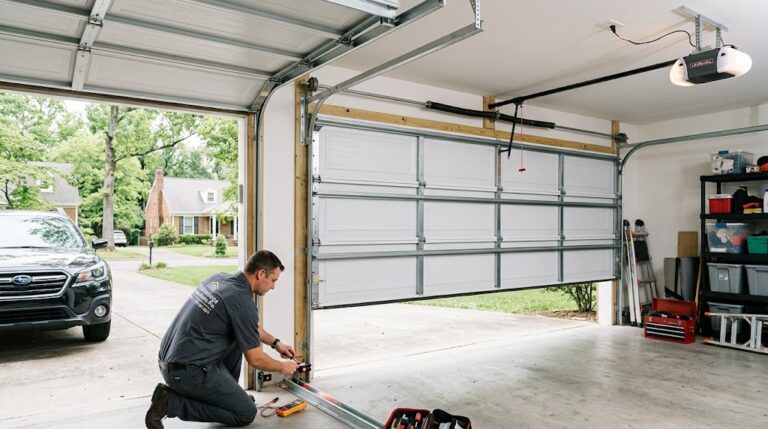
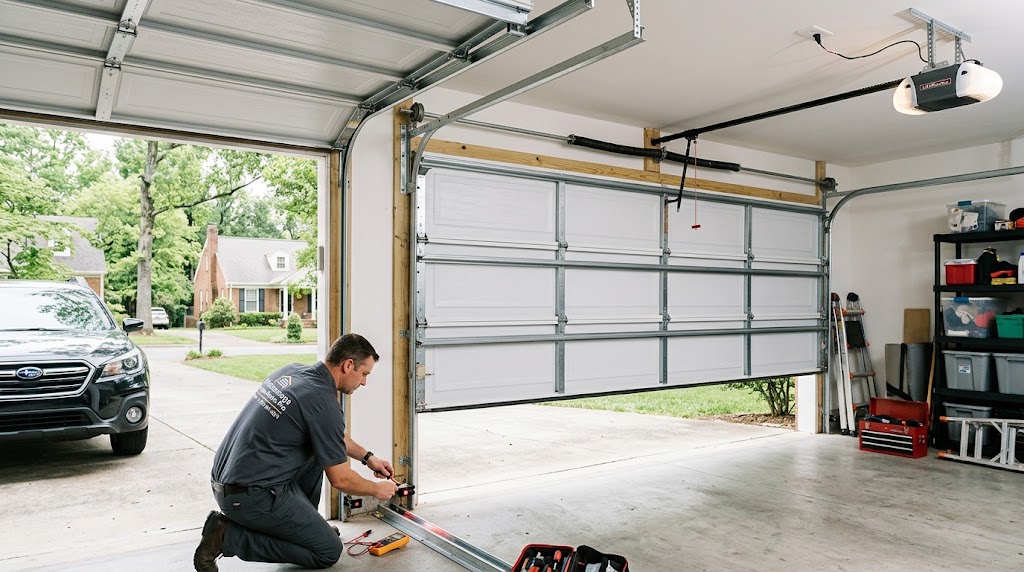
If your garage door reverses before hitting the floor, the safety sensors are the first thing to check. These small photo-eye units are mounted about six inches above the floor on both sides of the door opening. One sensor emits an infrared beam; the other receives it. When the beam is broken, the opener interprets it as an obstruction and reverses the door. The most common reasons the beam gets interrupted include misalignment, dirt or cobwebs on the lenses, loose wiring, and direct sunlight glare into the sensor lens.
Look at the LED lights on both sensors. A solid light on each unit means they’re aligned and working. A blinking light — on either the sending or receiving unit — indicates a problem. Start by wiping the lenses with a soft, dry cloth. Then check that both sensors are pointed directly at each other and that their mounting brackets are secure. A bumped bracket or a loose wing nut is often all it takes to knock them out of alignment. If the lights are still blinking after cleaning and realigning, the issue may be a wiring fault or a failed sensor. This is one of the signs you need emergency garage door repair if the door cannot be secured. Our guide to garage door sensor issues covers this in more detail.
Cause 2: Incorrect Down-Limit Settings
This is the second most common cause — and it’s often the one homeowners mistake for a sensor problem. The down-limit switch tells the opener where “fully closed” is. If it’s set too low — meaning the opener thinks the floor is deeper than it actually is — the door touches the ground, the opener senses resistance, and it reverses. From your perspective, the door appears to reverse “before” hitting the floor, but in reality, it’s already made contact and the opener is reacting to the sudden resistance.
How to fix: Locate the down-limit adjustment on your opener. On most models, this is a small screw on the back of the motor housing labeled “down limit” or “close limit.” One full turn typically equals about 2 inches of door travel. Turn the screw counterclockwise in small increments to raise the “closed” position, then test. On newer smart openers, limit programming is done electronically through the wall control or the app. After every adjustment, run a full open-close cycle to verify the door travels smoothly and stops correctly. If the door still reverses after multiple adjustments, the travel module may be failing and need replacement. This is one of the most common issues our technicians resolve during a service call.
Cause 3: Force Sensitivity Settings Too Low
Garage door openers have force adjustment controls that regulate how much power is used to close the door. If the down-force is set too light, the opener may interpret normal resistance — such as the door meeting the floor, or a slight binding in the tracks — as an obstruction and reverse. This is especially common in colder months when metal parts stiffen and lubrication thickens. The door may appear to close completely, but the opener never registers that the cycle is finished, so it reverses. This accounts for roughly 30% of service calls for this symptom.
Increasing the down-force slightly — usually by turning a control screw clockwise in small increments — often solves this. However, this adjustment must be done carefully. Setting the force too high compromises the safety reverse system and can prevent the door from reversing when it should. Never increase force beyond the minimum required to close the door. If the door is binding or unbalanced, increasing force is not the answer — the underlying mechanical issue must be addressed. A professional can test the door’s balance and force settings and make precise adjustments.
Cause 4: Worn Rollers or Tracks
The door moves up and down on rollers riding inside vertical and horizontal tracks. Over time, these rollers can wear out, crack, or lose their bearings. When a roller fails, the door binds in the track, creating resistance that the opener interprets as an obstruction. This is especially common near the bottom curve of the track, where the rollers are under the most stress. If one or more rollers have worn bearings or flat spots, they create resistance as they reach the bottom, and the opener reads that resistance as an obstruction.
How to check: With the door halfway open, shake each roller by hand. Any wobble, gritty feel, or resistance to spinning means it’s time for new rollers. Lubricating the rollers and hinges with a garage-door-specific lubricant can solve minor stiffness. However, if the rollers are cracked, flat-spotted, or missing, they need to be replaced. A professional can replace the full set of rollers during a routine service call. Dirty or damaged tracks can also create resistance — inspect the tracks for debris, dents, or bends, and clean them with a damp cloth.
Cause 5: Physical Obstruction in the Door's Path
Sometimes the simplest explanation is the right one. A stick, a leaf, a small rock, or a piece of debris can wedge into the bottom of the track and stop the door from seating. A toy, a garden tool, or even a buildup of ice and snow can interrupt the sensor beam or create resistance that triggers the reversal. Before assuming a major repair is needed, inspect the entire path of the door. Look along both tracks, under the bottom seal, and around the sensors. Clear any debris that may have accumulated. In Chattanooga’s humid climate, it’s also worth checking for spider webs or insect nests around the sensor lenses — a surprisingly common cause of intermittent reversal. Understanding how weather affects garage doors in Tennessee can help you anticipate seasonal issues before they cause a reversal.
Cause 6: Worn or Broken Springs
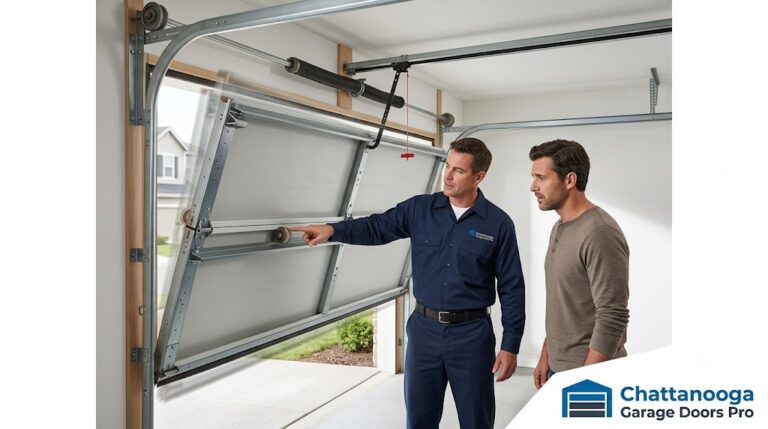
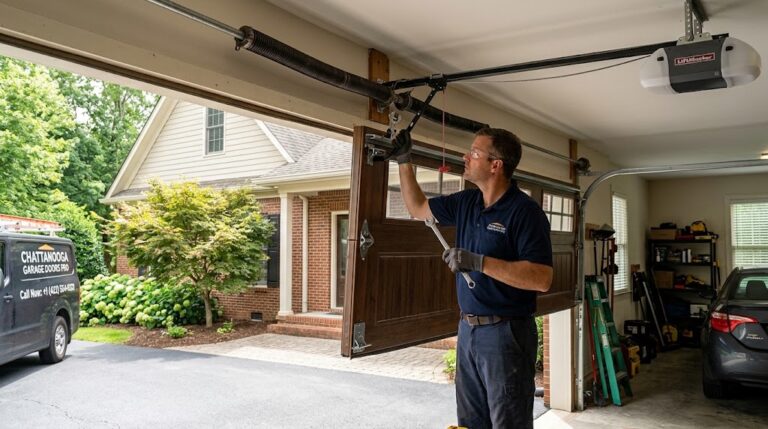
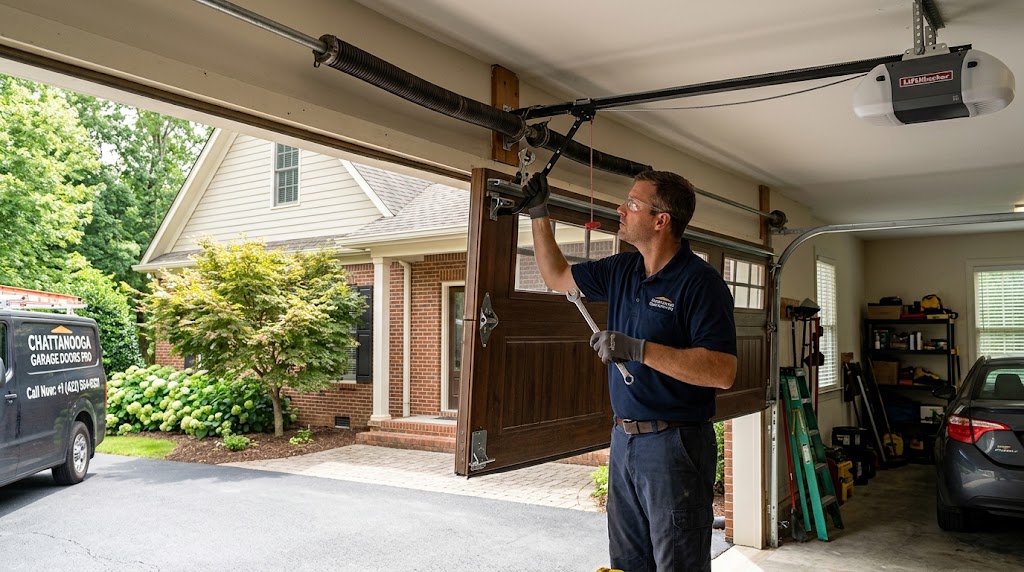
The torsion spring above the door is what actually lifts the weight — the opener motor is far too weak to lift a 300-pound door on its own. As springs age, they lose lifting force. A spring with roughly 20% of its life left may still open the door slowly but create enough imbalance that the opener struggles to control the door’s movement, potentially leading to reversals as the opener fights against uneven tension. When a torsion spring breaks, the door loses the counterbalance force needed for smooth operation. A broken spring almost always shows a visible gap in the coil — the two halves will be clearly separated. If you see this, do not attempt to operate the door. Torsion springs are under extreme tension, and a DIY replacement can cause serious injury. This is a job for a licensed technician. The garage door spring replacement cost is modest compared to the risk of a DIY attempt.
Quick Diagnosis: What to Check First
Follow these steps in order to narrow down the cause:
- Watch where it reverses. Note exactly where the door reverses. If it reverses before touching the floor, the down-limit is likely set too high. If it touches the floor and then reverses within half a second, the down-limit is set too low. If it reverses midway, the force setting or a physical obstruction is the likely cause.
- Check the sensors. Look at the LED lights on both photo-eye units. Solid lights mean they’re aligned. Blinking lights mean a problem. Clean the lenses and check alignment.
- Inspect the door’s path. Look for anything blocking the sensors or preventing the door from closing completely — toys, debris, ice, or a damaged bottom seal.
- Test the door’s balance. Disconnect the opener using the emergency release cord. Lift the door halfway and let go. If it slides down, the springs are weak or broken. If it stays in place, the springs are fine.
- Check the rollers. With the door halfway open, shake each roller by hand. Any wobble, gritty feel, or resistance to spinning means it needs replacement.
These checks will give you a clear picture of whether you’re dealing with a simple sensor issue or a more serious mechanical or electronic failure. If you’re unsure at any point, stop and call a professional. Our guide on when to call a garage door technician can help you make that call.
When to Call a Professional
Some fixes — cleaning sensors, clearing obstructions, minor limit adjustments, and replacing worn rollers — are safe for a confident DIYer. But the moment the problem involves springs, cables, or the internal electronics of the opener, it’s time to step back. Torsion springs are under extreme tension, and a snapped cable can whip free with enough force to cause serious injury. If the door feels heavy, if you heard a loud bang, or if the door is visibly off its tracks, do not attempt a DIY repair. These are clear emergency garage door repair situations.
A licensed technician will do more than just fix the immediate symptom. They’ll check the door’s balance, inspect the bearings, test the opener’s force settings, and lubricate all moving parts. This comprehensive approach ensures the repair addresses the root cause, not just the reversal. If you’re wondering how to find a reliable pro, our guide on how to choose the best garage door company in Chattanooga walks you through the questions to ask and the red flags to avoid.
Prevention: Keep Your Door Closing Smoothly
Most reversal problems develop gradually. A little preventive maintenance goes a long way toward keeping your door operating reliably:
- Clean the sensor lenses regularly. A quick wipe with a dry cloth every few months prevents dirt and cobwebs from blocking the beam.
- Lubricate moving parts twice a year. Use a silicone-based or white lithium grease on rollers, hinges, and the torsion shaft. Avoid WD-40 as a long-term lubricant — it attracts dust.
- Test the safety reverse feature monthly. Place a piece of wood on the ground under the door and close it. The door should reverse upon contact.
- Schedule a professional tune-up every 12–18 months. A technician can catch worn springs, misaligned tracks, and failing sensors before they cause a reversal. Our seasonal garage door maintenance guide for Chattanooga homes explains what to check each season.
For more troubleshooting tips and maintenance advice, browse our blog. If you’re also dealing with a door that stops partway up, our guide on garage door stops halfway covers that symptom in detail.
Frequently Asked Questions
1. Why does my garage door reverse before hitting the floor?
The most common causes are an incorrect down-limit setting, a force sensitivity setting that’s too light, misaligned or dirty safety sensors, worn rollers creating resistance near the bottom of the track, or a physical obstruction in the door’s path. Start by watching exactly where the door reverses to narrow it down.
2. How do I know if the problem is the sensors or the limit switch?
If the door reverses before touching the floor, the down-limit is likely set too high (the opener thinks it hit an obstacle). If the door touches the floor and then reverses within half a second, the down-limit is set too low. If the door reverses midway down, the sensor or force setting is the more likely culprit. Check the sensor LED lights first — blinking lights indicate a sensor problem.
3. Can I fix this myself?
Cleaning sensors, clearing obstructions, replacing rollers, and minor limit or force adjustments are safe DIY tasks. However, if the door feels heavy, you heard a loud bang, or the springs look damaged, do not attempt a repair. Call a professional immediately.
4. Is this an emergency?
If the door won’t stay closed, it’s a security risk. If you suspect a broken spring or a snapped cable, it’s an emergency — the door can fall without warning. Do not use the door and call a technician right away. Our guide to emergency garage door repair signs explains which symptoms require immediate action.
5. How much does it cost to fix a garage door that reverses before closing?
The cost depends entirely on the cause. A sensor cleaning or limit adjustment is often part of a routine service call. Roller replacement typically ranges from $135 to $210 for a full set. A spring replacement typically ranges from $200 to $700. See our full breakdown of garage door spring replacement cost for details. If your opener is old and failing, our guide to garage door installation cost in Chattanooga TN can help you budget for a replacement.
Don’t Let a Reversing Door Leave You Exposed
A garage door that reverses before hitting the floor is more than an annoyance — it’s a security gap. Every time the door reverses, your home is left open to the street. In Chattanooga, Hixson, East Ridge, and Ooltewah, our licensed technicians can diagnose the problem and restore your door’s reliable operation — often in a single visit. We test the full system, replace worn parts with factory-spec components, and never leave a job until the door operates the way it should. Call now to schedule your repair.
Call (423) 564-8231