Garage Door Hinges: Signs They Need Replacement
Every time your garage door opens, a set of small steel hinges is hard at work. They connect the door’s panels, allowing them to fold and travel smoothly around the curved track. They also hold the rollers that keep the door aligned. You probably never think about them — until something goes wrong. In Chattanooga and across the Tennessee Valley, failing hinges are one of the most common — and most overlooked — causes of garage door problems. Hinges are the quietest failure point on a garage door. They do not scream like worn rollers, and they do not pop like a snapped spring. They wear gradually, then crack quickly, and by the time you notice, a panel may already be damaged .
The good news is that hinge inspection takes about ten minutes, replacement hinges are inexpensive, and catching the problem early prevents a cascade of expensive damage. This guide will explain what hinges do, how to identify the different types, the warning signs that a hinge needs replacement, what repair costs, and which replacements are safe to do yourself versus which require a licensed technician. If your door is already making unusual noises or refusing to open, a failing hinge may be the culprit. Our guides on garage door makes clicking noise but won't open and garage door bracket repair cover related hardware failures that often accompany hinge problems.
What Garage Door Hinges Do and Why They Matter
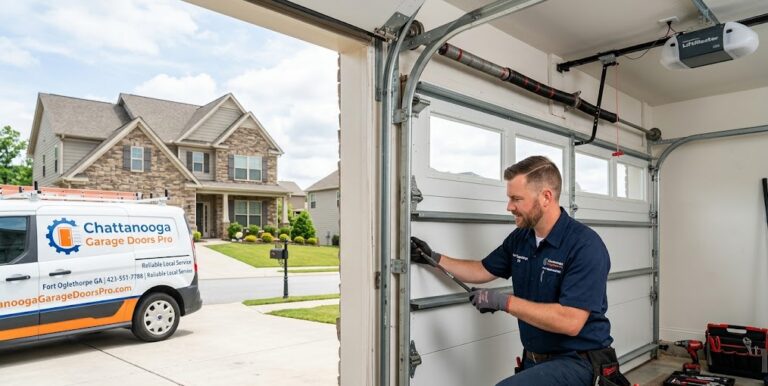
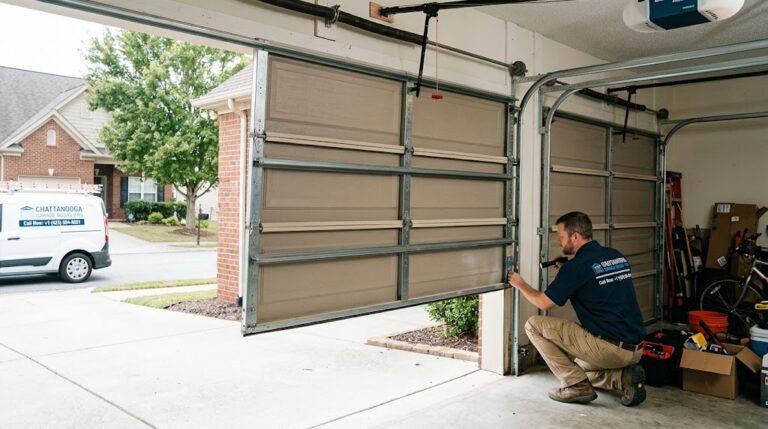
A sectional garage door looks like a single rigid panel when closed, but it’s actually three, four, or five separate horizontal sections joined by a row of steel hinges. Every time the door opens, each hinge pivots the panel above and the panel below through a different angle so the assembly can fold up and into the horizontal track overhead . Without hinges, the door could not fold to travel overhead — it would be a solid wall that couldn’t bend around the track curve .
Hinges matter for three critical reasons. They connect the panels: A cracked centre hinge causes the door to flex visibly in the middle, scrape against the seal, and put extra load on its neighbours . They hold the rollers: End hinges carry the roller stems that keep the door aligned in the tracks. A bent end hinge throws a roller out of alignment, the door rubs against the jamb, and the opener starts straining . They prevent cascading damage: Left long enough, a chain of related failures can pull a door section out of the track or tear the roller stem out of the hinge altogether . A hinge that costs a few dollars to replace can prevent hundreds of dollars in panel, track, and opener damage.
Types of Garage Door Hinges
Not all hinges are the same, and not all of them carry the same risk level for a DIY repair. Understanding which hinge you’re dealing with is the first step before picking up any tools.
| Hinge Type | Location | Function | DIY-Safe? |
|---|---|---|---|
| Centre Hinge | Middle of each panel joint | Connects sections at the centre, allows pivoting | Yes — low risk |
| End Hinge (#1–#5) | Edges of each panel joint | Holds rollers in the track, numbered by position | Proceed with caution |
| Bottom Hinge | Lowest panel joint | Supports the bottom panel and roller | No — high tension risk |
| Top Hinge | Top panel joint | Connects top panel to the opener arm | Yes — low risk |
Centre hinges sit in the middle of each panel joint and do not hold a roller. They have a simple two-leaf design and are the safest to replace yourself . End hinges, also called graduated edge hinges or roller hinges, sit at the outside edge of each section and hold the roller stem. They are numbered from bottom to top — a #1 hinge sits between the bottom two panels, a #2 between the next pair, and so on . The number matches the hinge to the correct horizontal joint because hinges at different heights are shaped slightly differently to keep the door square . Using the wrong number can throw the door’s spacing off and cause binding. Bottom hinges are the most dangerous because they connect to the lift cable system and are under constant tension. Never replace a bottom hinge yourself.
Signs Your Garage Door Hinges Need Replacement
Hinge failures rarely happen instantly. They develop over months or years, giving homeowners plenty of warning signs — if they know what to look for. The problem is that most people never inspect the inside of their garage door. When was the last time you looked at your hinges? If it’s been more than a year, it’s worth doing now. Here are the warning signs that indicate a hinge is failing:
- Visible cracks in the hinge body. Look at each hinge where it bolts to the door panel. Hairline cracks radiating from the bolt holes are often the first sign. Larger visible cracks on the hinge knuckle — the folded edge — mean the hinge is ready to fail. Any crack means immediate replacement. A cracked hinge can fail mid-cycle and slam a panel corner into the track .
- Orange rust on the pivot pin. Look at the pivot pin of each hinge. A healthy pin is smooth and shows the original finish. Orange staining on the pin means the hinge has been running dry for a while. A rust ring around the pin where it meets the hinge body indicates more advanced wear. This is the earliest warning sign and often catches a hinge six to twelve months before actual failure .
- Visible play when you wiggle a panel. With the door closed, grab the edge of one panel and wiggle it gently up and down. No movement means the hinges are tight. A slight wiggle of 1–2mm is normal wear — lubricate and re-inspect next year. Noticeable wiggle of 5mm or more means the hinges are worn and you should plan replacement. Loose, sloppy movement or clunking means replace immediately. Replace the hinges on both sides of that panel joint, not just one side .
- Elongated hinge pin holes. Pull the door partway open with the opener disconnected. Get eye-level with a middle hinge. A healthy pin hole is round and tight around the pin. A pin hole that looks slightly oval, like an egg, means wear is advanced. A visible gap between pin and hole means replace immediately .
- Grinding, popping, or scraping noises during operation. A squeak or creak that comes back soon after you lubricate the hinges points to worn pivot points where the metal has thinned. Lubrication quiets a healthy hinge for months, so a squeak that returns in days means the part itself is worn out, not just dry . Grinding or scraping sounds usually indicate the door is binding because a hinge is no longer holding the joint tight.
- The door looks wavy or the panels gap as it moves. When hinges start failing, the panels they connect begin to flex and twist instead of folding cleanly. The door starts looking slightly wavy. The edges catch the track . A gap that opens between two panels as the door travels the curve suggests a hinge is no longer holding the joint tight .
- Rollers regularly jumping off the track. When an end hinge bends or shifts, it pulls the roller out of alignment with the track. If you’re constantly re-seating rollers, the underlying hinge may be the problem. A bent end hinge can let a roller leave the track and pull the door out of alignment .
If you notice multiple symptoms at once, there’s a good chance more than one hinge is compromised. A full inspection by a professional is a smart move before attempting any repair.
How Much Does Garage Door Hinge Replacement Cost?
The cost of hinge replacement depends on whether you tackle it yourself or hire a professional, and on which hinge is involved. Replacement hinges themselves are inexpensive — typically $5 to $15 each for standard types, though heavy-duty hinges can range from a few dollars to over $20 per unit depending on gauge and style . A full set for a standard door typically runs between $30 and $80 at a hardware shop .
Professional installation adds labor costs, usually between $75 and $150 for the service call and repair . You can expect to pay about $5 to $40 for each new hinge including labor costs . Most hinge replacements take only a few minutes each, so a technician can typically replace a full set in under an hour . If your hinge failure has caused secondary damage — a bent track, a damaged panel, or a roller out of alignment — the total will be higher. If you’re concerned about the overall cost of a repair versus replacement, our guide to garage door installation cost in Chattanooga TN can help you compare.
DIY vs. Professional Replacement: The Safety Line
This is the most important section of this guide. Garage door hinge replacement is not a uniform task — some hinges are safe to replace yourself, and others can cause serious injury if you get it wrong. Centre hinges and top hinges are generally safe for a confident DIYer. The work is done with the door closed and still, so the panels are at rest and the springs are not the issue . The process is straightforward: disconnect the opener, secure the door in the closed position, remove the bolts holding the worn hinge, fit the matching numbered replacement, and bolt it back. Most hinges take only minutes each.
However, end hinges — especially bottom hinges — are a different story. The bottom hinge is under constant tension from the lift cable system. A hinge that fails completely can release that cable with enough force to cause severe injury. The safest approach is to call a professional for bottom hinge replacement and for any hinge work that requires the springs to be released. A misaligned hinge can make the door unstable, and tension from the springs can cause injury if something shifts unexpectedly . If you’re not sure which category your repair falls into, stop and call a professional. Our guide on when to call a garage door technician can help you make that call.
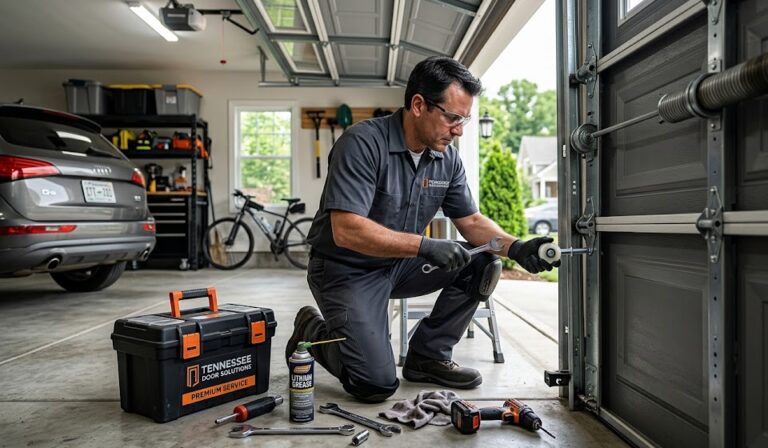
If you do attempt a safe DIY hinge replacement, the critical safety step is securing the door. Disconnect the opener by pulling the emergency release cord, and secure the door in the closed position with locking pliers or C-clamps on the track. An unsecured door can rise unexpectedly and cause injury. Never skip this step. Also, always match the replacement hinge number to the original — using the wrong number can throw the door’s spacing off and cause binding .
Prevention: Keep Your Hinges Healthy
Hinges don’t fail overnight. They rust, loosen, and crack over years of exposure to humidity and constant load. A little preventive attention goes a long way:
- Lubricate hinges twice a year. Use a silicone-based or white lithium grease on all hinge pivot points. A healthy hinge stays quiet for months after lubrication. A squeak that returns in days means the hinge is worn out, not just dry .
- Inspect hinges twice a year. With the door closed, look at every visible hinge for rust, cracks, or loose bolts. Pay particular attention to the bottom corners and the centre hinges where stress is highest.
- Check for play annually. Wiggle each panel gently. No movement is ideal. Noticeable wiggle means plan for replacement. Loose, sloppy movement means replace immediately .
- Keep the door balanced. An unbalanced door puts uneven stress on hinges. Test the balance annually by disconnecting the opener and lifting the door halfway — it should stay in place.
- Schedule a professional tune-up every 12–18 months. A technician can catch hinge fatigue before it becomes a failure. Our seasonal garage door maintenance guide for Chattanooga homes explains what to check each season.
For more troubleshooting tips and maintenance advice, browse our blog. If you’re also concerned about your door’s brackets, our guide on garage door bracket repair covers that related hardware. If you’re comparing drive systems for a new opener, our guide on garage door chain or belt covers the pros and cons of each.
Frequently Asked Questions
1. What are the most common signs that garage door hinges need replacement?
The most common signs are visible cracks in the hinge body, orange rust on the pivot pin, visible play when you wiggle a panel, elongated hinge pin holes, grinding or popping noises during operation, and rollers regularly jumping off the track. A squeak that returns soon after lubrication is one of the earliest warning signs .
2. Can I replace garage door hinges myself?
Centre hinges and top hinges are generally safe for a confident DIYer, provided the door is fully secured and the opener is disconnected. Bottom hinges and end hinges that hold rollers are riskier and should be handled by a professional, especially if the springs are under tension. If you’re not sure which category your repair falls into, call a professional .
3. How much does garage door hinge replacement cost?
Hinges themselves cost $5 to $15 each for standard types, or a few dollars to over $20 for heavy-duty units. A full set for a standard door typically runs $30 to $80 at a hardware shop. Professional installation adds labor costs, usually $75 to $150 for the service call and repair. You can expect to pay about $5 to $40 per hinge including labor .
4. How do I know which hinge number to buy?
Hinges are stamped with a number that indicates where they belong from bottom to top. A #1 hinge sits between the bottom two panels, a #2 between the next pair, and so on up the door. The number matches the hinge to the correct horizontal joint because hinges at different heights are shaped slightly differently to keep the door square. Always match the replacement hinge number to the original .
5. What happens if I ignore a failing hinge?
A failing hinge can lead to a cascade of problems. A cracked centre hinge causes the door to flex and scrape against the seal. A bent end hinge throws a roller out of alignment, causing the door to rub against the jamb and the opener to strain. Left long enough, a chain of related failures can pull a door section out of the track or tear the roller stem out of the hinge altogether . Ignoring a hinge problem almost always results in a more expensive repair down the line.
6. How often should hinges be inspected and lubricated?
Inspect hinges twice a year — ideally in spring and fall when you’re already doing seasonal maintenance. Lubricate all hinge pivot points with a silicone-based or white lithium grease at the same time. If you use your garage door heavily (multiple times per day), consider a professional inspection every 12 months.
Don’t Let a Small Hinge Become a Big Repair
A garage door hinge is a small, inexpensive part that most homeowners never think about — until it fails. And when it fails, the consequences can be far more serious than a noisy door. A cracked hinge can damage panels, bend tracks, and strain your opener. In Chattanooga, Hixson, East Ridge, and Ooltewah, our licensed technicians inspect hinges during every service call and can safely replace any hinge on your door — including the high-tension bottom hinges that homeowners should never touch. We test the full system after every repair, replace worn parts with factory-spec components, and never leave a job until the door operates the way it should. Call now to schedule your hinge inspection or replacement.
Call (423) 564-8231