Garage Door Rollers: Nylon vs Steel — Which Is Better for Your Door?
Every time your garage door opens, a set of small wheels called rollers glides along the metal tracks, carrying the weight of each panel through every cycle. They’re one of the most overlooked components on the entire door — until they start rumbling, squealing, or flat-spotting and the whole system feels rough. In Chattanooga and across the Tennessee Valley, worn rollers are one of the most common causes of noisy, jerky garage door operation — and upgrading them is one of the cheapest, most satisfying improvements you can make. But when it comes time to replace them, homeowners face a choice: nylon or steel? The answer isn’t as simple as “nylon is quieter” or “steel is stronger.” Each material has real trade-offs in noise, durability, maintenance, and cost. This guide breaks down the differences so you can choose the right roller for your door, your climate, and your home.
If your door is already making grinding or scraping noises, worn rollers may be the culprit. Our guides on garage door makes clicking noise but won’t open and garage door hinges: signs they need replacement cover related hardware failures that often accompany roller problems.
What Garage Door Rollers Do and Why They Matter
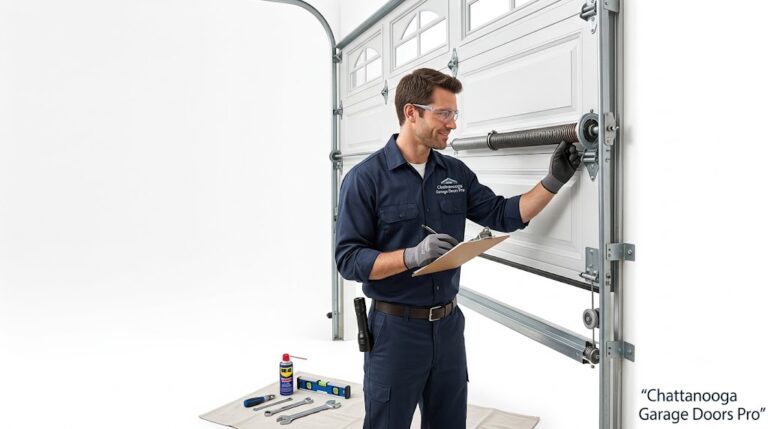
Garage door rollers are small wheels mounted on stems that fit into the hinges along the sides of each door panel. They ride inside the vertical and horizontal tracks, guiding the door as it opens and closes. Without them, the door couldn’t move at all — the rollers are the interface between the door and the track, and they bear the full weight of the door as it travels. There are typically 10 to 12 rollers on a standard single-car door and up to 16 on a double-car door, and every one of them has to be in good condition for the door to operate smoothly.
Rollers matter for three critical reasons. Noise: Worn or dry rollers are the number one cause of a loud, rumbling garage door. Smooth operation: Flat-spotted or seized rollers make the door jerk and bind, putting strain on the opener and the door’s other components. Longevity: Rough-running rollers accelerate wear on the tracks, hinges, and opener motor. Replacing a $5 roller can prevent a $500 repair. If your door is already struggling to open or stay closed, our guides on garage door stops halfway and garage door reverses before hitting the floor cover related symptoms that often trace back to roller problems.
The Three Types of Garage Door Rollers
Not all rollers are created equal. There are three basic types in residential use, and understanding the differences is the first step toward choosing the right replacement.
| Roller Type | Material | Bearings | Lifespan |
|---|---|---|---|
| Plastic (Builder-Grade) | Solid plastic, no bearing | None | 1–3 years |
| Steel | Steel wheel, steel stem | 7 or 10 ball bearings | 5–15 years |
| Nylon | Nylon wheel, steel stem | 10 or 13 sealed ball bearings | 10–20 years |
Plastic rollers are the cheapest option and what most builder-grade doors come with. They have no bearings, so they grind against the track instead of rolling smoothly, and they wear out fast — typically within two to three years. Steel rollers come next. They’re sturdy and inexpensive, but steel-on-steel contact with the track makes them loud. They’re available with 7 or 10 ball bearings, and a well-lubricated steel roller can last a decade or more. Nylon rollers are the premium option. They have a nylon wheel around a steel stem, with sealed ball bearings inside. They’re significantly quieter than steel, resist rust and corrosion, and typically last 10 to 20 years — the longest lifespan of any roller type.
Nylon vs. Steel: The Real Comparison
Here’s how the two materials stack up across the factors that matter most to homeowners.
Noise
This is the clearest difference. Steel rollers produce a metallic rattle and squeal as they roll through the track. Nylon rollers eliminate the metal-on-metal contact, producing a smooth, low hum instead. The noise reduction is immediately noticeable — most homeowners describe the difference as “night and day.” If your garage sits beneath a bedroom, a nursery, or a home office, nylon rollers are worth the upgrade for quietness alone. Reviews consistently mention the dramatic noise reduction when switching from steel to nylon.
Durability and Lifespan
Steel is often described as “more durable,” but the reality is more nuanced. Steel rollers with unsealed bearings last 5 to 8 years. Nylon rollers with sealed bearings last 10 to 15 years or roughly 20,000 cycles. Quality nylon rollers are rated for up to 20 years of service. The sealed bearings in premium nylon rollers protect against dust and grit, which is what kills most steel rollers in humid climates. A well-maintained steel roller can last longer than a cheap nylon one, but in equal-quality comparisons, nylon wins on lifespan.
Maintenance
Steel rollers need regular lubrication — typically twice a year — to stay quiet and smooth. Without it, they rust and grind. Nylon rollers with sealed bearings need almost nothing. The sealed bearing keeps the lubricant in and the dirt out, so you can install them and forget about them. This is a significant advantage for homeowners who want low-maintenance operation.
Cost
Steel rollers cost less upfront — typically $2 to $5 each, versus $5 to $12 for nylon. A full set of steel rollers runs $30 to $60, while a full set of nylon runs $50 to $120. Installed, the total cost for a full roller replacement is $100 to $250, with nylon at the higher end. Given that nylon rollers last two to three times longer and don’t need lubrication, the long-term value favors nylon — but if you’re on a tight budget and your garage is detached or well-isolated, steel is a perfectly serviceable choice.
Corrosion and Climate
In Chattanooga’s humid climate, rust is a real concern. Steel rollers will rust if they’re not lubricated regularly, and rust accelerates wear on both the roller and the track. Nylon rollers are unaffected by humidity — the nylon wheel doesn’t corrode, and the sealed bearings keep moisture out. For a garage door exposed to Tennessee’s seasonal swings, nylon is the better long-term choice for corrosion resistance.
Nylon vs. Steel at a Glance
| Factor | Steel Rollers | Nylon Rollers |
|---|---|---|
| Noise | Loud — metallic rattle | Quiet — smooth hum |
| Lifespan | 5–15 years | 10–20 years |
| Maintenance | Lubricate 2x per year | Minimal — sealed bearings |
| Cost per roller | $2–$5 | $5–$12 |
| Full set installed | $100–$180 | $150–$250 |
| Rust resistance | Poor if unmaintained | Excellent |
| Best for | Budget builds, detached garages | Attached garages, quiet operation, humid climates |
Signs Your Garage Door Rollers Need Replacement
Rollers wear out gradually. They don’t fail catastrophically like springs, but they do degrade — and ignoring the warning signs leads to rough operation, increased strain on the opener, and eventual track damage. Here’s what to look for:
- Loud rumbling or rattling during operation. A door that sounds like a freight train every time it moves almost certainly has worn or dry rollers. If lubrication doesn’t quiet it down, replacement is the next step.
- Jerky or uneven movement. If the door shudders, hesitates, or moves in stops and starts, flat-spotted rollers are the likely cause. Flat spots develop when a roller sits in one position for too long — common on doors that aren’t used regularly.
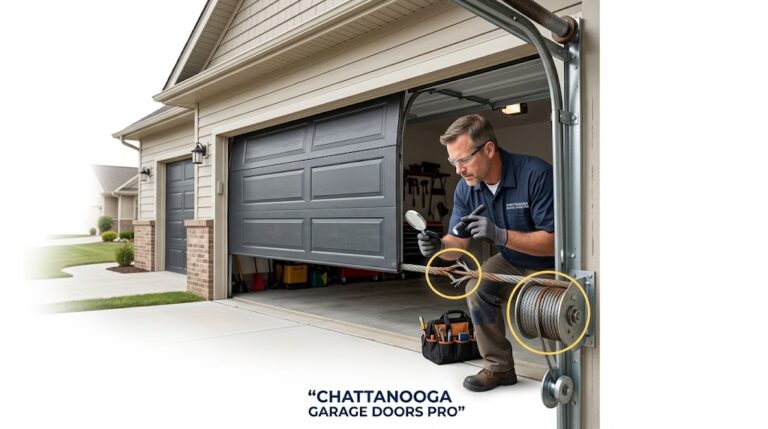
- Visible cracks or flat spots on the roller wheel. With the door closed, inspect each roller. Cracks, chips, or flattened spots on the wheel mean the roller is no longer round and can’t roll smoothly. Replace it immediately.
- Wobbling or loose stems. Grab each roller and try to wiggle it. Any noticeable play in the stem or wheel means the bearing is worn. A wobbly roller will eventually fall out of the track.
- Rust or corrosion. Steel rollers in humid climates rust quickly. Surface rust is cosmetic, but deep rust with pitting means the roller is compromised.
- Rollers that have jumped the track. If you’re constantly re-seating rollers in the track, the rollers themselves or the hinges holding them are worn. See our guide on garage door hinges for related issues.
If you notice two or more of these signs, a full roller replacement is the sensible move. Replacing all rollers at once ensures even wear and consistent operation.
How Much Does Roller Replacement Cost?
The cost of replacing garage door rollers depends on the material and whether you do it yourself or hire a professional. Rollers themselves are inexpensive — $2 to $5 each for steel, $5 to $12 each for nylon. A full set for a standard door runs $30 to $120 in parts. Professional installation for a full set typically costs $100 to $250 installed, with nylon sealed-bearing rollers at the higher end and basic steel at the lower end. For a double door or a high-lift door, the cost can range from $200 to $450. Given that roller replacement is one of the cheapest garage door repairs, it’s also one of the best value upgrades you can make for your door’s quietness and smoothness.
DIY vs. Professional Replacement
Roller replacement is one of the more DIY-friendly garage door tasks, but it’s not without risk. The door must be secured in the closed position with locking pliers or C-clamps on the track, and the opener must be disconnected. Once secured, you can remove the hinge bolts, slide the old roller out, and slide the new one in. The work is done with the door at rest, so the springs aren’t the immediate concern — but the door is still heavy, and an unsecured door can rise unexpectedly and cause injury. If you’re not comfortable working around the door’s mechanical systems, or if the door is heavy or has other issues, a professional can replace all rollers in under an hour. Our guide on when to call a garage door technician can help you decide.
Prevention: Keep Your Rollers Rolling
Rollers last longer with a little attention:
- Lubricate steel rollers twice a year. Use a silicone-based or white lithium grease on the roller stems and bearings. Nylon sealed-bearing rollers need no lubrication.
- Inspect rollers during your seasonal maintenance. Look for cracks, flat spots, and wobble. Our seasonal garage door maintenance guide for Chattanooga homes covers the full checklist.
- Keep the tracks clean. Dirt and grit in the track accelerate roller wear. Wipe down the tracks with a damp cloth periodically.
- Use the door regularly. Rollers that sit in one position for months develop flat spots. If you have a second garage door you rarely use, open and close it occasionally.
Frequently Asked Questions
1. Are nylon or steel garage door rollers better?
It depends on your priorities. Nylon rollers are quieter, last longer, resist rust, and need almost no maintenance. Steel rollers are cheaper upfront and can handle heavier doors. For most attached garages in humid climates, nylon is the better long-term choice.
2. How long do nylon rollers last compared to steel?
Nylon rollers with sealed bearings typically last 10 to 20 years. Steel rollers with unsealed bearings last 5 to 8 years. Quality nylon rollers can last two to three times longer than steel in the same conditions.
3. Can I replace just one roller, or should I replace them all?
Replace all rollers at once if they’re the same age. Replacing one roller while the others are worn will create uneven wear and inconsistent operation. A full set is inexpensive and takes less than an hour to install.
4. How much does roller replacement cost?
A full set of rollers costs $30 to $120 in parts, depending on material. Professional installation for a full set runs $100 to $250 for a single door and $200 to $450 for a double door. Nylon sealed-bearing rollers are at the higher end of the range.
5. Do nylon rollers need lubrication?
No. Nylon rollers with sealed bearings are self-lubricating. The sealed bearing keeps lubricant in and dirt out. Adding grease to a sealed bearing does nothing and can attract grit. Steel rollers, on the other hand, need lubrication twice a year.
Upgrade Your Rollers — and Quiet Your Door
Replacing worn rollers is one of the cheapest, most impactful upgrades you can make to your garage door. Whether you choose nylon for quietness and longevity or steel for budget and brute strength, the improvement in smoothness and noise is immediately noticeable. In Chattanooga, Hixson, East Ridge, and Ooltewah, our licensed technicians carry both steel and sealed-bearing nylon rollers on every truck and can replace a full set in under an hour. We’ll help you choose the right rollers for your door, your climate, and your home — and we’ll never upsell you on something you don’t need. Call now to schedule your roller replacement.
Call (423) 564-8231