Garage Door Makes Clicking Noise but Won’t Open? Here’s What It Means
You press the button, and instead of the familiar hum of the motor, you hear a sharp click. Maybe it clicks once. Maybe it clicks several times in rapid succession. But the door doesn’t move. A garage door that makes a clicking noise but won’t open is one of the most puzzling symptoms homeowners face in Chattanooga and across the Tennessee Valley. Is the opener dead? Is it a wiring problem? Is the door stuck? The answer depends on exactly where the click is coming from and what else is — or isn’t — happening.
The good news is that a clicking noise is actually diagnostic. It tells you the opener is receiving power and attempting to do something — but something in the chain between the button press and the door movement is failing. This guide will walk you through every likely cause, show you how to narrow down the problem in about five minutes, and explain when it’s time to call a licensed technician. If your door is also blinking a diagnostic code, our guide on garage door opener light blinking explains how to read those patterns.
What the Clicking Noise Tells You
A garage door opener is a surprisingly complex piece of electromechanical equipment. When you press the button, a sequence of events has to happen in order: the receiver picks up the signal, the logic board processes it, the relay engages, the motor starts, the drive system moves the trolley, and the door lifts. A clicking noise means the first few steps are working — power is reaching the opener, and the relay or logic board is trying to activate the motor. But somewhere after that, the chain breaks. The click could be the relay engaging but the motor failing to start. It could be the motor trying to turn but the drive gear slipping. Or it could be the opener attempting to move a door that’s mechanically stuck or too heavy to lift.
The location and rhythm of the click matter. A single click followed by silence usually points to a motor or capacitor problem. Rapid, repeated clicking often indicates a logic board or relay issue. A click from the wall control rather than the opener itself suggests a wiring or control panel problem. Understanding which category your click falls into is the first step toward a fix.
Cause 1: Dead or Weak Remote Battery
Before you assume the worst, rule out the simplest explanation. A remote with a weak battery can send a partial or corrupted signal that causes the opener to click without fully engaging. The opener receives something — enough to trigger the relay — but not enough to complete the command. If the wall button works but the remote only produces a click, the remote battery is the likely culprit.
How to fix: Replace the battery with a fresh CR2032 or the correct battery for your model. Clean the contacts while you’re in there. If the remote still only produces a click, the issue is elsewhere. Our guide on garage door won’t open with remote covers this in more detail.
Cause 2: Safety Sensor Issues
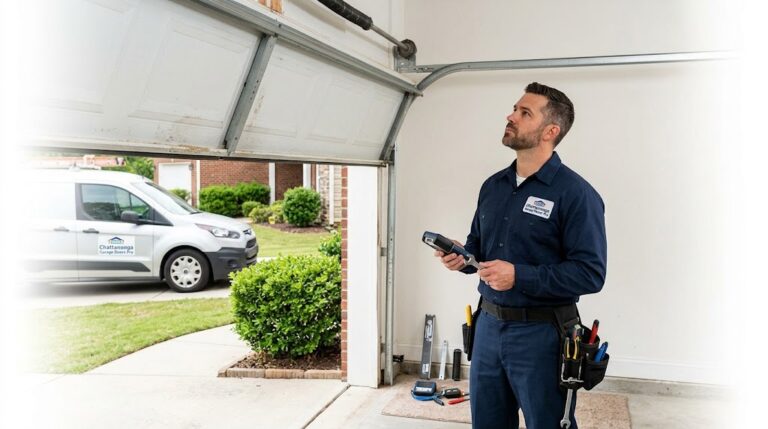
The safety reversing sensors are the small photo-eye units mounted about six inches above the floor on both sides of the door opening. If the beam is interrupted or the sensors are misaligned, the opener will click — the relay engages to start the motor — but immediately cut out because the safety system has detected an obstruction. The door won’t move. This is one of the most common causes of the click-no-open symptom, and it’s often accompanied by a blinking light on the opener or a blinking LED on the sensor itself.
How to fix: Look at the LED lights on both sensors. A solid light on each unit means they’re aligned and working. A blinking light — on either the sending or receiving unit — indicates a problem. Start by wiping the lenses with a soft, dry cloth. Then check that both sensors are pointed directly at each other and that their mounting brackets are secure. A bumped bracket or a loose wing nut is often all it takes to knock them out of alignment. If the lights are still blinking after cleaning and realigning, the issue may be a wiring fault or a failed sensor. This is one of the signs you need emergency garage door repair if the door cannot be secured. Our guide to garage door sensor issues covers this in more detail.
Cause 3: Lock or Vacation Mode Is Enabled
Many garage door openers have a “Lock” or “Vacation” mode that disables all remote controls while leaving the wall button functional. When Lock Mode is on, pressing a remote causes the opener to click — the relay engages — but the door won’t move because the opener is intentionally ignoring the command. Signs that Lock Mode is active include the opener lights flashing twice when you press the remote button, or a command LED on the wall control flashing continuously. The door will still open from the wall control, but no remote or keypad will work.
How to fix: Locate the Lock button on your wall control — most modern wall consoles carry a Lock or Vacation function, often marked with a padlock icon. Press and hold it for about two seconds until the indicator light stops flashing or becomes solid. Then test the remote. If you’re locked outside the garage, you’ll need to enter through another door to access the wall control and disable Lock Mode.
Cause 4: Logic Board or Relay Failure
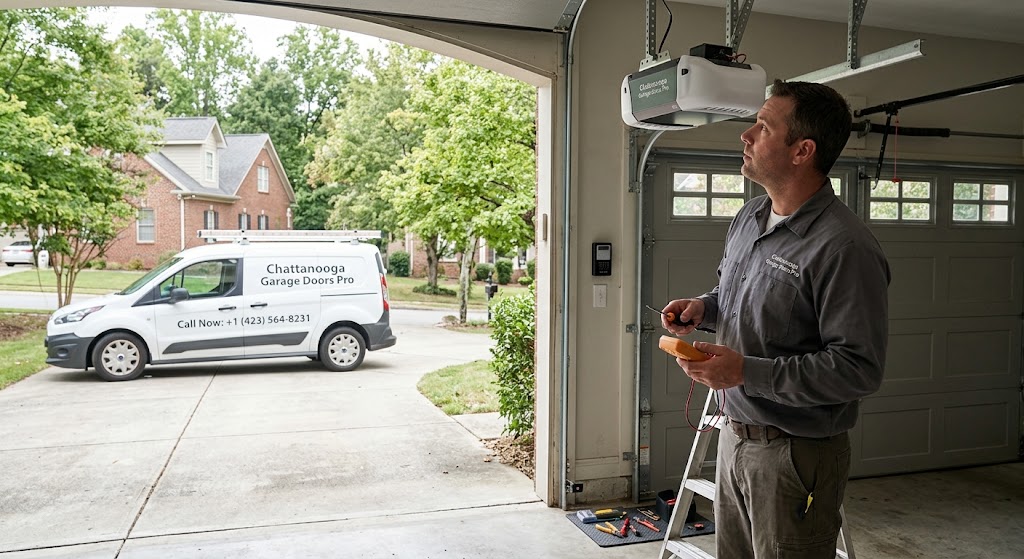
If the clicking is rapid and repeated — the opener clicks several times in quick succession but the door never moves — the problem is likely in the logic board or the relay that sends power to the motor. The logic board is the brain of the opener. When it begins to fail, it can send intermittent signals to the relay, causing a rapid clicking sound as the relay engages and disengages repeatedly. The motor never receives a sustained command to run. A power surge from a lightning strike, a faulty outlet, or simply age can damage the board.
How to fix: Diagnosing a logic board or relay issue requires a multimeter and a working knowledge of low-voltage electronics. If you’re not comfortable working with electrical components, this is a job for a technician. The good news is that opener repairs are often less expensive than full replacement. If your opener is more than 10–12 years old and you’re experiencing multiple electronic issues, upgrading to a modern smart garage door opener may be the more economical choice. If you’re concerned about the cost of a new opener, our guide to garage door installation cost in Chattanooga TN can help you budget.
Cause 5: Stripped Drive Gear or Broken Motor
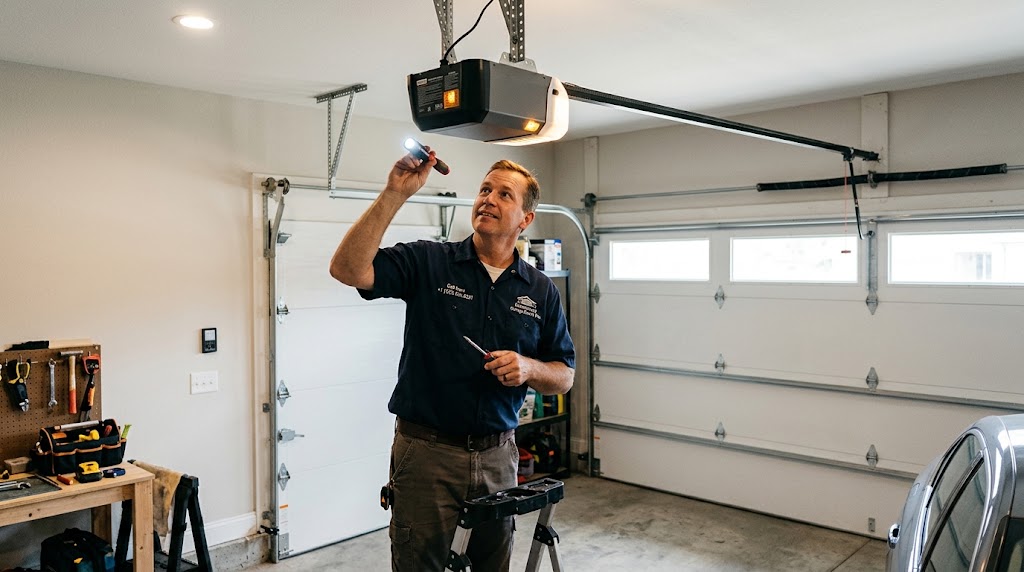
Inside the opener, a drive gear transfers power from the motor to the chain, belt, or screw that moves the trolley. Over time, this gear can wear down or strip completely. When the gear is stripped, the motor spins freely but the trolley doesn’t move — and you may hear a clicking or grinding sound as the motor runs against the stripped gear. On some openers, the motor capacitor fails instead, preventing the motor from starting at all. In that case, you’ll hear a single click from the relay engaging, followed by silence. The motor never turns.
How to fix: If you hear the motor running but the door doesn’t move, the drive gear is likely stripped. If you hear a single click and nothing else, the capacitor or motor may have failed. Both are repairable, but the opener may need to be partially disassembled. This is a job for a technician. A professional can test the capacitor, inspect the gear, and determine whether repair or replacement is the better option.
Cause 6: Disconnected Trolley or Emergency Release
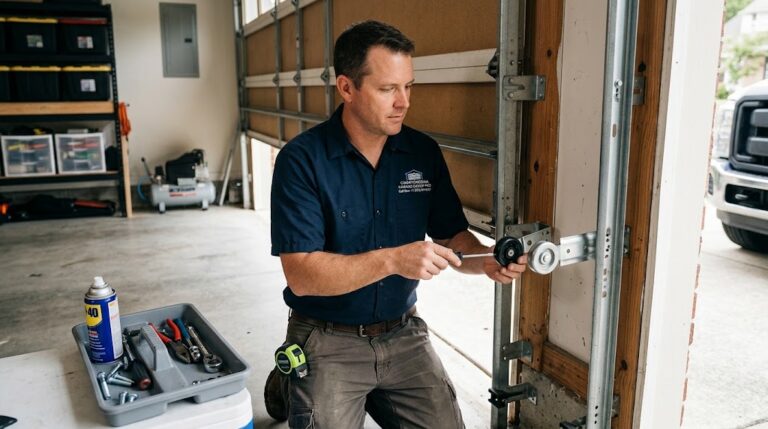
The trolley is the carriage that rides along the rail and connects the opener to the door. It can be disengaged from the drive system by pulling the red emergency release cord — this is the manual override used during power outages. If the trolley is disengaged, the opener will run (and you may hear clicking or humming) but the door won’t move because the carriage isn’t connected to the drive chain or belt. This is a common issue after a power outage when someone pulled the release cord and didn’t re-engage it.
How to fix: Look at the trolley on the rail. If the release cord is hanging down and the trolley is not connected to the chain or belt, you need to re-engage it. With the door fully closed, pull the emergency release cord toward the opener (or in the direction indicated by the manufacturer) until the trolley clicks back into place. Then test the opener. If the trolley won’t re-engage or the door still doesn’t move, the issue may be mechanical — a broken spring, a snapped cable, or a door that’s too heavy for the opener to lift.
Cause 7: Mechanical Failure — Broken Spring or Cable
If the opener clicks but the door won’t move, and you’ve ruled out the remote, sensors, and trolley, the problem may be mechanical. A broken torsion spring or a snapped cable will make the door too heavy for the opener to lift. The opener engages, clicks, strains against the weight, and then cuts out to protect the motor. You may hear the motor hum briefly before it stops. This is one of the most serious causes of the click-no-open symptom, and it’s dangerous to ignore. A door with a broken spring can fall without warning.
How to check: Disconnect the opener using the emergency release cord. Try to lift the door manually. If it feels like lifting a concrete slab, the springs have failed. Look at the torsion spring above the door — a broken spring almost always shows a visible gap in the coil. If you see this, do not attempt to operate the door. Torsion springs are under extreme tension, and a DIY replacement can cause serious injury. This is a job for a licensed technician. The garage door spring replacement cost is modest compared to the risk of a DIY attempt.
Quick Diagnosis: What to Check First
Follow these steps in order to narrow down the cause:
- Test the wall button. If the wall control works, the opener is fine and the problem is with the remote or its signal. If the wall button also clicks without opening, the problem is in the opener or the door.
- Check the sensors. Look at the LED lights on both photo-eye units. Solid lights mean they’re aligned. Blinking lights mean a problem. Clean the lenses and check alignment.
- Check for Lock Mode. Look for a lock button on the wall control and disable it if active. The opener lights flashing twice when you press the remote is a telltale sign.
- Inspect the trolley. Look at the carriage on the rail. If the emergency release cord is hanging down and the trolley is not connected to the chain or belt, re-engage it.
- Test the door’s balance. Disconnect the opener using the emergency release cord. Lift the door halfway and let go. If it slides down, the springs are weak or broken. If it stays in place, the springs are fine.
- Listen to the click. A single click followed by silence points to a motor or capacitor problem. Rapid, repeated clicking points to a logic board or relay issue. A click from the wall control rather than the opener suggests a wiring problem.
These checks will give you a clear picture of whether you’re dealing with a simple sensor issue or a more serious mechanical or electronic failure. If you’re unsure at any point, stop and call a professional. Our guide on when to call a garage door technician can help you make that call.
When to Call a Professional
Some fixes — replacing a remote battery, cleaning sensors, disabling Lock Mode, re-engaging the trolley — are safe for a confident DIYer. But the moment the problem involves springs, cables, the logic board, or the internal components of the opener, it’s time to step back. Torsion springs are under extreme tension, and a snapped cable can whip free with enough force to cause serious injury. If the door feels heavy, if you heard a loud bang, or if the door is visibly off its tracks, do not attempt a DIY repair. These are clear emergency garage door repair situations.
A licensed technician will do more than just fix the immediate symptom. They’ll check the door’s balance, inspect the bearings, test the opener’s force settings, and verify that the wiring is intact. This comprehensive approach ensures the repair addresses the root cause, not just the click. If you’re wondering how to find a reliable pro, our guide on how to choose the best garage door company in Chattanooga walks you through the questions to ask and the red flags to avoid.
Prevention: Keep Your Opener Running Smoothly
Most opener failures develop gradually. A little preventive maintenance goes a long way:
- Replace remote batteries every 1–2 years. Don’t wait for them to die — a fresh battery prevents the frustration of a remote that fails at the worst time.
- Clean the sensor lenses regularly. A quick wipe with a dry cloth every few months prevents dirt and cobwebs from blocking the beam.
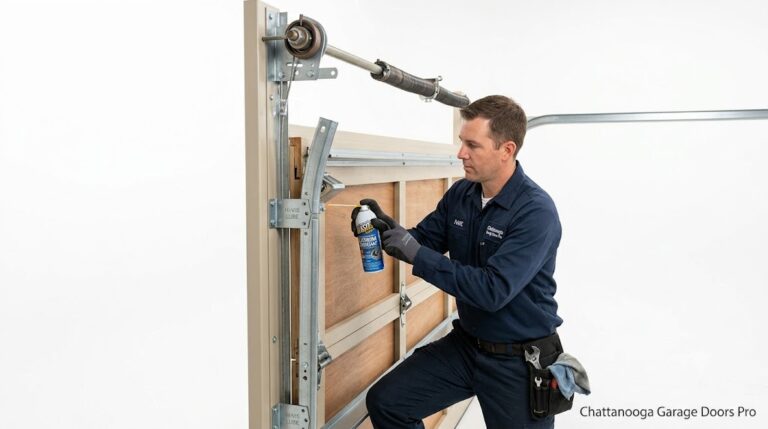
- Lubricate moving parts twice a year. Use a silicone-based or white lithium grease on rollers, hinges, and the torsion shaft.
- Test the door’s balance annually. Disconnect the opener and lift the door halfway. If it doesn’t stay in place, call a technician to adjust the springs.
- Test the safety reverse feature monthly. Place a piece of wood on the ground under the door and close it. The door should reverse upon contact.
- Schedule a professional tune-up every 12–18 months. A technician can catch worn springs, misaligned tracks, and failing sensors before they cause a click-no-open situation. Our seasonal garage door maintenance guide for Chattanooga homes explains what to check each season.
Frequently Asked Questions
1. Why does my garage door opener click but not open?
The most common causes are safety sensor issues, Lock Mode being active, a disconnected trolley, a stripped drive gear, a failing logic board or relay, or a mechanical failure like a broken spring. A clicking noise means the opener is receiving power and attempting to engage, but something in the chain is failing.
2. What does rapid clicking mean?
Rapid, repeated clicking usually points to a logic board or relay failure. The relay is engaging and disengaging repeatedly because it’s not receiving a sustained command from the logic board. This is a job for a technician.
3. What does a single click followed by silence mean?
A single click followed by silence often indicates a motor capacitor failure or a broken motor. The relay engages, but the motor never starts. This requires a technician to test the capacitor and motor.
4. Can I fix a clicking garage door opener myself?
Replacing a remote battery, cleaning sensors, disabling Lock Mode, and re-engaging the trolley are safe DIY tasks. However, if the problem involves springs, cables, the logic board, or the motor, do not attempt a repair. Call a professional immediately.
5. How much does it cost to fix a garage door that clicks but won’t open?
The cost depends entirely on the cause. A sensor cleaning or trolley re-engagement is often part of a routine service call. A logic board replacement typically ranges from $150 to $300. A spring replacement typically ranges from $200 to $700. See our full breakdown of garage door spring replacement cost for details.
Don’t Let a Clicking Opener Leave You Stranded
A garage door that clicks but won’t open is more than an inconvenience — it’s a system warning. Whether it’s a misaligned sensor, a failing logic board, a stripped gear, or a broken spring, the underlying cause will only get worse with time. In Chattanooga, Hixson, East Ridge, and Ooltewah, our licensed technicians can diagnose the problem and restore your door’s reliable operation — often in a single visit. We test the full system, replace worn parts with factory-spec components, and never leave a job until the door operates the way it should. Call now to schedule your repair.
Call (423) 564-8231