Garage Door Weather Seal: When Should You Replace It?
Your garage door weather seal is the thin strip of rubber or vinyl that runs along the bottom edge of the door — and it's one of the most overlooked components on the entire system. It's also one of the most important. A weather seal keeps rain, snow, dirt, leaves, insects, and rodents out of your garage. It blocks drafts that raise your energy bills. It cushions the door as it meets the floor, reducing noise and vibration. And it protects the bottom panel of your door from water damage that leads to rot, rust, and structural failure. In Chattanooga and across the Tennessee Valley, where humidity is high and seasonal storms are frequent, a worn weather seal fails faster than most homeowners realize. This guide will tell you exactly when to replace it, how to spot the warning signs, what it costs, and whether you can do it yourself.
If you're already noticing water in your garage, drafts, or daylight under the door, the seal is likely past its prime. Our guide on garage door tracks: common problems and solutions covers related issues that often accompany a failing seal, and our guide on how weather affects garage doors in Tennessee explains the seasonal factors that accelerate wear.

What Does a Garage Door Weather Seal Actually Do?
The bottom weather seal — also called the bottom seal, astragal, or garage door threshold seal — is a flexible strip that runs the full width of the door's bottom panel. When the door closes, the seal compresses against the concrete floor, creating a barrier. That barrier does four jobs:
- Keeps water out. Without a tight seal, rain and snowmelt run under the door and pool on your garage floor. Over time, that water damages stored items, rusts tools, and seeps into the foundation.
- Blocks drafts and improves energy efficiency. A gap under the door lets conditioned air escape and outside air enter — especially if your garage is attached to your home.
- Keeps pests out. Insects, mice, snakes, and leaves find their way through even a small gap. A proper seal closes that entry point.
- Reduces noise and vibration. The seal cushions the door as it meets the floor, which quiets the closing cycle and reduces wear on the opener and door panels.
Some garage doors also have side seals and a top seal that run along the door frame. These are separate from the bottom seal and serve similar purposes — blocking drafts, water, and pests along the sides and top of the door. They wear more slowly than the bottom seal but still need periodic inspection.
Types of Garage Door Weather Seals
Not all weather seals are the same. The right replacement depends on your door's bottom panel design, your climate, and how much traffic your garage sees.
| Seal Type | Material | Best For | Lifespan |
|---|---|---|---|
| Rubber (EPDM) | Synthetic rubber | Most climates, long life, resists cracking | 5–8 years |
| Vinyl | Flexible PVC | Budget option, moderate climates | 3–5 years |
| Brush Seal | Nylon bristles | Uneven concrete floors, gravel driveways | 3–5 years |
| Threshold Seal | Rubber, mounts to floor | Doors with persistent water intrusion | 5–10 years |
Rubber (EPDM) is the most popular choice for Chattanooga homes because it handles humidity and temperature swings well without cracking. Vinyl is cheaper but hardens and cracks faster. Brush seals are useful when the concrete floor is uneven and a rubber seal can't make full contact. A threshold seal mounts to the floor rather than the door and is a good solution when water pooling under the door is a chronic problem.
Signs Your Garage Door Weather Seal Needs Replacing
Weather seals don't fail overnight. They degrade gradually, and the warning signs are easy to spot once you know what to look for. Here are the most common indicators that it's time for a replacement:
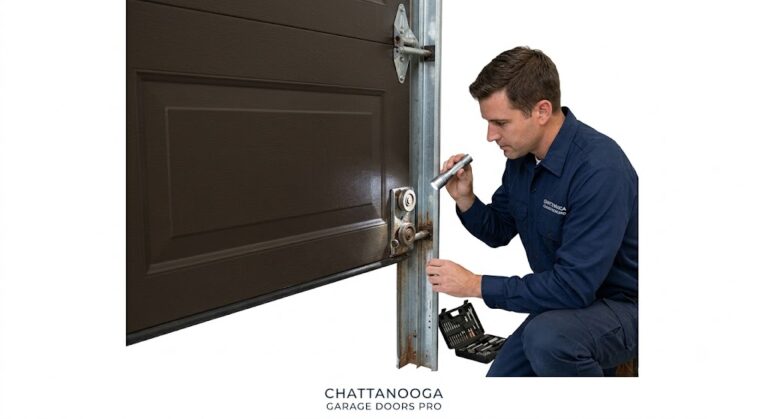
- Visible cracks, tears, or missing chunks. This is the most obvious sign. Rubber and vinyl dry out over time, especially with sun exposure and temperature swings. When the seal cracks, it no longer makes full contact with the floor. A seal with visible gaps or missing pieces should be replaced immediately.
- Daylight visible under the door. Close the door, stand inside the garage, and look along the bottom edge. If you can see daylight coming through, the seal is either worn down, compressed flat, or no longer touching the floor. Any visible light means water and pests can get in.
- Water on the garage floor after rain. A puddle or damp strip along the inside of the door is a clear sign the seal has failed. This is especially common in Chattanooga during spring and summer storms. Water intrusion leads to mold, rust, and damage to stored items.
- The seal is hard, brittle, or stiff. A healthy weather seal is flexible and springs back when you press it. If the material feels hard, brittle, or rigid — or if it crumbles when you touch it — it's past its useful life and won't compress against the floor properly.
- The seal is flattened or compressed. Over years of the door pressing against the concrete, the seal can flatten and lose its ability to fill gaps. If the seal looks like a thin, flat strip rather than a rounded or angled shape, it's time to replace it.
- Pests or drafts inside the garage. If you're finding insects, mice, or leaves inside the garage, or if you feel a draft along the bottom of the door, the seal is not doing its job. This is a sign that the gap has grown large enough to matter.
- The seal is more than 5 years old. Even if it looks fine, a weather seal that's been in service for 5 to 8 years is near the end of its life. In Tennessee's climate, where humidity and temperature swings are significant, seals often degrade faster than their rated lifespan. If you can't remember the last time it was replaced, it's probably due.
If you notice two or more of these signs, replacement is the right call. A new weather seal is one of the cheapest repairs you can make to your garage door, and the payoff in energy savings, pest control, and water protection is immediate.
How Much Does Weather Seal Replacement Cost?
Weather seal replacement is one of the most affordable garage door repairs. The cost depends on the type of seal, the width of your door, and whether you do it yourself or hire a professional.
The seal itself is inexpensive. A standard rubber or vinyl bottom seal for a single-car door (8–9 feet wide) costs $15 to $40. For a double-car door (16 feet wide), expect $25 to $60. Brush seals and premium EPDM rubber seals run slightly higher — $30 to $80 depending on width. A full kit with the replacement seal and new retainer clips or tracks typically costs $30 to $100.
Professional installation adds labor. A service call to replace a bottom weather seal typically costs $75 to $150, including the seal itself. If side seals or a top seal are also replaced, the total can run $150 to $300. For a threshold seal that mounts to the floor, expect $100 to $250 installed. Given that a new seal can lower energy bills and prevent water damage, it's one of the best-value repairs you can make.
If the seal replacement is combined with other repairs — a bent track, worn rollers, or a spring replacement — the technician can usually handle the seal at the same time for a minimal additional cost. Our guide on garage door track bent? what should you do? explains how track damage often accompanies seal failure, and our guide on garage door spring replacement cost covers the most common major repair.
DIY vs. Professional Replacement
Weather seal replacement is one of the most DIY-friendly garage door repairs. Unlike springs, cables, or tracks, the bottom seal isn't under tension. The door is at rest when you replace it, and the work doesn't involve the door's lifting mechanism. If you're comfortable with basic tools, this is a job you can handle yourself.
The process is straightforward. You'll need to determine the correct seal type for your door — there are several profiles, and the seal must match your door's bottom panel retainer track. Some seals slide into a track on the bottom of the door; others are fastened with screws or adhesive. Once you have the right replacement, you remove the old seal (cutting it in the middle if needed for easier removal), slide or fasten the new seal into place, and trim the ends to fit. The job typically takes 30 to 60 minutes.
The most common DIY mistake is buying the wrong seal profile. Garage door bottom seals come in several shapes — T-style, P-bulb, U-shape, and others — and they're not interchangeable. Bring a piece of your old seal to the hardware store, or look up your door's model number, to make sure you get the right match. The second most common mistake is not cleaning the retainer track before installing the new seal — dirt and grit left in the track cause the new seal to seat unevenly.
If your door has a non-standard bottom panel, or if the retainer track itself is damaged or rusted, the job becomes more complex. In that case, or if you're not comfortable working near the door's springs and cables, a professional can replace the seal quickly and ensure it makes proper contact with the floor. If you're unsure, our guide on when to call a garage door technician can help you decide.
How to Check Your Weather Seal in 2 Minutes
A quick inspection twice a year will tell you whether your seal needs attention. Here's what to do:
- Close the door fully. Make sure the door is seated against the floor and the opener has completed its cycle.
- Look for daylight. Stand inside the garage with the lights off. Any light visible under the door means the seal is not making full contact. Pay attention to the corners, where gaps are most common.
- Feel for drafts. On a windy day, hold your hand along the bottom edge of the door. A noticeable draft means the seal has failed.
- Press the seal with your fingers. A healthy seal compresses and springs back. A brittle or flat seal is due for replacement. If pieces crumble off when you touch it, replace it immediately.
- Inspect for cracks and tears. Look along the full length of the seal. Cracks, splits, or missing chunks mean the seal is no longer doing its job.
- Check the floor for water stains. A damp strip or water stain along the inside of the door after rain is a clear sign the seal has failed.
If you find one or more problems, replacement is the fix. It's an inexpensive repair with an outsized impact on your garage's comfort, dryness, and energy efficiency.
How to Make Your Weather Seal Last Longer
A few simple habits will extend the life of your weather seal and delay the next replacement:
- Keep the garage floor clean. Dirt, gravel, and debris on the floor grind against the seal every time the door closes, accelerating wear. Sweep or hose out the garage periodically.
- Lubricate the seal lightly. A silicone-based spray or a light coat of silicone grease on the seal keeps the rubber supple and prevents cracking. Avoid petroleum-based products, which degrade rubber.
- Don't park on the seal. If your car tires rest on the seal when parked, the weight compresses it and accelerates flattening. Park far enough back that the tires are clear of the door's bottom edge.
- Check the door's balance. An unbalanced door presses unevenly against the floor, wearing one side of the seal faster than the other. Test the balance annually by disconnecting the opener and lifting the door halfway — it should stay in place.
- Inspect the seal twice a year. Add it to your seasonal maintenance routine. Our seasonal garage door maintenance guide for Chattanooga homes explains what to check each season.
For more troubleshooting tips and maintenance advice, browse our blog. If you're also dealing with noisy operation, our guide on garage door rollers: nylon vs steel explains how upgrading your rollers can quiet the entire system.
Frequently Asked Questions
1. How often should a garage door weather seal be replaced?
Most weather seals last 3 to 8 years, depending on the material and climate. In Tennessee's humid, storm-prone climate, rubber seals typically last 5 to 8 years and vinyl seals 3 to 5. If your seal is cracked, flat, or more than 5 years old, it's likely due for replacement.
2. What are the most common signs the seal needs replacing?
The most common signs are visible cracks or tears, daylight showing under the door, water on the garage floor after rain, a brittle or flat seal, drafts, and pests getting inside. If you notice any of these, replacement is the fix.
3. Can I replace a garage door weather seal myself?
Yes. Bottom weather seal replacement is one of the most DIY-friendly garage door repairs because the seal isn't under tension. The key is buying the correct seal profile for your door — bring a piece of the old seal to the hardware store or look up your door's model number. If the retainer track is damaged or the door has a non-standard bottom panel, a professional may be needed.
4. How much does weather seal replacement cost?
The seal itself costs $15 to $60 depending on door width and material. Professional installation adds $75 to $150 for a bottom seal. If side seals or a top seal are also replaced, the total runs $150 to $300. A floor-mounted threshold seal costs $100 to $250 installed.
5. What happens if I don't replace a worn weather seal?
A worn seal lets water, drafts, dirt, and pests into your garage. Over time, water intrusion damages stored items, rusts tools, and can lead to mold and foundation problems. Drafts raise your energy bills, and pests can nest in the garage or find their way into your home. Ignoring a worn seal is a small problem that turns into a bigger one.
6. What's the best material for a garage door weather seal in Tennessee?
Rubber (EPDM) is the best choice for Tennessee's humid, temperature-swinging climate. It resists cracking and hardening better than vinyl, and it lasts 5 to 8 years. Brush seals are a good option if your concrete floor is uneven and a rubber seal can't make full contact.
A Small Seal Makes a Big Difference
A garage door weather seal is one of the smallest, cheapest components on your door — and one of the most important. It keeps your garage dry, blocks drafts, keeps pests out, and protects the bottom panel from water damage. If your seal is cracked, flat, or more than five years old, replacing it is one of the best-value repairs you can make. In Chattanooga, Hixson, East Ridge, and Ooltewah, our licensed technicians carry the correct seal profiles for every major door brand and can replace your bottom, side, and top seals in a single visit. We test the door through multiple cycles before we leave, and we never charge hidden fees. Call now to schedule your weather seal replacement — your garage will be drier, quieter, and more energy-efficient for years to come.
Call (423) 564-8231