Why Your Garage Door Opens Slowly and How to Fix It
garage door opens slowly is a problem most homeowners in Chattanooga TN notice at the worst possible time, often when they are rushing to work or trying to leave during bad weather. A door that used to move smoothly suddenly becomes heavy, noisy, or delayed, creating stress and safety concerns. In many homes, this issue starts small but quickly turns into a major failure if ignored.
A slow-moving garage door is not just an inconvenience. It often signals deeper mechanical issues like worn torsion springs, weak opener motors, or dirty garage door tracks. In some cases, it can even mean the door is becoming unsafe to operate. If you've noticed your door hesitating, check out other symptoms like a garage door that won't open for related troubleshooting.
Common causes include lack of lubrication, broken rollers, cable tension issues, or opener strain. Homeowners in Tennessee also face humidity-related rust and seasonal expansion that affect door movement.
The right response is early inspection, simple troubleshooting, and knowing when to call a professional garage door technician before the problem turns into a full breakdown.
Why is my garage door opening slowly and what does it indicate?
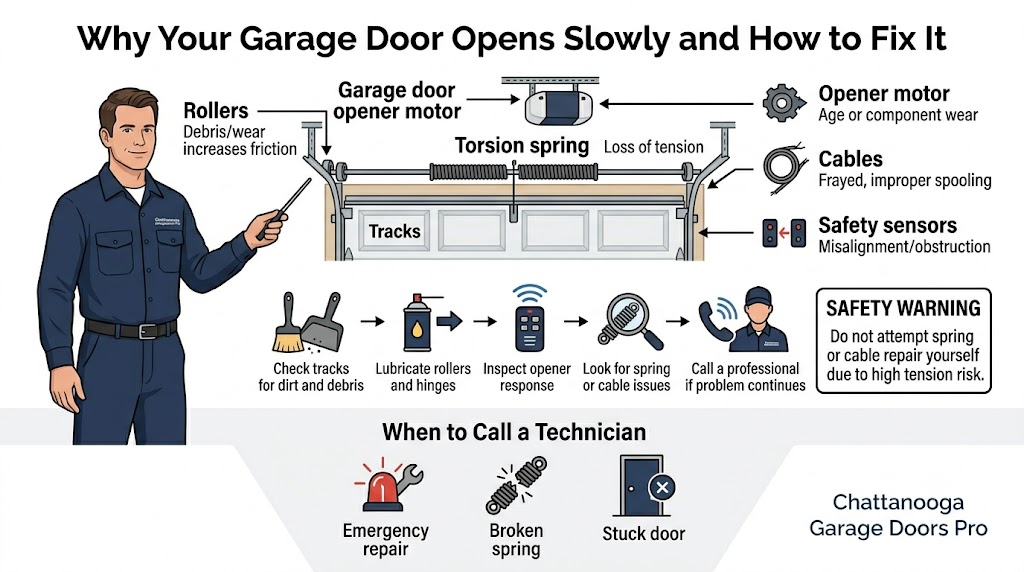
A slow garage door usually indicates mechanical resistance or system imbalance. In real service calls across Chattanooga, this is one of the earliest warning signs of failing components.
Common causes include:
- Worn garage door rollers creating friction
- Weak or broken torsion spring reducing lifting force
- Dirty or misaligned garage door tracks
- Failing garage door opener motor losing power
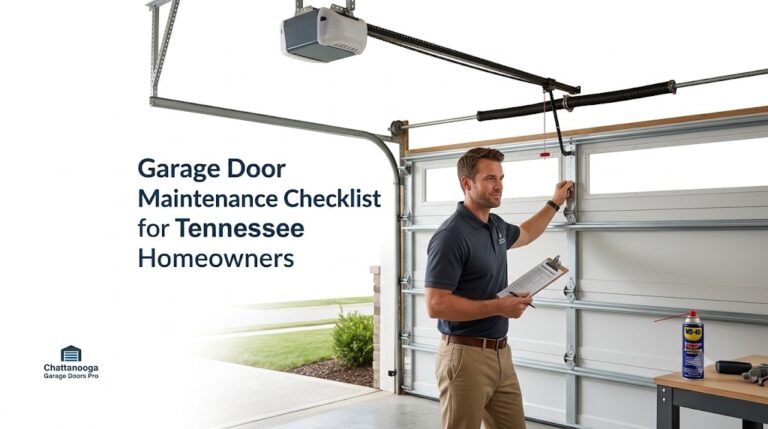
Homeowners often notice the door hesitating before moving or making grinding sounds. For example, a homeowner in East Chattanooga reported their door taking nearly 10 seconds to fully open. The issue was worn rollers combined with dry tracks. A regular maintenance checklist can help catch these issues early.
Basic troubleshooting steps:
- Check for visible dirt or rust on tracks
- Listen for unusual grinding or clicking
- Test manual lifting to feel resistance
- Inspect opener response delay
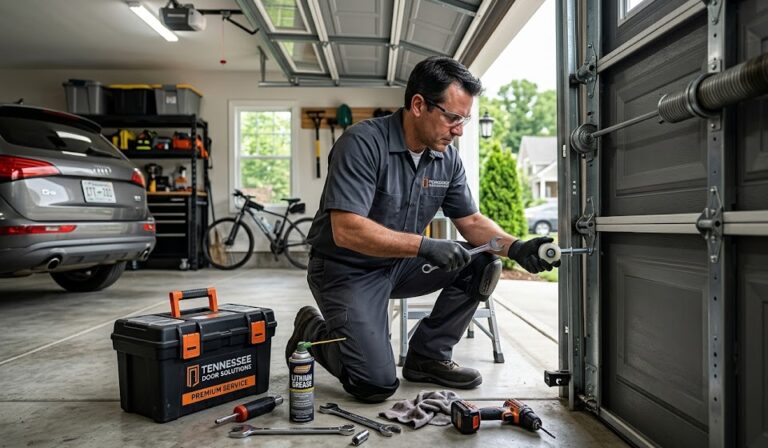
Professional technicians often resolve this by performing lubrication, roller replacement, or adjusting spring tension through services like garage door repair services. For spring-related issues specifically, garage door spring repair can restore proper lifting speed.
What causes a garage door to move slowly over time?
A garage door rarely slows down overnight. It usually develops gradually due to wear and environmental exposure. In Tennessee, humidity and temperature changes accelerate this process.
Main causes include:
- Lack of routine garage door maintenance
- Rust forming on metal tracks
- Worn bearings inside rollers
- Aging garage door opener gears
For example, a homeowner near downtown Chattanooga noticed their door becoming slower each week during winter. Inspection revealed rust buildup inside the track system, increasing friction.
Troubleshooting steps homeowners can try:
- Clean tracks with a dry cloth
- Apply silicone-based lubricant (refer to our garage door lubrication guide)
- Tighten loose hardware bolts
- Reset opener system if delayed
When internal components like springs or cables degrade, professional garage door spring repair becomes necessary to restore proper balance and speed. Knowing how often springs should be replaced can help prevent slow operation.
Can weather in Chattanooga affect garage door speed?
Yes, weather plays a significant role in garage door performance, especially in Chattanooga TN where humidity and seasonal temperature shifts are common.
Moisture can cause:
- Expansion of wooden or metal panels
- Rust on garage door tracks
- Reduced efficiency in opener motors
- Stiff rollers during cold mornings
For example, during a rainy week, a family in Chattanooga experienced a garage door that moved halfway and stopped. The cause was moisture swelling in the lower panel and increased track friction.
Homeowner actions:
- Wipe moisture from door edges
- Inspect rubber seals for damage
- Keep tracks dry and clean
- Run door cycle daily during cold months
In such cases, technicians providing garage door repair Chattanooga TN services often adjust alignment and replace weather-affected components.
When should you worry about a slow garage door?
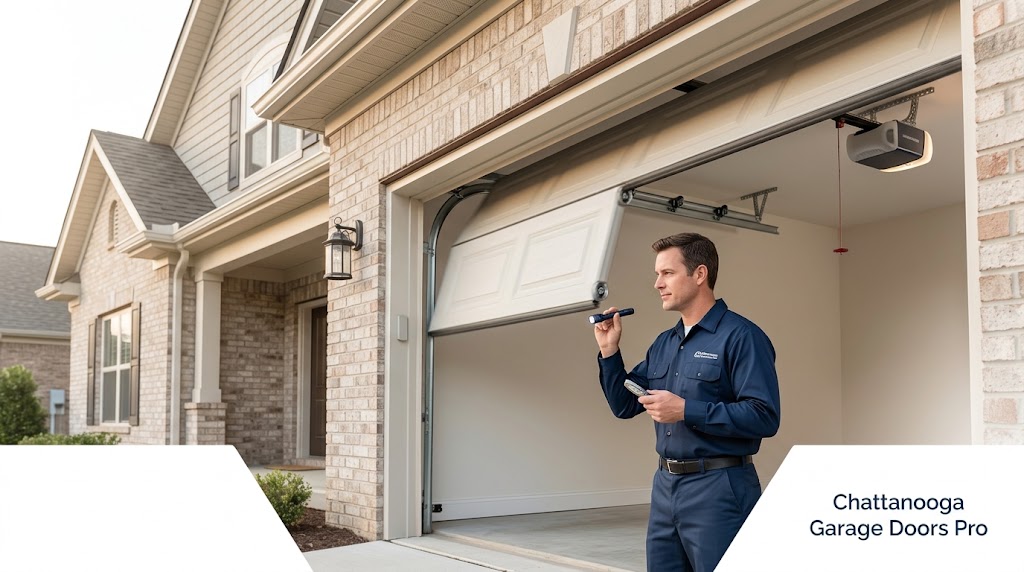
A slow garage door becomes serious when it shows signs of mechanical failure. Ignoring early symptoms can lead to complete breakdown or safety hazards.
Warning signs include:
- Door struggling to lift evenly
- Loud popping or snapping sounds
- Opener motor running but door not moving
- Door reversing unexpectedly (see why your garage door won't close)
Example: A homeowner in North Chattanooga heard a loud snap and then the door slowed drastically. The issue was a weakening torsion spring that was about to fail.
Steps to take immediately:
- Stop using the door repeatedly
- Switch to manual mode carefully
- Inspect cables for visible slack
- Call a technician for inspection
Professional garage door opener repair or spring replacement is often required to restore safe operation.
How can homeowners fix a slow garage door safely?
Some minor issues can be handled safely by homeowners if the problem is early-stage and not mechanical failure.
Safe DIY steps:
- Lubricate rollers and hinges (using our garage door lubrication guide)
- Clean debris from tracks
- Check opener battery and settings
- Tighten loose brackets
Example: A homeowner in Tennessee noticed slow movement and fixed it by cleaning dusty tracks and applying silicone lubricant. The door speed returned to normal immediately.
However, more complex issues require professional help:
- Broken springs
- Cable tension imbalance
- Motor gear failure
- Track misalignment
For deeper problems, booking a garage door maintenance service ensures long-term performance and safety.
What real problems do homeowners face with slow garage doors?
Example 1: Broken Spring Before Work
A homeowner in Chattanooga tried opening the garage door in the morning, but it moved extremely slowly and felt heavy. The cause was a broken torsion spring. The solution required emergency garage door repair, restoring safe operation the same day.
Example 2: Door Stuck During a Storm
A family found their garage door moving halfway and stopping during heavy rain. Moisture had caused track friction. After cleaning and alignment, the door function was restored.
Example 3: Opener Clicks but Door Doesn't Move
A homeowner heard clicking but saw no movement. The issue was a stripped opener gear. Garage door opener repair solved the problem and restored smooth operation.
When should you call a professional garage door technician?
Professional help is needed when:
- Door remains slow after lubrication
- Springs or cables show damage (cable failure signs)
- Opener motor struggles
- Door becomes unsafe or uneven
Technicians can diagnose spring tension issues, motor load problems, track alignment faults, and roller wear conditions. Booking garage door repair services ensures proper tools and safety handling.
For urgent situations, same-day garage door repair in Chattanooga is often the safest option.
Frequently Asked Questions
How much does garage door repair cost?
Cost depends on the issue. Minor repairs are affordable, while spring or motor replacements cost more due to parts and labor complexity.
Can I repair a garage door spring myself?
No. Garage door springs are under high tension and can cause serious injury if handled incorrectly.
Why does my garage door reverse when closing?
This often happens due to misaligned sensors or obstruction in the track system.
How long does garage door repair take?
Most repairs take 1–2 hours depending on whether parts need replacement.
When should I replace my garage door?
If the door is old, heavily damaged, or repairs are frequent, replacement is more cost-effective. Learn about garage door replacement options.
Conclusion
A slow garage door is usually a sign of friction, worn components, or opener strain. In many Chattanooga homes, the issue starts small but can quickly become a safety risk if ignored. Simple cleaning and lubrication may help, but deeper issues often involve springs, cables, or motors that require expert handling.
Homeowners should focus on early detection, safe troubleshooting, and regular preventive maintenance. For persistent issues, professional garage door technicians in Chattanooga ensure safe, long-term repair and prevent unexpected failures.